


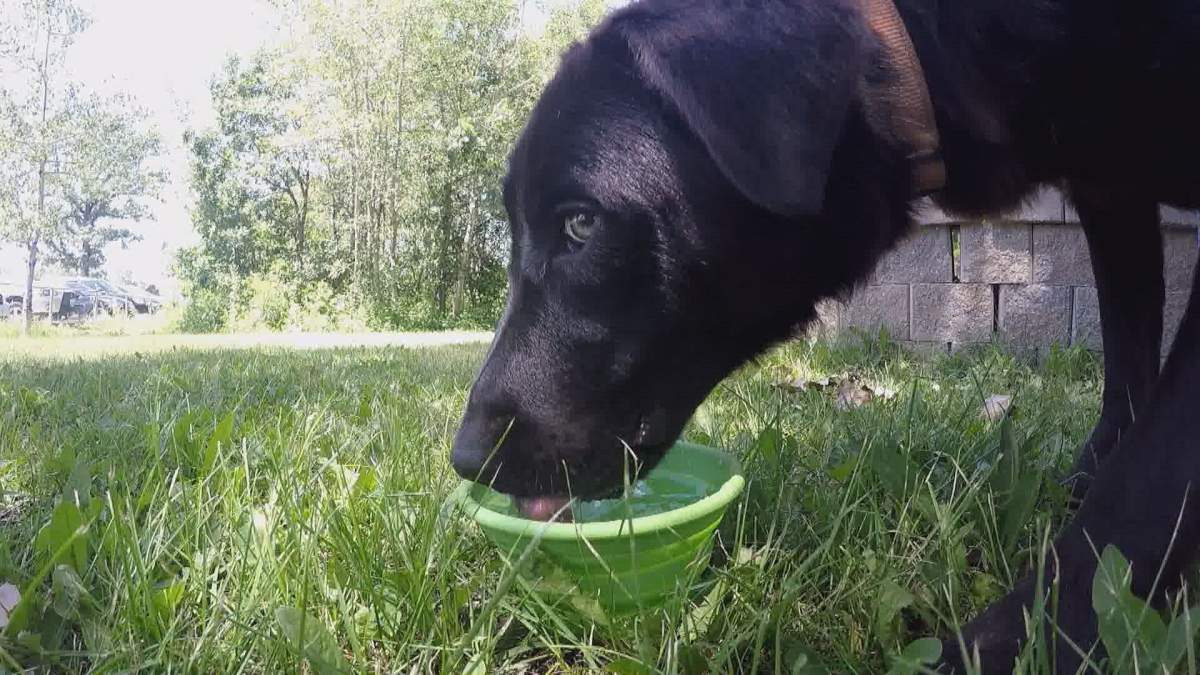
While people in the province find ways to stay cool during the current heat wave in Saskatchewan, pet owners are being asked to do the same for their furry friends.

Saskatchewan SPCAs are reminding pet parents to be aware of the dangers associated with the heat and what can be done to avoid any potential problems.
Heatstroke in animals can cause organ damage and can even lead to death, according to the Saskatchewan SPCA website.
Trina Mortson, Saskatoon SPCA’s acting executive director, said it’s important not to leave pets in hot cars, something that happens a lot.
“Our animal protection officers probably get called to close to 200 dogs in hot cars (per summer). Usually, we can get there in sufficient time so that something severe hasn’t happened to the dog,” Mortson said.
She said it’s best to leave dogs at home during heat waves.

Get daily National news
“There really is no safe amount of time to leave a dog in a car. Some people think that leaving the windows open is an option, but it’s not a good option, especially in that type of heat,” Mortson said.
“Our best advice is to just leave your dogs at home in a cool air-conditioned environment, if possible. That’s the safest place for your animals.”
Read more: Edmonton fire crews respond to calls of people, animals locked in vehicles during heat wave
She said if leaving your dog at home isn’t an option, there are measures you can take to keep them safe.
- Canada’s big banks brace for more bad loans, focus on ‘de-risking’
- Former GM plants must be repaired or demolished, Ontario city orders
- American Cancer Society recommends blood screening for colorectal cancer
- No Pathways, no pipeline: How Alberta’s massive carbon storage project would work, if built


“If you must take your dog out and you can’t leave them home, you can wet your dog down,” Mortson said.
“You can use a bandana that’s been soaked in water and tie that around their neck to help keep them cool and definitely take a water dish with you or a collapsible bowl so that you can constantly keep them hydrated.”
Highlighted on the Saskatchewan SPCA website, pets that are very young or very old, obese or have long hair are among the most vulnerable.



Comments
Want to discuss? Please read our Commenting Policy first.