






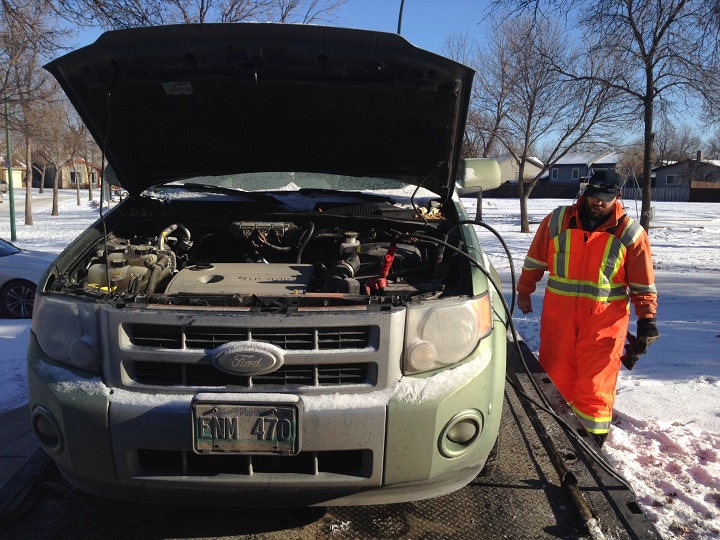
With Manitoba settling in for an extended period of extreme cold, most drivers know to plug in their vehicles.

…but why does that help your car start in the bitter cold? At what temperatures should we really be plugging in, and how long should we be plugging in for?
CAA Manitoba mechanic Tib Pereira told 680 CJOB Friday that it’s all about preserving the battery life.
“This cold compared to room temperature, it’s basically cutting your battery’s output in half,” said Pereira.
“It’s taking so much more out of the battery to start the engine when it’s cold, and usually in the winter, it’s dark when you start off in the morning, so you’ve got all your headlights on. Then you’ve got your heater on high trying to keep yourself warm.
“Instead of the charging system putting that energy back into the battery – which you just used to start it – you’re just putting a little bit back in because you’re running your lights and your heater.”
Pereira said while there’s no hard-and-fast rule for when people should start plugging in their vehicles, he recommends anything beyond the -20 C mark as a must-plug.

Get breaking National news
“Whenever it gets to -20, -25, I would plug in,” he said.
“A lot of newer vehicles, GMs primarily, have special block heater cords with a little round knob on them that’s actually a temperature sensor. They will not turn themselves on unless it’s colder than -18 to save energy.


“I think -20 is a good threshold to start plugging… although it doesn’t hurt to plug in at -10 either.”
The minimum length of time you should leave your car plugged in before driving, he said, is at least two or three hours.
WATCH: CAA Manitoba sets service record due to cold
_TOR1BOCU_848x480_1127886915640.jpg?w=1040&quality=70&strip=all)


Comments
Want to discuss? Please read our Commenting Policy first.