


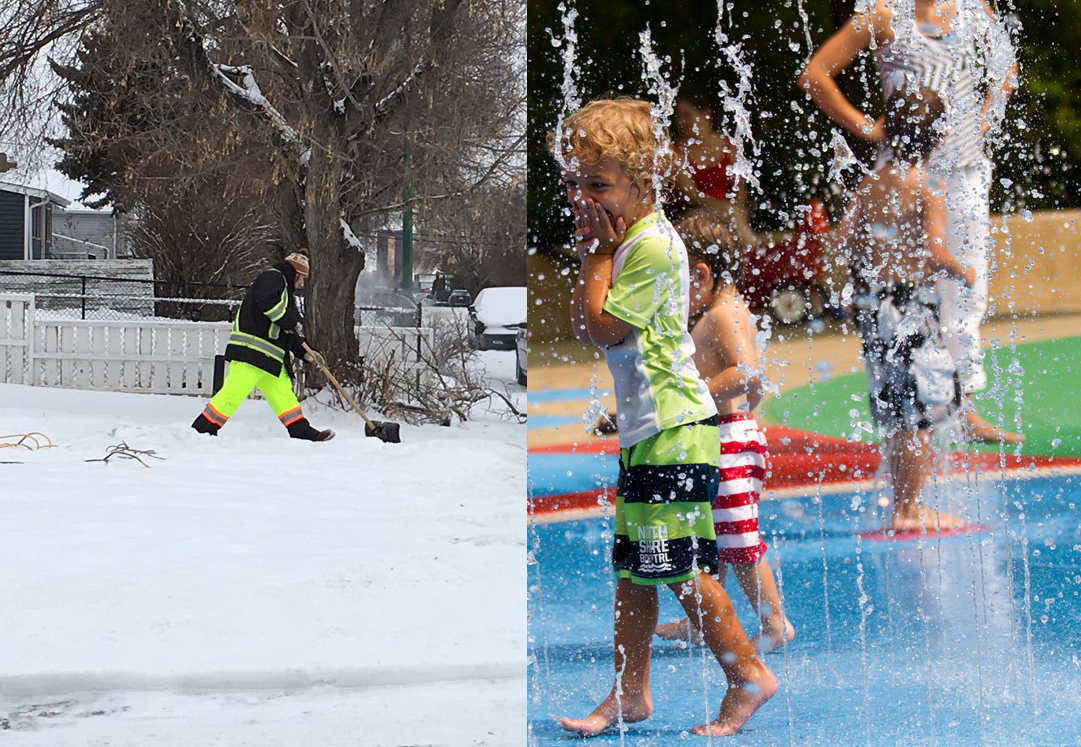
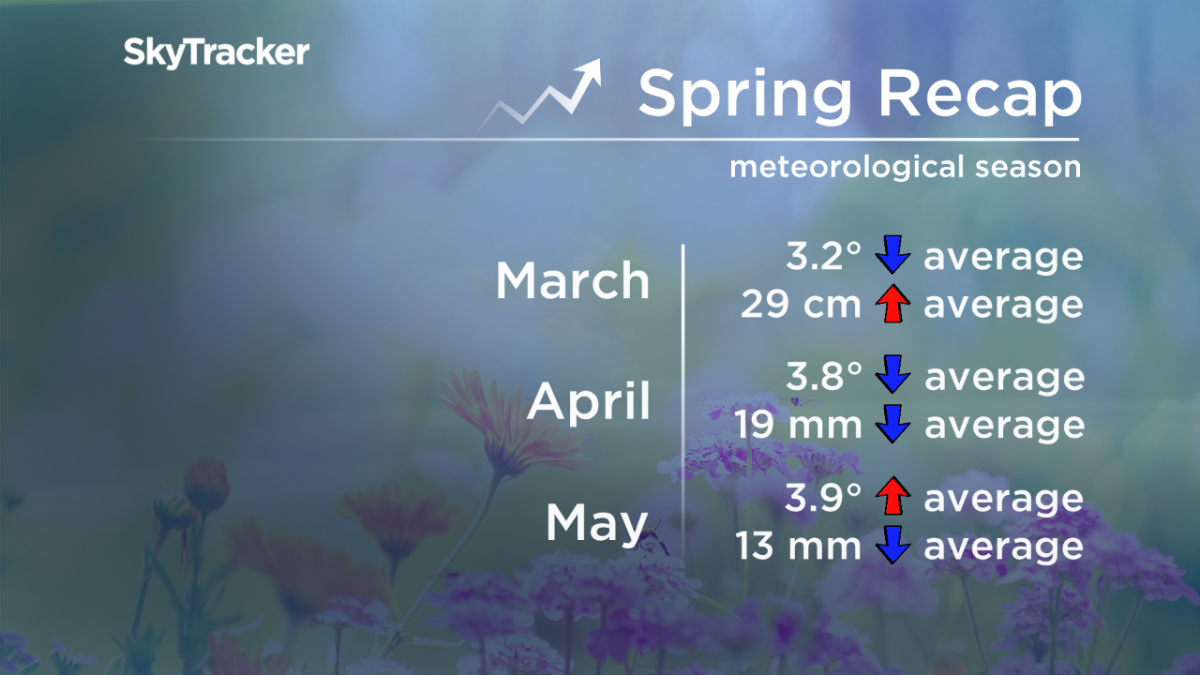
Regina had over double it’s normal snowfall in March and May was the hottest ever recorded.

READ MORE: Regina breaks 82-year-old cold record
March and April were both colder than seasonal, but in May temperatures soared; making it the hottest May ever recorded in the City of Regina.

READ MORE: 2017 second driest year on record in Regina
Much of southern Saskatchewan has been in a drought for over a year, but March snowstorms and May thunderstorms helped improve soil moisture.

Get daily National news
Regina had almost no rainfall in May and although thunderstorms brought nearly 40 mm of rain to the city in May, conditions are still drier than normal.
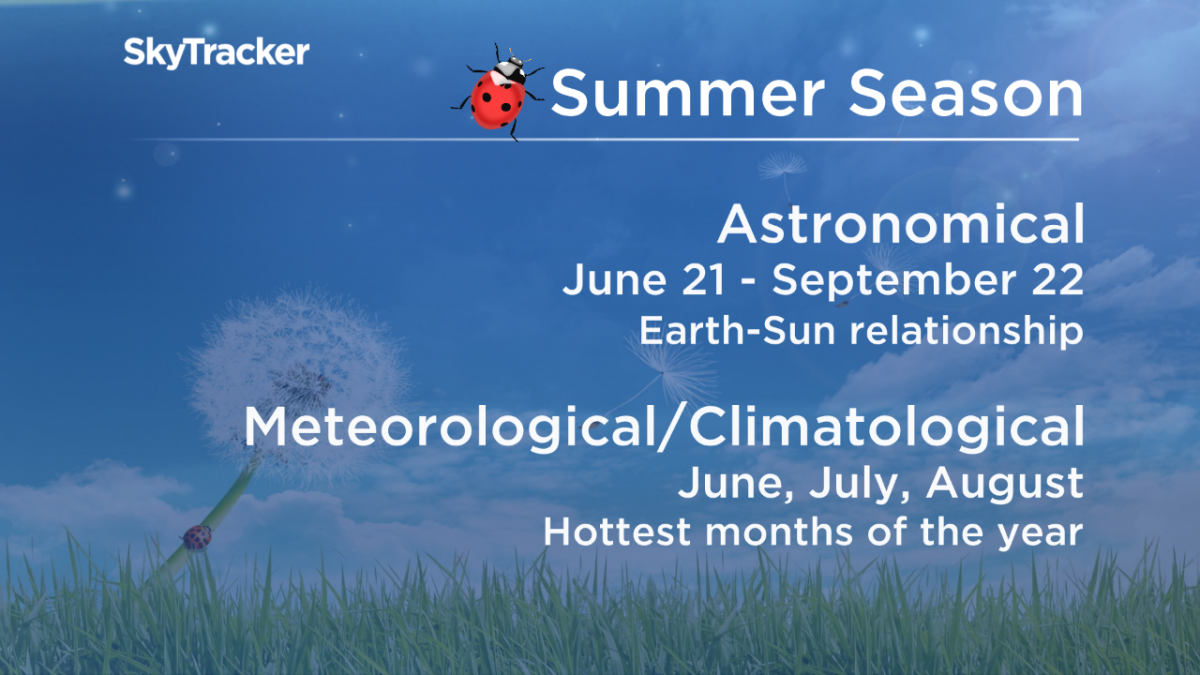


The summer solstice occured at 4:07 a.m. on June 21, marking the first day of the astronomical summer season.
For observation and forecasting purposes, meteorologists and climatologists observe different season groupings based on the annual temperature cycle.
The meteorological summer season is observed as the three hottest months of the year; June. July and August.
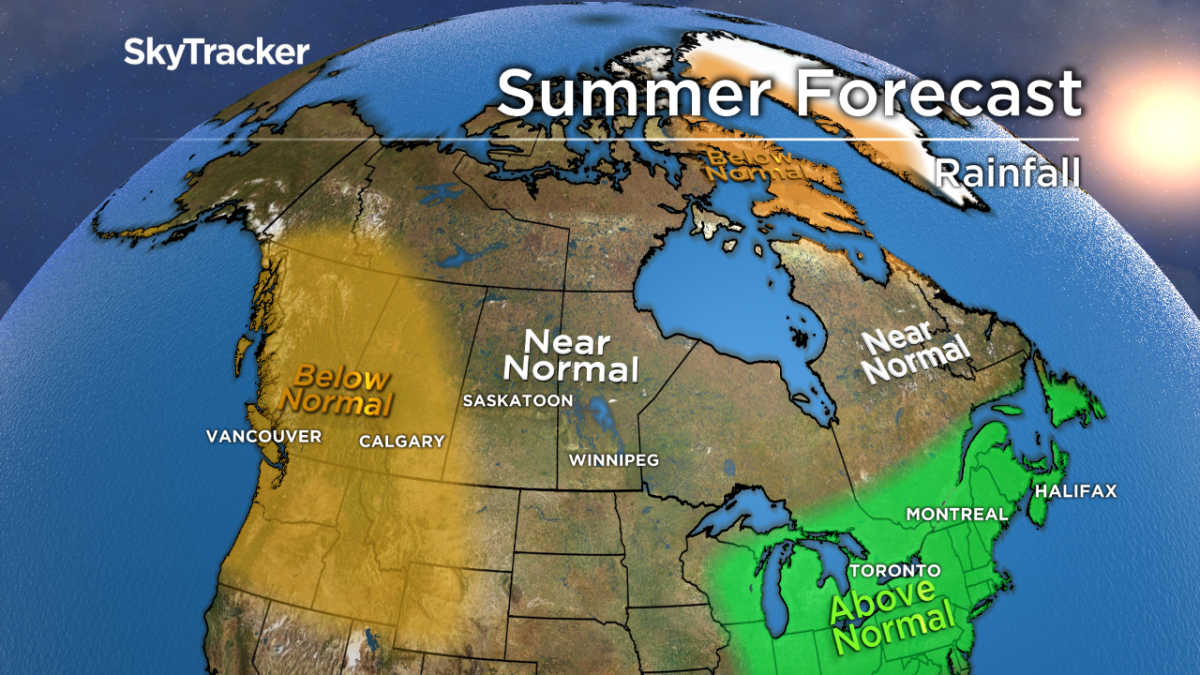
A hot and stormy summer is forecasted for Saskatchewan.
Rainfall from thunderstorms should bring precipitation amounts back up to normal standards, which is great news for farmers.
To stay updated with radar and weather alerts in your area, download the Global News Skytracker weather app for iPhone, iPad or Android.


Comments
Want to discuss? Please read our Commenting Policy first.