


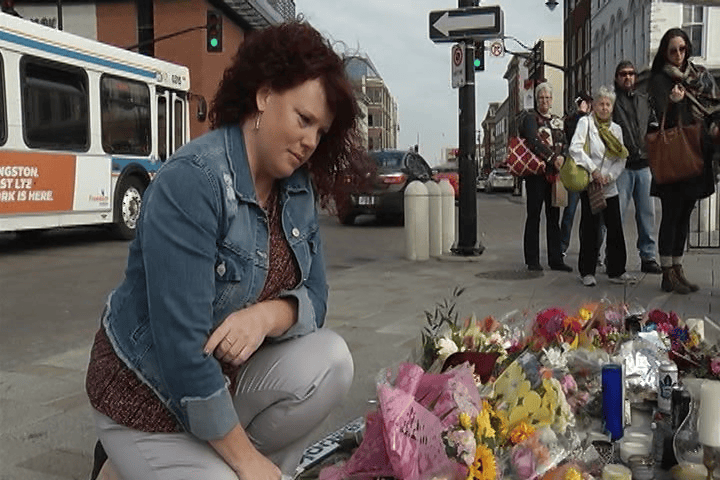
Kelly Armitage was moved to tears as she paid her respects to Gord Downie at the Market Square Tribute in Downtown Kingston.

The Tragically Hip frontman died almost exactly a year after her life-long friend Jeff Mackintosh — who also lost his life to Gliobastoma.
“It felt like a piece of my heart was torn open again and all of the feelings associated with Jeff’s passing came back,” Armitage said.
Mackintosh described himself as a ‘huge Hip Fan’. His dying wish was to see the band play their final show in their hometown. He was given two tickets to the sold-out show last year and took in the concert from a private box.

“Seeing Gord and seeing his physical scars and seeing the incredible love from his fans at that concert made his last month of his life incredibly fulfilling and rewarding and gave him the drive to get through the hardest part of his battle, just before he passed,” Armitage said.

Get daily National news
When Gord Downie went public with his cancer diagnosis, Canadians from coast to coast opened up their wallets to donate to the cause. From that donating drive, $400,000 dollars came back to Kingston’s Canadian Cancer Trails Group.
- ‘GTA VI’ actor with Canadian ties says it’s ‘surreal’ to be part of game
- ‘Vanderpump Rules’ star Jax Taylor reveals cancer diagnosis, tumour surgery
- David Beckham sues for $41 million after luxury perfume sold in gas station
- ‘Days of Our Lives’ actor Larry Poindexter dead at 66 after being hit by car


“We don’t cure cancer, we beat it back, we make small baby steps,” Dr. Christopher O’Callaghan said.
“Temozolomide in Brain Cancer is a great example. We doubled the amount of time people have after their diagnoses using that drug. If we can add onto that and stretch that out we turn diseases that have extremely bad prognosis into diseases that we can manage for a longer period of time,” O’Callaghan added.
Armitage hopes the influx of research money and increased awareness after Downie’s diagnosis and eventual death will prevent another family from losing their loved one to the same disease.
“It’s only going to move forward the progress that they make in diagnosing this cancer earlier,” Armitage said.
“Being able to treat it and provide a quality of life for people and hopefully, eventually a cure.”




Comments
Want to discuss? Please read our Commenting Policy first.