




The City of Edmonton is considering the return of calcium chloride as a way to deal with the intense snow and ice buildup in the winter.

The anti-icing agent was highly controversial in Edmonton when the city used it on arterial and collector roads in 2017 and 2018.
The potential re-introduction of the controversial compound was mentioned in the city’s snow and ice policy report released to the public on Thursday.
“We are also responding to two motions from councillors earlier on in the year,” said Valerie Dacyk, the city’s supervisor of snow and ice control.
“One of them specifically asked us to look into the positives and negatives of calcium chloride, so this is that response.”
The city ran the pilot program for two years but stopped using the de-icing agent in 2019 after increased concerns about damage to vehicles, concrete and infrastructure.
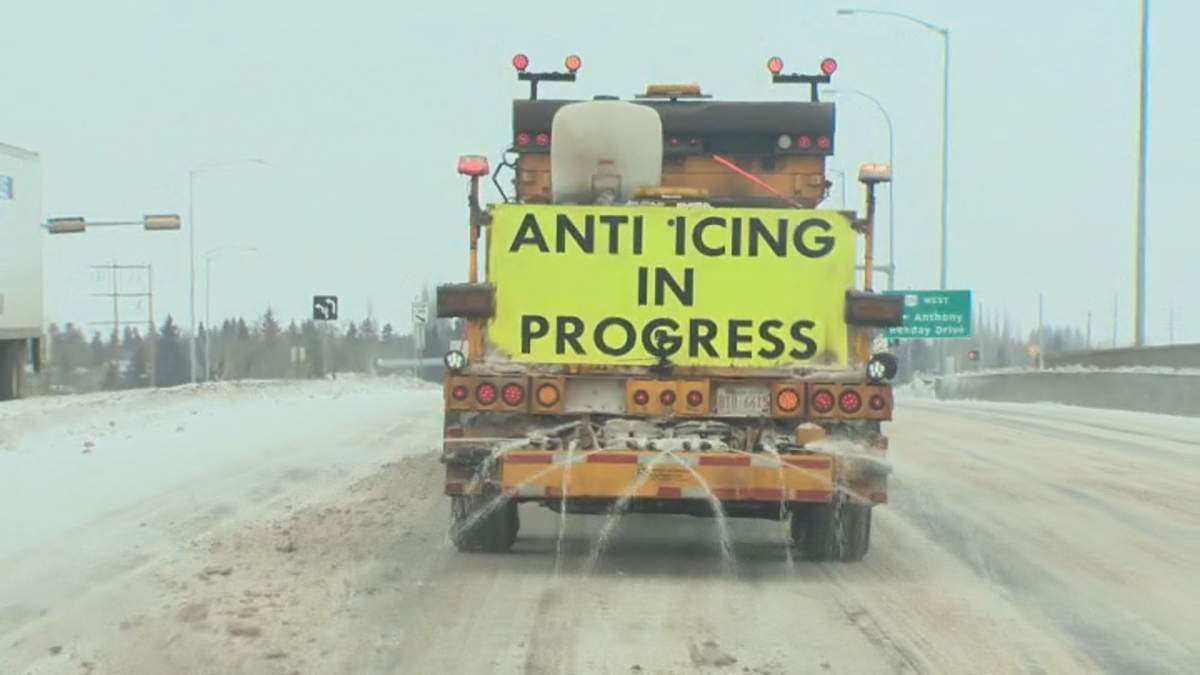
The solution was applied in a thin layer once per snowfall and designed to prevent snow from sticking to the pavement.
It has a lower freezing point than sodium chloride — salt — making it easier for crews to remove snow from the streets.

Get daily National news
Chemical engineers and mechanics expressed concerns about vehicle rust and corrosion as result of the calcium chloride.

While the province has been using calcium chloride on Anthony Henday Drive for years, the ring road is often dry because high vehicle speeds blow snow off the road — whereas lower speeds on city streets can lead to wet accumulation of calcium chloride on vehicles, which then creep into vehicle parts.
Local auto experts say seven years later, they’re still dealing with the damage caused by calcium chloride.
“It’s very highly corrosive, so we’re finding a lot of vehicle rust, suspension and steering components are rusting, corroding and breaking,” said Michael Bauman of Mike the Mechanic.
“We’re seeing stuff that’s unprecedented.”
Bauman believes it would be in the best interest of vehicle owners if the city uses sand or salt instead of the chemical compound.
“Calcium chloride, it absorbs the moisture, so it holds the moisture in.


“So when it’s on the undercarriage of the vehicle, it’ll bring the moisture in and that’s how it expedites the rust and corrosion.”


If council chooses this option, the return would happen in two phases.
The first would be 12- to 24-months long, where the city would seek out proper equipment and hire and train operators. The second phase would see it actually implemented and used on Edmonton’s streets.
The report mentions public sentiment towards the de-icing agent is still poor and Ward sipiwiyiniwak councillor Thu Parmar has heard the same.
“My residents… they would be on the side of not using calcium chloride. I’m gonna get some more information from administration on what are the pros and cons,” Parmar said.
“We’ve had some really extreme weather in terms of the freeze and thaw, with extreme storms, and so potentially there are gonna be more tools needed in the tool kit.”
The policy will be debated at city hall on Monday, Aug. 31, but further discussion on the usage of calcium chloride will be made during budget deliberations this fall.



If the city goes ahead with this, knowing full well the damage they’re causing, they better be prepared for a class action lawsuit for damages to residents vehicles. I would definitely instigate that or be a litigant in it.
No No No. People just need to learn how to drive.
Boooooo!
This stuff is terrible. I lived in a snowy country where they just plowed the roads and did not use salt or anything (very costly, damaging to wildlife, infrastructure, cars)and we got around just fine. Here in North America it’s all about liability and lawsuits..and people always in a hurry not driving properly.
Please do not use Calcium Chloride , people don’t want the roads and cars destroyed … use your brain …
Calcium chloride used on winter roads is considered bad by many drivers and property owners because it causes severe vehicle rust, concrete damage, and infrastructure corrosion.The chemical is a powerful de-icer, but it comes with heavy drawbacks. Calcium chloride is significantly more corrosive to metals and concrete than traditional sodium chloride salt. Liquid spray splashes onto car undercarriages, wheel wells, and brakes, causing fast and aggressive rust on vehicles.Concrete Degradation: It eats away at sidewalks, curbs, and garage pads much faster than standard salt.Infrastructure Wear: Bridges, guardrails, and metal fixtures suffer higher rates of structural decay.
Seriously don’t be a moron ….
Let’s remove some of the members of this council who seem to think that the opinions of taxpayers don’t matter. Maybe try to get plows out on the road when the snow first falls and keep them out until it is all gone. Instead of destroying taxpayers’ cars as well as bridges and concrete. Tax paying Edmntonians don’t want calcium chloride on our streets. This council needs to go. Not one good decision has been made since they got into office.
In this case its the tail chasing the dog.
Why don’t you idiots just dump more salt on the roads like you do when a few snowflakes hit the ground and the City goes inti a big panic!
So this product rusts metal, do you want to want to replace bridges and overpasses too? Try common sense !!
They really do hate us. The public has expressed clearly on this issue. We must not be switching to bicycles fast enough so the plan is to rot the cars off the road? Anything to avoid just buying proper snow removal equipment.
Good bye car frame and bodies . And grass in the summer .the roads are more important for the bad drives
No mention of the irritation to pet’s paws?
When we lived in Edmonton almost 20 years ago…..we always bought a 5 yr old chevy 4×4 p/u as a winter beater…..kept for about 5 years…..
No to calcium chloride or salt. Sand and plow. How about winter tires.
Great plan! Calcium chloride is a useful chemical for melting ice and controlling dust, but its major cons include severe skin and eye irritation, heat-releasing thermal burns, and corrosive damage to concrete and vehicles. Let’s do this! Sounds expensive though.
Salt the cocksuckers. Between the jeets and the idiot boomers on the roads, we need them as safe as we can get.
How about just plowing the roads every time it snows? Within 24 hours for arterial roads and bus routes, within 72 hours for residential.
So much money is wasted removing the snow just before it melts in the spring.