


A recent increase in the number of bear sightings and trail closures in Alberta’s mountain parks has wildlife experts reminding backcountry users to be careful when visiting bear country.

“At springtime, you know, all the bears just got out of their dens after five to six months of laying in their dens and they’re hungry, they’re looking for food,” said Nick de Ruyter, WildSmart director at the Biosphere of the Bow Valley.
“There’s snow up high, there’s better weather down in the valley bottoms, all their food is available in the valley bottoms, so they’re here looking to eat and that’s where we are.”
In Banff National Park, a bear warning was issued Tuesday for Boom, Arnica and Twin Lakes trails along with Twin Lake campground and the surrounding area after “a cinnamon-coloured black bear exhibited concerning behaviour” by closely approaching and following a hiker.
There are also a number of closures and warnings that have been issued in Kananaskis Country this week, including the Terrace Trail and Kovach Ski Trails in Spray Lakes Provincial Park and a warning for the Heart Creek Trail, Heart Creek Bunker Trail and Trans Canada Trail, where there have been numerous sightings of black bears, some with cubs, in close proximity to the trails.

With more people heading into the mountains at this time of year and the bears looking for food, de Ruyter says, it’s no surprise there have been more sightings and encounters.

Get breaking National news
“So right now the easiest food they’re keying on is that green grass and dandelions, which is often found along roads and highways, trails, campgrounds, parks, playgrounds, backyards — so all those places where we are as people,” said de Ruyter.
“That’s pretty typical for this time of year, so it is just really crucial that they are left undisturbed to feed.”

de Ruyter also shared some advice for anyone who is heading into the backcountry.
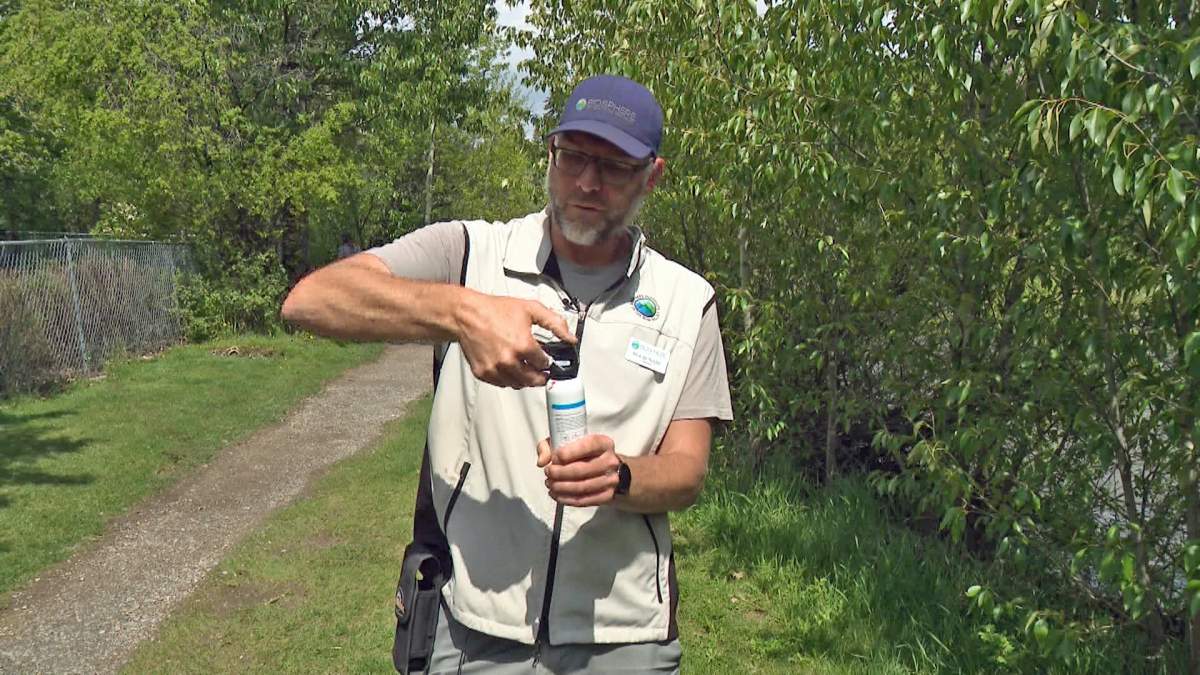
“Check out where the trail warnings and closures are — there are a lot of warnings and several closures as well. Make sure you buy bear spray, make sure you know how to use it and carry it on your person, hip holster or chest holster belt (and) never put in your backpack.”
Forget silent and serene hikes: once out in the woods, it’s important to make your presence known.
“When you get the trail, things like making noise are key and going in a group, ideally. I use the human voice — ‘Hey-oh!’ — much better than things like bear bells (because) they’re just not loud enough. Being in a group, you make more noise, you’re more intimidating for wildlife. Keeping pets on a leash. But really the key thing is just giving wildlife space,” added de Ruyter.
“If you don’t get close to a bear, you’re not going to have a problem with a bear.”
Between now and the start of summer in July, de Ruyter says bears will gradually move up to higher elevations.
Then when berry season starts, they’ll drift back down to the valley bottoms for a bit, then gradually follow the ripening berries back to higher elevations later in summer.
All the latest warnings and closures for both Banff National Park and Kananaskis Country are available online at the Biosphere Institute of the Bow Valley.




Bears must be prevent from eating humans. Junk food is not good for them
And remember when hiking, make lots and lots of noise. But do not complain if you did not see a single animal. Just the excersize was good for you. Lol
Do not listen to the forest, just bang a gong.
if they want to be eaten by a bear its natural selection. besides its not like the world is going to have a shortage of humans
The bear population is exploding because of all those tasty people hiking in bear country. Again humans are disrupting nature.