


Canadian astronaut Jeremy Hansen and his three American crewmates of NASA’s Artemis II mission have returned back down to Earth Friday evening after their historic journey around the moon.

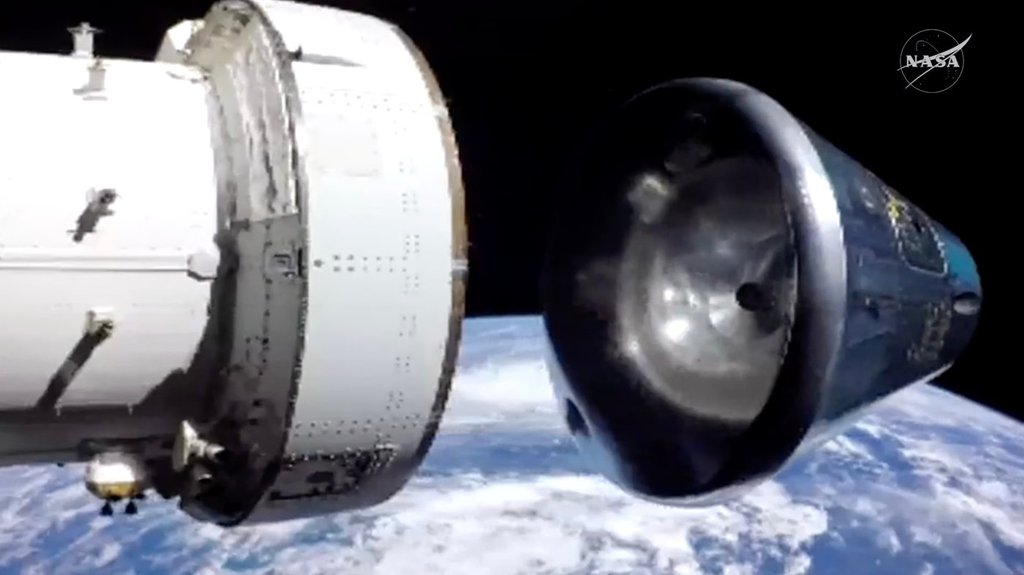
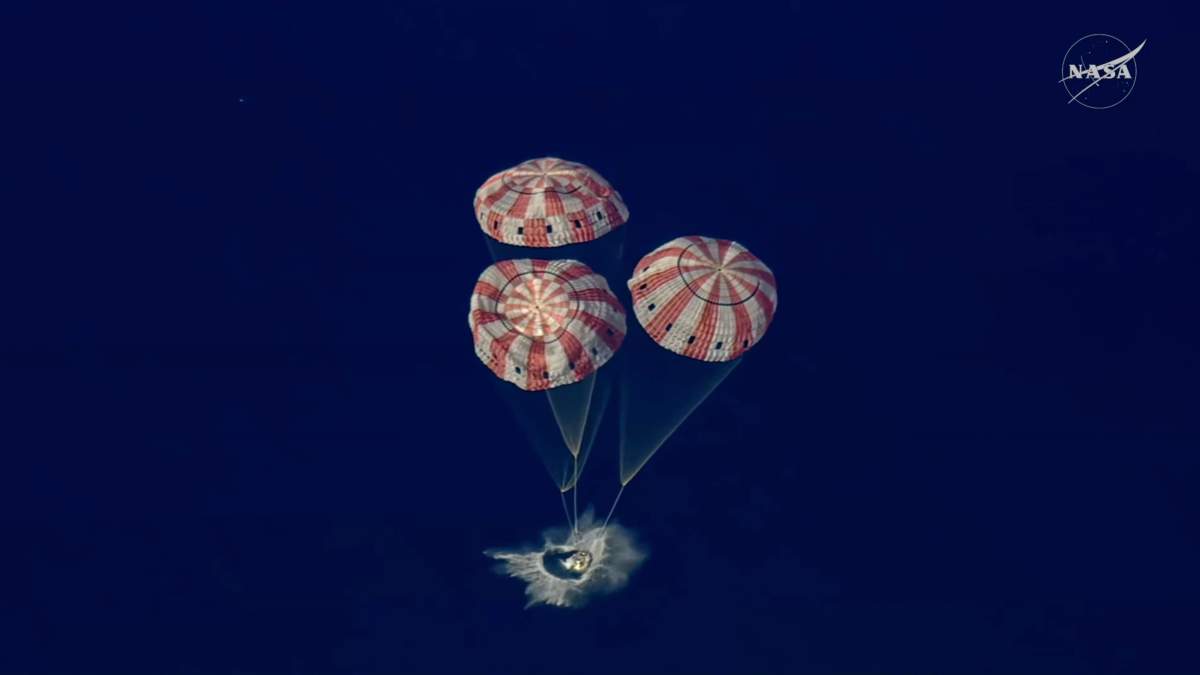
NASA says the four-person crew and their Orion spacecraft splashed down in the Pacific Ocean, off the coast of San Diego, aboard the capsule Integrity, which completed its descent on autopilot.
“A perfect bull’s-eye splashdown,” reported mission control’s Rob Navias.
Reid Wiseman, Victor Glover, Christina Koch and Hansen hit the atmosphere travelling 33 times the speed of sound — a blistering blur not seen since NASA’s Apollo moonshots of the 1960s and ’70s.
“The weather is looking good for splashdown,” NASA said on X just before 3:30 p.m. Eastern, indicating the mission remained on schedule.
All eyes were on the spacecraft’s heat shield, designed to withstand temperatures of several thousand degrees during re-entry. On Orion’s previous uncrewed test flight in 2022, the shield returned heavily charred and pockmarked, adding to the tension surrounding this return.
NASA’s Mission Control erupted in celebration, with hundreds pouring in from the back support rooms. “We did it,” NASA’s Lori Glaze rejoiced at a news conference. “Welcome to our moonshot.”
The final minutes before landing were filled with anticipation at the Canadian Space Agency headquarters in Longueuil, Que.

Get daily National news
“We’re feeling the same emotions as we did on launch day — we’re so excited,” said Caroline-Emmanuelle Morisset, senior scientist in lunar and planetary science at the Canadian Space Agency.
Kumudu Jinadasa, a senior engineer at the Canadian Space Agency, said the first priority is ensuring the astronauts’ health. “There’s no doubt that the first thing that needs to be done is to undergo medical tests,” she said.


On social media, Canadian Prime Minister Mark Carney congratulated Hansen and the rest of the crew for a “historic feat.”
“Welcome home,” Carney said.
After splashdown, the crew will be examined aboard the USS John P. Murtha before flying to Johnson Space Center in Houston.
Their return marks the end of a 10-day mission that saw humans examine the moon up close for the first time since the Apollo flights decades ago.

The astronauts looped the moon this week in a six-hour lunar flyby that took them farther into space than any humans before.
Space officials say Artemis is ushering in a new era of space exploration, with hopes of planting boots near the moon’s south pole by 2028.
—With files from the Canadian Press and the Associated Press

-
![]() Artemis II returns: NASA’s Orion spacecraft splashes down on Pacific Ocean after 10-day moon mission
Artemis II returns: NASA’s Orion spacecraft splashes down on Pacific Ocean after 10-day moon mission -
![]() Artemis II astronauts ate well throughout historic mission thanks to Quebec supplier
Artemis II astronauts ate well throughout historic mission thanks to Quebec supplier -
![]() Artemis II returns to Earth after record-setting mission
Artemis II returns to Earth after record-setting mission -
![]() ‘So proud of how well Jeremy and his crew has done’: Chris Hadfield on the Artemis’ return home
‘So proud of how well Jeremy and his crew has done’: Chris Hadfield on the Artemis’ return home -
![]() Artemis II crew prepares for dangerous return home
Artemis II crew prepares for dangerous return home




Come on! Let’s do something new and novel. How about a manned mission around Mars? How about a manned mining mission on the Moon?
Let’s get a little creative with the NASA budget!!
This is a repeat of what has already been done over 50 years ago. Why is it historic? It is a necessary step to confirm that the revised tech works. – however not without it’s problems. Toilet, heat shield…
why were they able and willing to live stream a black screen and a round Rock for hours on the way there but no livestream on the way back. i asked my son in high school what the other students think? he said they all say its fake. just anecdotal ofcourse.
Wasn’t NASA founded by a N@zi and occultists and such? And all the missions named after Greek gods? Seems pagan and strange to me. And what was the point of this? Whoopdeedoo
^ Pi 😉
^ Peace & Love to all Life Across the Stars 🌟*☆°•.* ^☀️ 🌙. ☆•¿||7=Pi
Hey Pete, F*ck off! Are you for real man? Only an ignorant hillbilly thinks that way.
Feels like déjà vu. Having watched the first moon landing it is sorta disappointing to simply see humans go around the Moon and come home.
With today’s technology this seems so low tech. A waste of time, money and possibly lives
it was also launched on April fools day lol
I think Pete needs to take his meds.
mission was fake. if it was real thry would gave video of spinning earth so people could film clouds on earth and compare them to images by the ship. thats how you know its fake. also does anyone really believe this isnt a distraction from the disastrous iran war.