







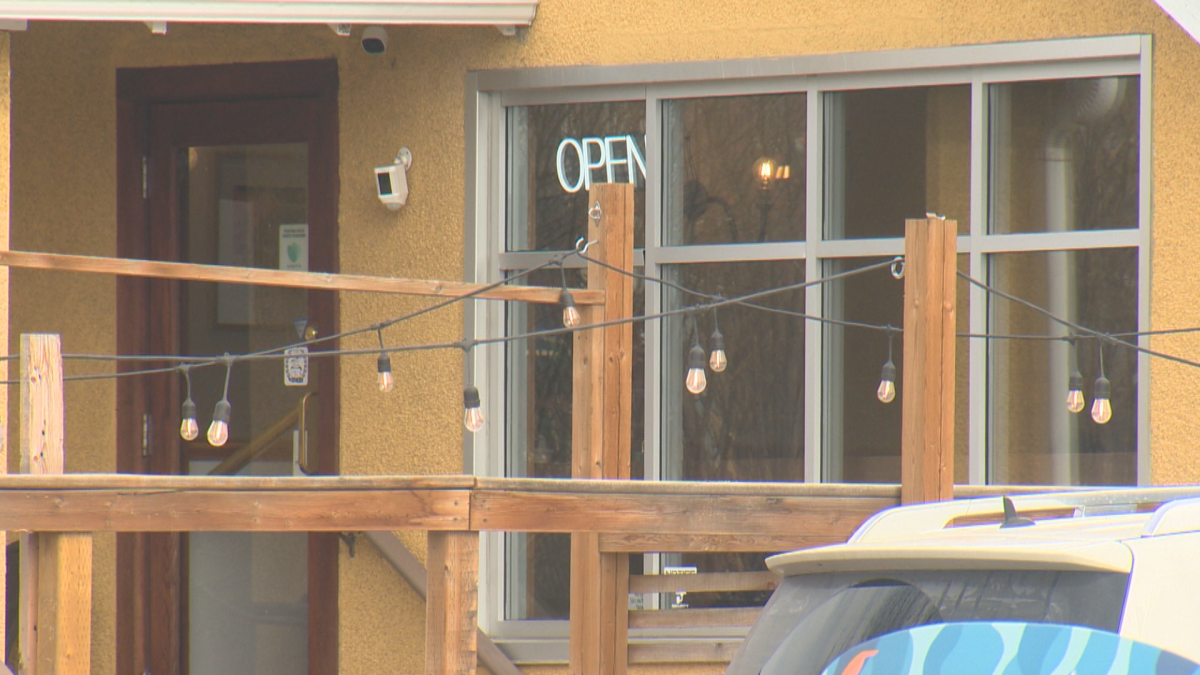
In the wake of the recently-tabled provincial budget, Calgary businesses are preparing for a sharp increase in property taxes this year.

The budget included an increase to the education property tax requisition for municipalities, expected to generate $3.6 billion across the province in 2026.
The requisition from Calgary is set at $1.2 billion, an increase of $200 million from last year.
For the median non-residential property in Calgary, the move is expected to cost an additional $1,816 this year.
When combined with Calgary city council’s 1.6-per cent property tax increase included in its budget, the typical local business could expect to pay nearly $3,000 more on their bills in 2026.

“It’s terrifying with the cost of everything else right now,” said Arlen Smith, who is an operating partner of the Palomino Smokehouse in downtown Calgary.
“I don’t expect to get rich, but it’d be nice to not worry on a busy month that we’re going to be in the red.”

Get daily National news
Although the establishment prepares for increases in property taxes annually, Smith said, his goal is to not raise prices out of concern a hike could “cost people out.”
“We have to at least break even,” he said. “We can’t run a deficit. I’d love to be able to run a $9 billion deficit but that’s not in the cards for us.”
The Palomino served as a backdrop Thursday for a press conference for Alberta’s Opposition NDP to respond to the provincial budget and its impact on local property owners and businesses.
“This budget makes life more expensive,” NDP leader Naheed Nenshi told reporters. “It makes every one of us pay more.”
Nenshi accused the provincial government of squandering record oil production and royalties in a budget that projects a $9.4-billion deficit.
The former mayor of Calgary also took issue with the increase to the education property tax in Calgary, which has increased 58.6 per cent over the last four provincial budgets.
In comparison, the education property tax requisition in Edmonton is $639 million in 2026.
According to the City of Edmonton, the education property tax is expected to add $11 per every $100,000 in assessed value for non-residential properties, while city council’s 6.9 per cent property tax increase equates to an additional $164 per $100,000 of value for those properties.
“They were hoping that people would blame the mayor and blame city council when they get their property tax bill,” he said. “But the mayor is doing a great job of making sure people know exactly who’s behind that tax increase.”


Defending the increase Thursday, Premier Danielle Smith said the province committed to funding a third of the education operating budget through property taxes to respond to growth pressures in the system.
“We heard from ratepayers in Calgary that they wanted us to keep up with growth, they wanted us to build more schools, they wanted us to address issues of complexity,” Smith said. “Forty per cent of the pressures on our education system are coming from growth in Calgary.”
Smith said it would be “unaffordable” if taxpayers in Calgary had to front 100 per cent of the operating costs of education in Calgary, noting the city’s two major boards will be receiving $2.24 billion in operating in the upcoming school year.
“There is no community that is paying 100 per cent of the cost of education. They pay a fraction of the operating cost, they pay none of the capital costs, and it’s because of the robust growth in our oil sands and the revenues associated with that,” she said. “I look forward to continuing the conversation.”
Smith said local businesses will benefit from dual credit programs for apprenticeship programs included in the education budget this year.
She added the education property tax will “stay” at the current rate.
The Canadian Federation of Independent Business (CFIB) said the provincial budget introduces further cost pressures for local businesses through the education property tax increase.
CFIB’s Alberta director Keyli Loeppky told Global News the organization is advocating both municipal and provincial governments to create a new property subclass for small businesses to ease the burden on bottom lines.
“You could tax small businesses at a lower rate and provide some relief that way,” she said.
Calgary city council is expected to finalize property taxes in the spring, with bills set to be mailed out to property owners in May.
Comments
Want to discuss? Please read our Commenting Policy first.