


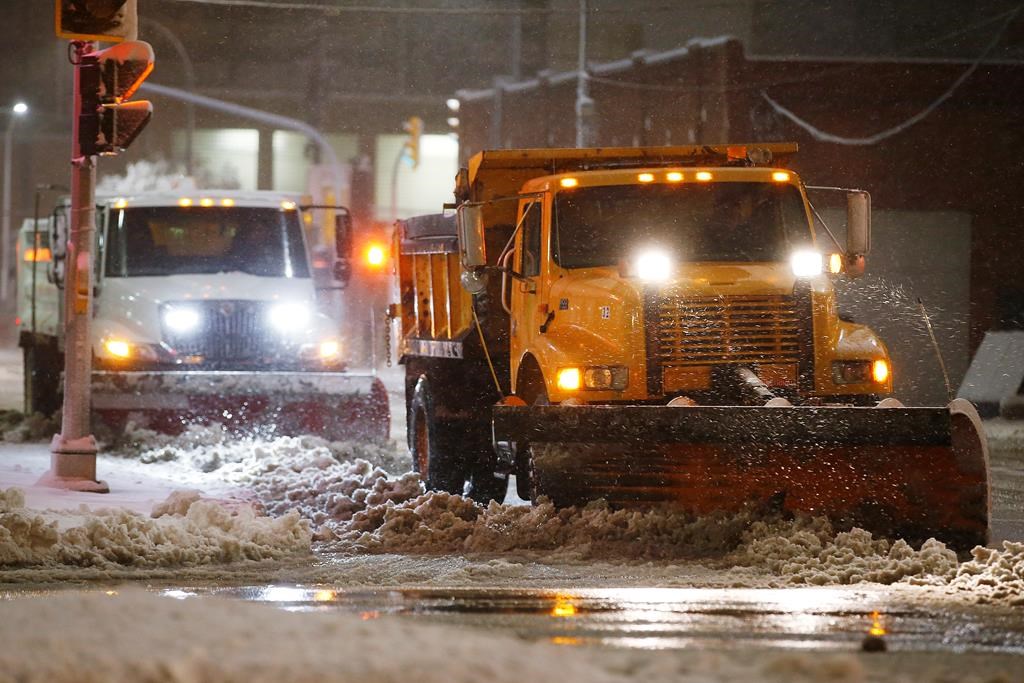
Winter storms and blizzards sound very similar but there’s one key difference — visibility.

Blizzard warnings are issued by Environment and Climate Change Canada when visibility is 400 metres or less due to falling or blowing snow for at least four hours.
There is no minimum expected snowfall requirement for a blizzard, meaning these warnings can be issued when no new snow is falling.
There are times when snowfall from the day before will blow around furiously in strong winds and if it is reducing visibility to less than 400 metres, a blizzard warning is warranted.
Winter storm warnings are more flexible in their description.
These warnings can be put in place for a few different reasons but their most common is when there is significant snowfall expected combined with potentially hazardous weather of a different kind such as freezing rain, strong winds, blowing snow or extreme wind.

Get daily National news
They can also be issued for a major snowfall (25 cm or more in a 24-hour period) or when potential blizzard conditions are expected.
- Old Man Winter wallops B.C.’s Mainland/Southwest region, major highway closed
- Calgary hit by unexpected blast of spring snow, causing dozens of crashes
- False spring strikes again: Saskatchewan prepares for incoming winter weather
- Albertans’ interest in alternative forms of travel growing as fuel prices spike


For a list of all the warning criteria from Environment and Climate Change Canada, click here.



Comments
Want to discuss? Please read our Commenting Policy first.