


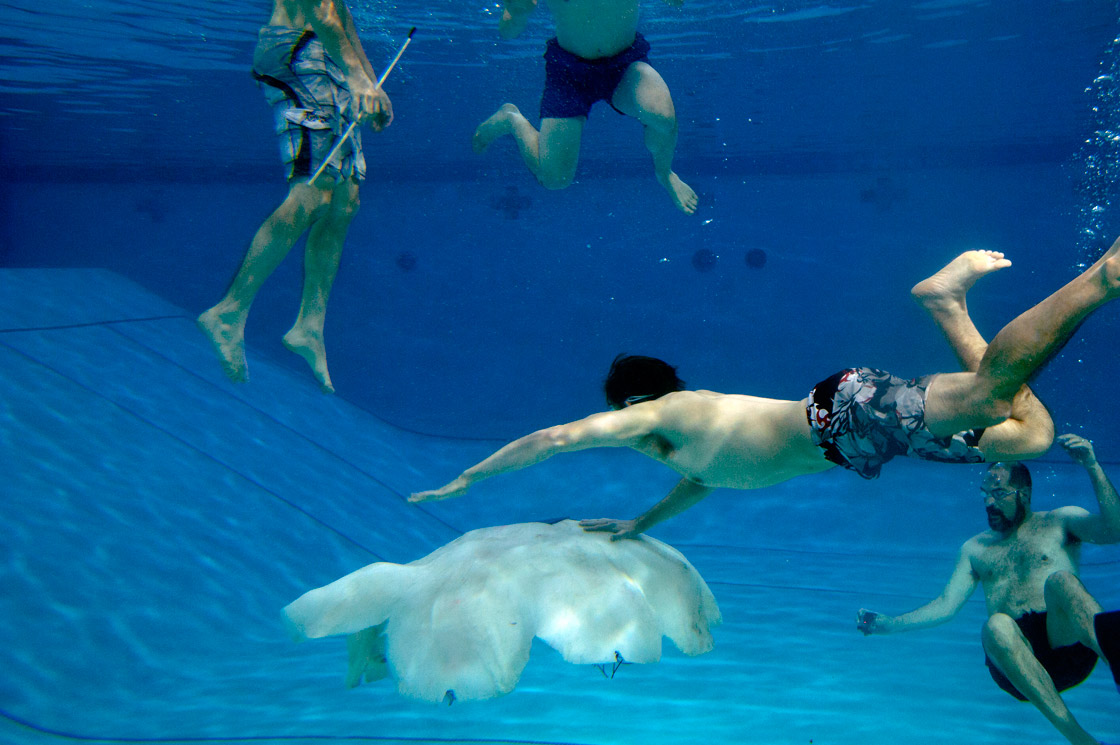
Meet Cyro. A like-life robotic jellyfish weighing in at 170 pounds (77 kg) that one day will be tasked with surveilling the waters around us.

Researchers from the Virginia Tech College of Engineering unveiled the autonomous robotic prototype this week as part of a nationwide $5 million project, funded by the U.S. Naval Undersea Warfare Center and the Office of Naval Research.
Cyro and a smaller prototype named RoboJelly – unveiled in 2012 – will patrol the waters, surveilling the environment, studying sea life, mapping the ocean floor and monitoring ocean currents.
“Our goal with this robot is to copy natural jellyfish,” said Virginia Tech graduate student Alex Villanueva of Saint-Jacques, N.B.

Get breaking National news
Jellyfish are an ideal creature to mimic thanks to their ability to move in water while consuming very little energy. The marine animals can be found in every corner of the world’s major oceans and can withstand a wide range of temperatures in both fresh and salt water.
Jellyfish thrive in shallow waters along coastlines, although some species have been found at depths 7,000 metres below sea level.
- Canadian Natural president says oil sands growth depends on new West Coast pipeline
- New Brunswick should move faster on Health Canada guidelines for clean water: doctor
- Spring thaw not letting up as flooding persists in Saskatchewan communities
- Fuel spill contaminates water body in Ontario community, cleanup underway


Cyro is still just a prototype, but eventually the researchers hope it will be able to operate on its own autonomously for months at a time.
“We hope to improve on this robot and reduce power consumption and improve swimming performance as well as better mimic the morphology of the natural jellyfish,” said Villanueva.


Comments
Want to discuss? Please read our Commenting Policy first.