


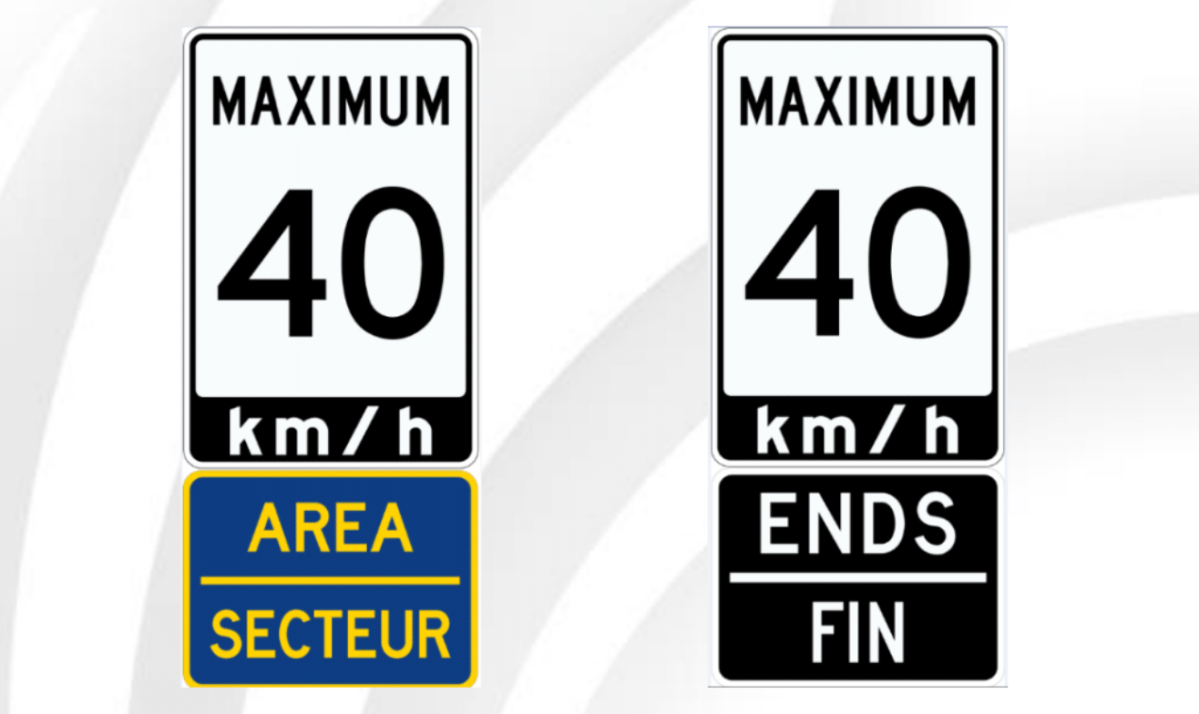
The City of Ottawa is moving ahead to implement new so-called “gateway” signs demanding vehicles slow down to 40km/h in certain residential areas – but the current budget for the initiative means it’ll take about 30 years before the signs are installed citywide.

The 40km/h signs will be placed at the entrances and exits of a designated residential zone – rather than being posted every 300 metres in the area, as the law previously required for speed limits lower than the default 50 km/h.
The city’s traffic services department currently has an annual budget of $50,000 to spend on the new gateway signs, which restricts the rollout to only one neighbourhood or residential “pocket” in each of Ottawa’s 23 wards every year.
Staff have pegged the total cost of the initiative at $1.58 million – meaning it would take the municipality, at its current pace, 31 years to place the new signs in every community.
City staff are “exploring funding options” to accelerate the project, traffic operations manager Chris Brinkmann told members of the transportation committee on Wednesday.
The city’s ability to establish lower speed limits using these gateway signs comes after a nine-year lobbying effort at Queen’s Park. The Ontario government gave municipalities the green light this spring, and the regulatory changes kicked into gear on May 1, 2018.
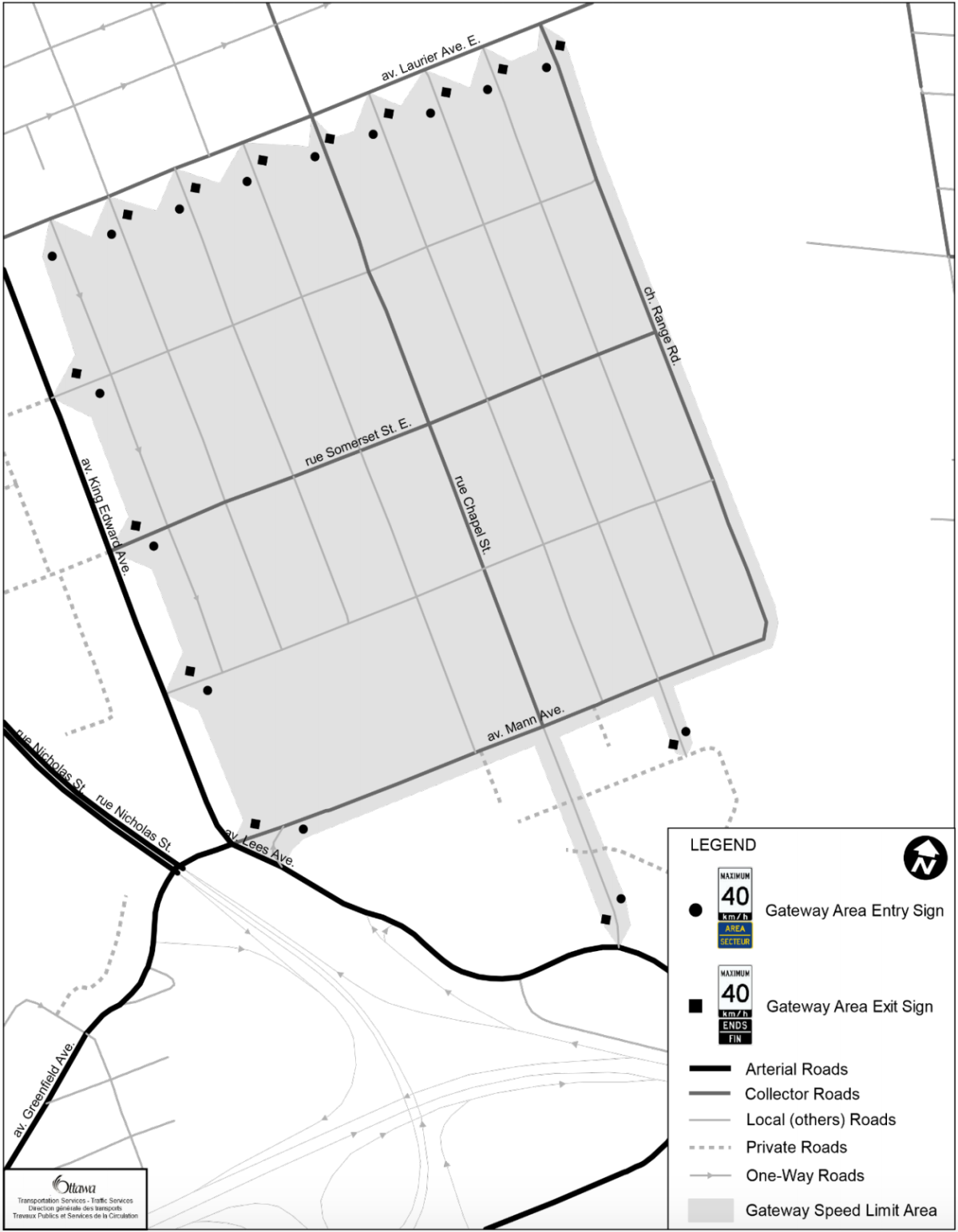
Brinkmann told the committee the new gateway notices will help reduce the number of speed limit signs in a designated area. He used the example of a residential zone in Sandy Hill, bordered by King Edward Avenue, Laurier Avenue East, Range Road and Mann Avenue. With the changes, the number of signs in that pocket would drop from 125 to 30 signs, Brinkmann said.
A new speed zoning policy that Ottawa city council passed in 2009 established that a limit of 40 km/h would be more appropriate on local residential streets.
But, because of the high cost of installing so many new signs, that policy required residents of existing communities to go through the effort of petitioning the city if they wanted a speed limit lower than 50 km/h. New subdivisions, meanwhile, would automatically become 40 km/h zones.

Get daily National news
Somerset Coun. Catherine McKenney, who is running to serve a second term in this fall’s municipal election, still doesn’t think 40 km/h is slow enough – particularly on residential streets in her downtown ward. She said she wants to see a default speed limit of 30 km/h on all residential roads.
“I hear from people all the time and they’re always looking for 30 kilometres,” McKenney said after Wednesday’s meeting.
However, Gloucester-Southgate Coun. Diane Deans, also running for re-election, argued there’s a difference between driving in the downtown core and commuting in more suburban areas, and that imposing 30 km/h on all residential roads in the city might not be appropriate.
John Manconi, Ottawa’s general manager of transportation services, told McKenney he would have to look into whether the city could legally make that change – but he said the city would support consultations with communities who want lower speed limits.
- City of Calgary says wild weather swings have pothole crews playing catch-up
- Woman killed, child airlifted to hospital after crash near Brooks: Alberta RCMP
- ‘They’re intense’: Transport Canada seeks feedback on bright vehicle headlights
- B.C. government urged to make Sea to Sky Highway safer as crashes increase
-
![]() New Brunswick highway re-opened after 48 hours of remedial work to clean major fuel spill
New Brunswick highway re-opened after 48 hours of remedial work to clean major fuel spill -
![]() Residents continue push for changes at a Seton intersection after pedestrian hit
Residents continue push for changes at a Seton intersection after pedestrian hit -
![]() Winnipeg construction season disruptive but necessary, city councillor says
Winnipeg construction season disruptive but necessary, city councillor says -
![]() Electric vehicle enthusiasm up as gas price soar in Alberta
Electric vehicle enthusiasm up as gas price soar in Alberta


“It’s not one-size-fits-all,” he said.
The new gateway signs will only apply to residential streets and roads connecting those smaller streets to main arterial roadways – and will be automatically installed in any new subdivisions. Staff said they’d work with councillors to determine which residential areas in their respective wards would get priority.
The transportation committee on Wednesday approved the traffic department’s approach to rolling out the new gateway signs. City council will have the final say on the matter at its next meeting, scheduled for Aug. 29.
The decision whether to increase the annual budget for the signs’ installation will be up to the new council elected this fall.
City aiming to launch photo radar in school, community safety zones in 2019
In other traffic news, the transportation committee also heard on Wednesday that the city is aiming to launch photo radar in school zones and designated “community safety zones” in 2019.
Brinkmann told councillors the Ontario government passed legislation last year allowing the use of photo radar technology in those specific areas – but hasn’t yet given municipalities the technical regulations.
In the meantime, city staff have been working to gather speed data in all of Ottawa’s school zones and determine the best locations to install photo radar, Brinkmann said. Staff have complete data from 72 out of 370 schools, he said, and will aim to finish up their data collection before the winter.
Asked after the meeting whether a 2019 start date is realistic, Brinkmann simply re-iterated it’s the city’s goal.
“We’re trying everything in our power to do that,” Brinkmann said.
Brinkmann said it’s still unclear whether the photo radar cameras will be mounted on trailers or vehicles, or installed permanently in the field.
Some councillors suggested future revenue from photo radar could help fund other traffic projects, like the new gateway speed limit signs.
City staff also told the transportation committee the traffic department needs more money to repaint fading road markings more frequently – and another truck to carry out that work.


Comments
Want to discuss? Please read our Commenting Policy first.