


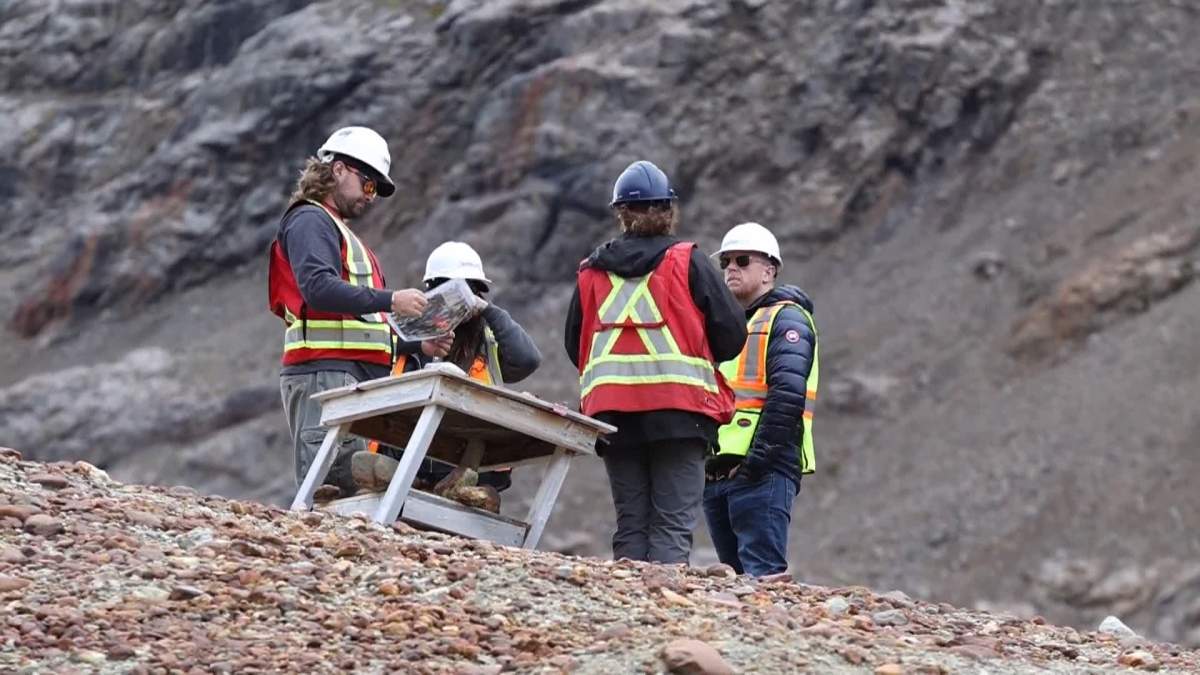
A huge mining project in a remote part of Northern B.C. is at the centre of a complicated legal fight that is seeing several First Nations disagreeing with each other.

The Seabridge Gold KSM Project is being described as one of the world’s largest undeveloped gold reserves and will be Canada’s largest gold mine if it goes ahead.
In 2024, the province’s assessment officer ruled that the project had substantially started, but last week, the B.C. Supreme Court ruled the province needs to reconsider that designation and engage in consultation with the Tsetsaut Skii km Lax Ha Nation (TSKLH).
The Nisga’a Nation and Tahltan Nation support the project and the province’s substantial start decision for KSM and do not think they need to consult with TSKLH.
“We are the rights holders and decision makers for our respective Territories,” they said in a release.
“We reject the claims being made by others to projects in our Territories, including the group calling themselves the Tsetsaut Skii Km Lax Ha Nation (TSKLH).”
“Our position is clear: the Nisga’a Nation and the Tahltan Nation do not recognize the TSKLH as holding any Aboriginal rights or title within our respective Territories and we firmly reject the claims being made by TSKLH in relation to the KSM Project, which is in Tahltan Territory and in the Nass Area and Nass Wildlife Area (as those terms are set out in the Nisga’a Final Agreement).”

The Nisga’a Nation and Tahltan Nation said any claims to land or rights in that area are “opportunistic and unsupported.”

Get breaking National news
Ryan Beaton, a lawyer at Power Law in Vancouver representing the TSKLH Nation and Chief Darlene Simpson, told Global News that in 2023, the area where KSM proposes to put its waste facilities was assessed, and the provincial government found that all evidence suggests that it is in TSKLH territory.
“The court agreed with us that the province essentially disregarded its own conclusions about whose territory is at stake, and that’s what amounted to a failure to adequately consult,” Beaton said.
The Nisga’a Nation and Tahltan Nation said in a recent release that they have seen an approach to consultation on major projects in B.C. that has expanded which groups can participate in environmental assessments for major projects.
“This approach has led to increased claims to consultation by groups with unsupported, marginal or speculative claims. This approach has created uncertainty and disrespected treaty rights and proper rights and title holders,” the nations said.
- Alberta to begin search for new privacy commissioner as UCP deny contract renewal
- New act allows Alberta step in on natural gas pipelines — if private sector falls short
- Minister defends not initially banning college with surging OSAP usage
- Alberta proposes new limits, penalties for provincial voter list after privacy breach
-
![]() Three weeks after the Nackawic pulp mill closed, the community is feeling the effects
-
![]() Oromocto River Bridge closure lengthening commutes, impacting businesses
-
![]() A two-day convention aims to answer the question of how to build more and better housing
-
![]() ‘Low-cost labour and higher rents’: Poilievre blames short supply of doctors, housing on immigration


“We are very concerned that BC’s approach to consultation on projects such as KSM appears to be empowering groups who do not have the obligations held by rights holders to attempt to hijack and derail project reviews.”
The TSKLH wanted to make it clear that they are not opposed to the project moving ahead, but they want to have their rights honoured and be consulted.
“They have members who work in mining,” Beaton said.
“It’s important to them, as it is for all British Columbians, to have a strong economy and to have good projects go forward, and they want to see it done efficiently. So they are not against development; they’re not against this project specifically, as long as it respects the rights and is done responsibly and sustainably.”

B.C.’s Golden Triangle is a huge region in the province’s northwest that has become a major focus of mineral exploration and mining projects.
The area is rich with deposits of gold, silver, copper, molybdenum, lead and zinc and has become central to Prime Minister Mark Carney’s nation-building agenda, with the North Coast Transmission Line expansion set to deliver power to those critical mineral and LNG developments.
The B.C. Mining Association estimates the projects in the Golden Triangle will generate nearly $800 billion in economic activity over the next two decades.


Comments
Comments closed.
Due to the sensitive and/or legal subject matter of some of the content on globalnews.ca, we reserve the ability to disable comments from time to time.
Please see our Commenting Policy for more.