


The U.S. midterms produced a wave of landmark victories across the country Tuesday, including newly elected officials who are among the first Black, female, Latina, Native and openly gay leaders in their states and, in some cases, in the nation’s history to take office.

By late Tuesday, the country’s first Black female governor, the first Native American female governor, the first Native female senator, and the first openly gay male U.S. senator had been declared winners.


As of early Wednesday, the first Muslim U.S. senator joined the growing list of milestones.
Here is a breakdown of notable firsts and key wins from the 2026 U.S. midterm elections.
Keisha Lance Bottoms - Georgia
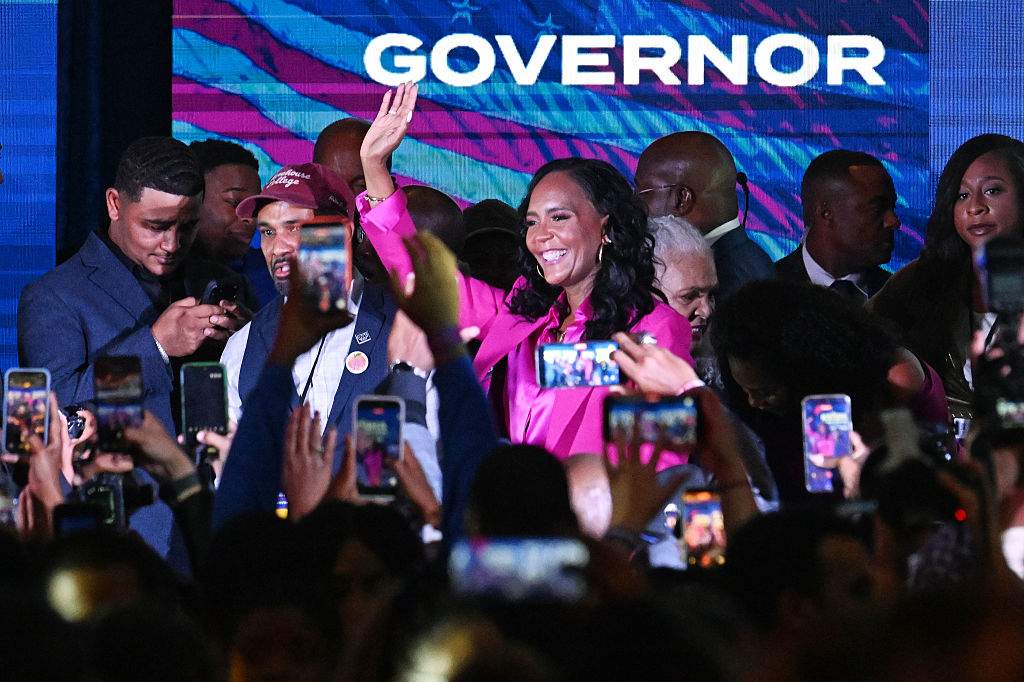
Keisha Lance Bottoms, who won the gubernatorial race in Georgia, will become the first Black female governor in U.S. history.
She will also be Georgia’s first governor of colour. All 83 of Georgia’s previous governors have been white men.
The former Atlanta mayor delivered Democrats a victory in one of the nation’s most contentious and closely divided political battlegrounds, defeating Republican candidate and billionaire businessman Rick Jackson.
During her victory speech Tuesday night, Bottoms said, “Georgia, we sent a message loud and clear that we want a leader who will put Georgia first and who will stand up to all the chaos coming out of Washington, D.C.”
“But even more importantly,” she continued, “you sent the message that in these times of division and acrimony, you believe in something foundational, and that is hope. And that is why we launched this campaign.”
Bottoms succeeds Republican Governor Brian Kemp, who is leaving office after completing two consecutive terms. Bottoms had previously served as a senior advisor to former U.S. president Joe Biden and as director of the White House Office of Public Engagement.
Until her election, Republicans had been in control of Georgia’s governor’s office for more than 20 years.
Chris Pappas - New Hampshire
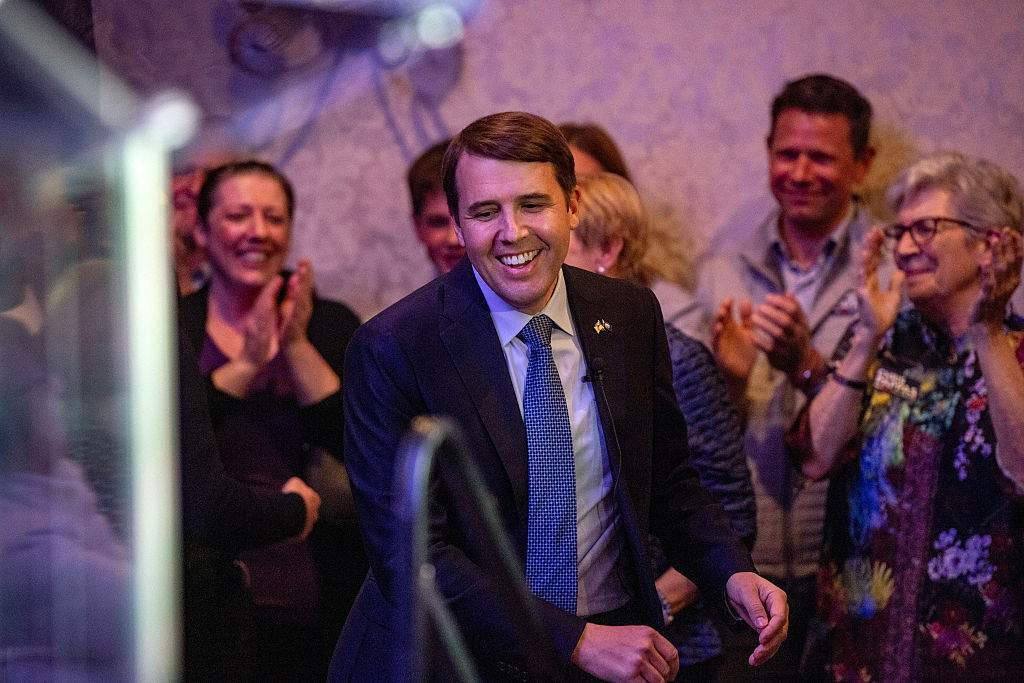
New Hampshire voters elected Chris Pappas, a former Democratic congressman, to the Senate on Tuesday, making him the first openly gay man elected to the U.S. Senate.
Filling the seat vacated by retiring Democratic Sen. Jeanne Shaheen, Pappas, known as a centrist voice in the U.S. House of Representatives, defeated Republican candidate and former U.S. senator John Sununu in a closely contested race.

Get daily National news
Pappas will be succeeded in the House by Shaheen’s daughter, Stefany Shaheen.
During his acceptance speech, Pappas thanked his husband, Vann Bentley, for his support. “The wrong person was on the ballot,” Pappas joked, after a crowd of his supporters greeted Bentley with a rapturous applause.
“He’s always been by my side, ” Pappas continued, “Tonight, win, lose or draw, I am the luckiest guy because I’m married to a man that I love.”
“It’s nice to know that love and truth prevail tonight,” he continued.
New Hampshire voters haven’t elected a Republican to Congress since 2010 and have voted for Democrats for president for over two decades, despite Republicans dominating at the state level in recent years. Its moderate electorate has long made New Hampshire a swing state.
Deb Haaland - New Mexico
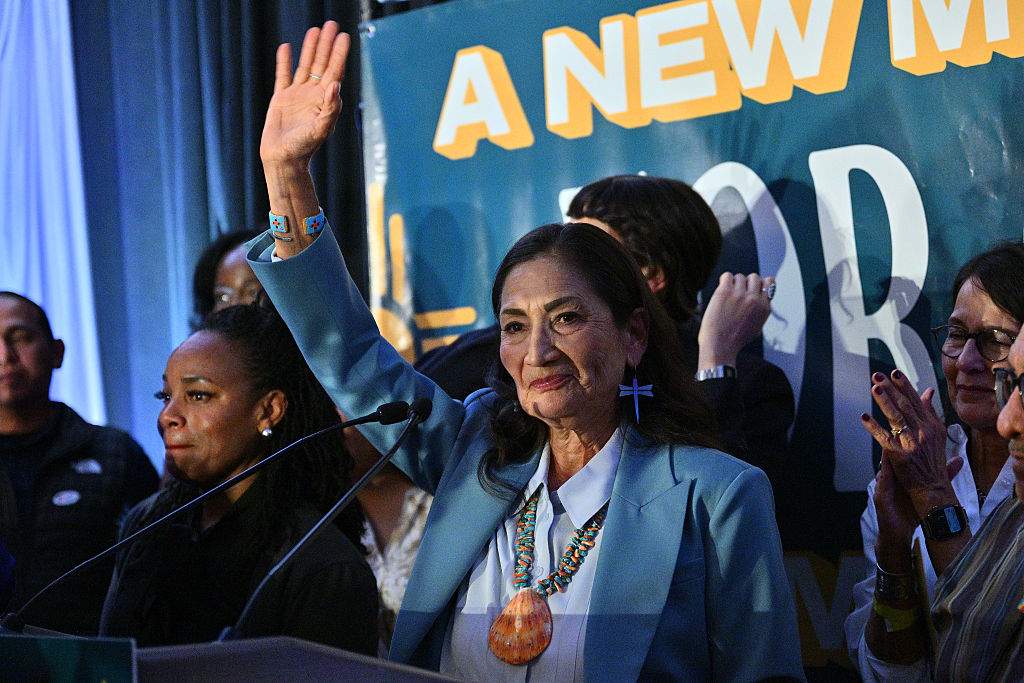
Deb Haaland, a former congresswoman and interior secretary, will become the first female Native American governor in U.S. history after securing victory against Republican candidate Gregg Hull in New Mexico on Tuesday night.
“Tonight our state proved that Democrats are entrusted to fight for our home,” Haaland said while declaring victory.
“New Mexico’s brightest days are ahead of us,” she added, “because I believe in a New Mexico that works for all New Mexicans. A New Mexico that embraces who we are, the care, the grit and the heart that we have to lead the nation,” she continued.
Haaland has been hailed as a trailblazing political figure, having achieved many firsts.
She was the first Native person to lead a state political party after being elected as chair of the Democratic Party of New Mexico in 2015, and was one of the first two Native American women elected to Congress. She was also the country’s first Native American cabinet secretary during the Biden administration.
Haaland takes over from the term-limited Democratic Gov. Michelle Lujan Grisham.
Abdul El-Sayed - Michigan
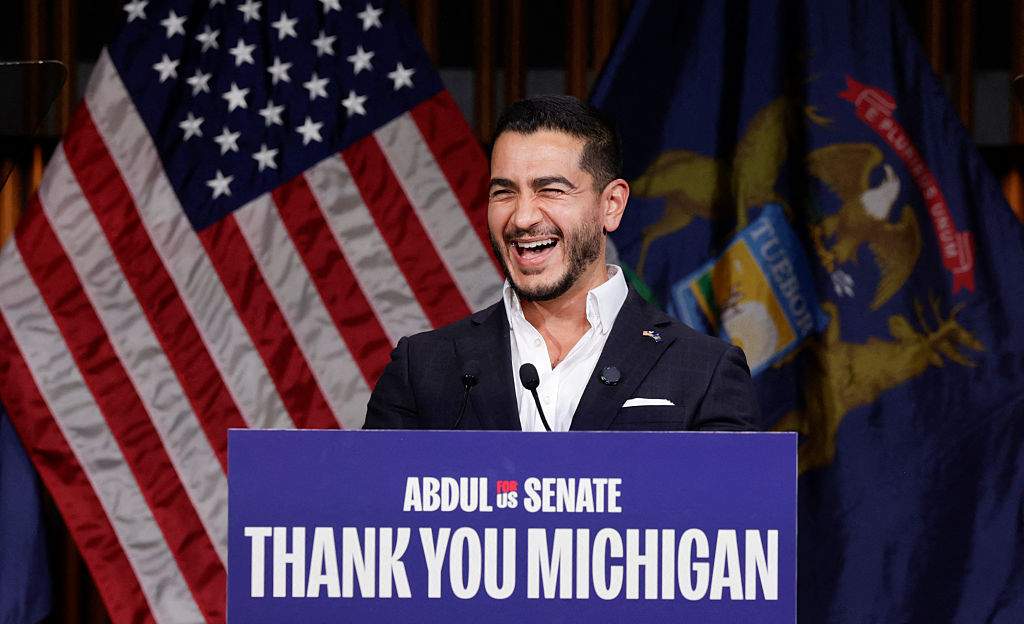
Abdul El-Sayed defeated Republican Mike Rogers in Michigan, making him the country’s first Muslim senator and marking a progressive Democratic win in a vital swing state.


El-Sayed, the son of Egyptian immigrants and a former public health official who has never held elected office, rose from a double-digit defeat in the state’s Democratic gubernatorial primary eight years ago to win a seat in the U.S. Senate.
During his campaign, El-Sayed faced attacks from Republicans, including President Donald Trump, who sought to link him to terrorist organizations without evidence and challenged his loyalty to the country.
In his victory speech, El-Sayed said Republicans “went all in on one of the ugliest campaigns that we’ve seen in our lifetimes.”
“They might have been pointing to my name and my faith, but we all know my name and my faith are not why you can’t afford your gas,” he said.
Backed by progressive heavyweights like Congresswoman Alexandria Ocasio-Cortez —who was re-elected in a landslide as the representative for New York’s 14th congressional district— El-Sayed built his 2026 campaign around universal healthcare, removing outside funding from elections and staunch criticisms of Israel.
“You took a chance on the unlikeliest of candidates,” El-Sayed told a Detroit crowd early Wednesday as he declared victory. “Thank you. This is all yours.”
Peggy Flanagan - Minnesota
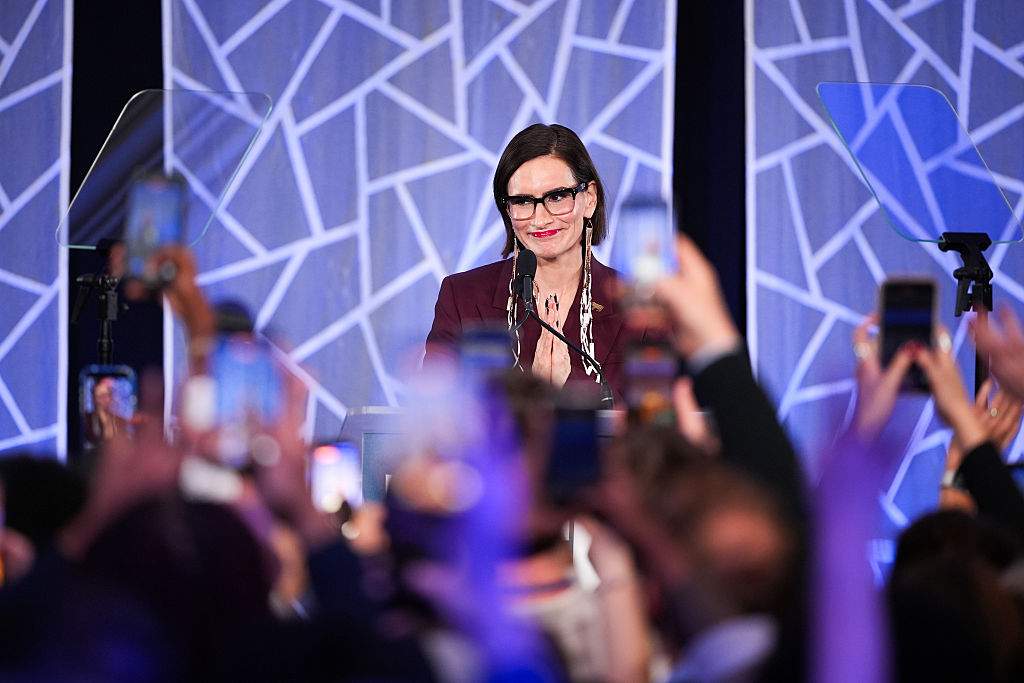
A citizen of the White Earth Band of Ojibwe, Minnesota Lt. Gov. Peggy Flanagan’s win over Republican candidate Michele Tafoya, a former NFL sideline reporter, made her the first Native American woman elected as a U.S. senator.
Tafoya, had she won, would have been the first Republican of Latina heritage to sit in the U.S. Senate.
“You just beat Donald Trump again,” Flanagan said during her victory speech.
That means “no more masked goons shooting our neighbours and terrorizing our communities. ”
Earlier this year, the state became a target of Trump’s anti-immigration campaign and saw the violent arrests of undocumented individuals as well as the fatal shootings of Renee Good and Alex Pretti, two American citizens, during government-sanctioned ICE raids.
Flanagan called out President Trump’s priorities and propensity to legislate in favour of the ultra-wealthy, “No more ballrooms, no more bombs or tax breaks for billionaires,” she continued.
Her victory extended the Democrats’ Senate -winning streak in a state that has not elected a Republican senator since 2002.
Other notable victories
The U.S. went from having only three elected Black governors in its 250-year history to gaining several more overnight.
Maryland Gov. Wes Moore, the only current Black governor, won re-election on Tuesday. Republican Byron Donalds in Florida and Democrat David Crowley in Wisconsin were elected as the first Black governors in their states, alongside Bottoms in Georgia.
Voters also ousted legacy Republicans in Texas, electing James Talarico to the Senate, who defeated Republican candidate Ken Paxton. Talarico’s victory will make him the state’s first Democratic senator since 1988.

Female candidates were among those who made gains across the country.
Democrat Amy Acton was elected the first female governor of Ohio, and Republican Marsha Blackburn will become the first woman governor of Tennessee.
Latino candidates vying for office successfully secured victories in several states.
Texas elected Democrat Gina Hinojosa as governor, making her the state’s first Latina in the role, ending its more than three-decade-long era of Republican gubernatorial control and Republican Greg Abbott’s 12-year tenure as governor.
Democrat Xavier Becerra, the former congressman, attorney general of California and U.S. health and human services secretary under Biden, was elected California’s first Latino governor since 1875, succeeding Democrat Gavin Newsom, who was unable to run after serving two terms.
In Alaska, Mary Peltola, who is Yup’ik and a Democrat, could also become the first Alaska Native U.S. senator. Votes in her race to unseat Republican incumbent Sen. Dan Sullivan are still being tabulated.
— With files from the Associated Press and Reuters


Comments
Want to discuss? Please read our Commenting Policy first.