


A newly established insect species is contributing to the spread of Dutch elm disease in Edmonton, where officials have confirmed 17 cases of the tree-killing illness so far this year.

Dutch elm disease is caused by a deadly fungus that spreads through elm roots and by a specific species of bark beetle that carry the fungus from tree to tree. It doesn’t infect other tree species.
The fungus clogs the elm tree’s water-conducting system, causing the leaves to wilt and the tree to die, usually within one or two seasons.
According to the Alberta government, the disease can kill an individual elm tree in as little as three weeks. The whole population of elms in a community can easily be destroyed within a decade.
Dutch elm disease poses a significant threat to Edmonton’s urban forest, with approximately 90,000 elm trees making up 22 per cent of the city’s open space and boulevard tree inventory.
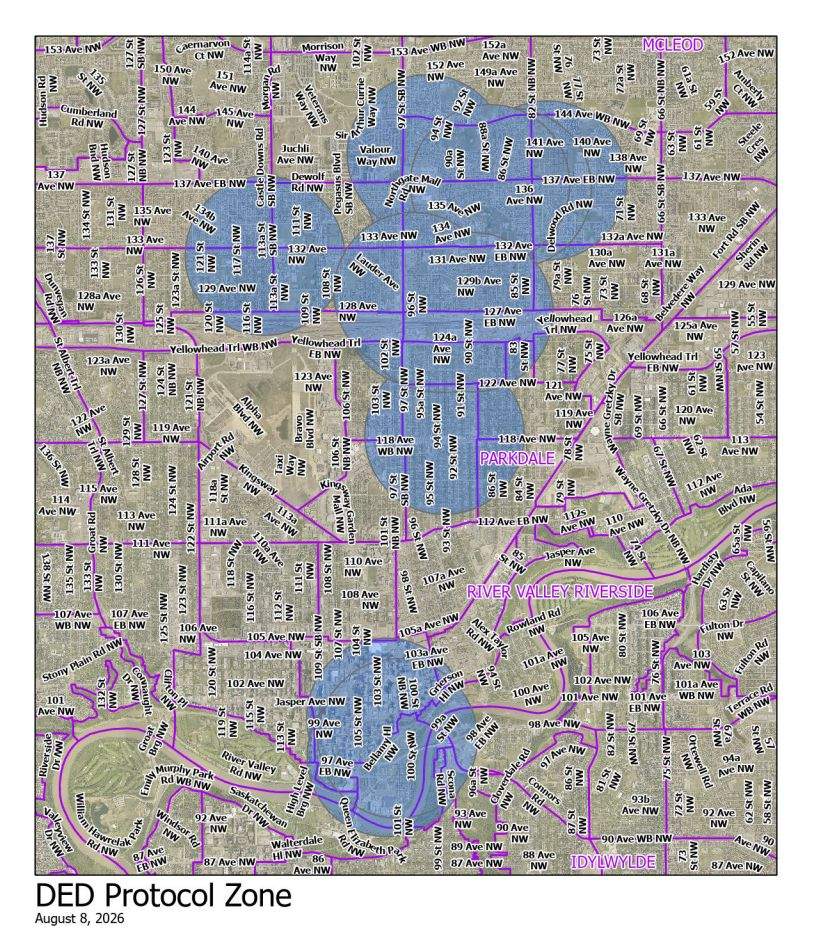
The City of Edmonton says several of the newest cases have been identified in clusters in the Killarney, Glengarry and Rossdale neighbourhoods.

The trees in both the downtown area and Delwood neighbourhood mark the 15th and 16th cases confirmed earlier in August. In July, three other cases were detected in trees in Calder, Northmount and also in Rossdale.
“This year we’ve had several more Dutch elm-positive trees. Most of them have been within that same cluster area, kind of spreading out from that central area,” said Mike Jenkins, a biological sciences technician and the City of Edmonton’s senior scientist.
“These are all largely brand new cases that we’re finding, very shortly after the initial infection.”

Get breaking National news
Officials say the banded elm bark beetle is playing a significant role in spreading the disease.
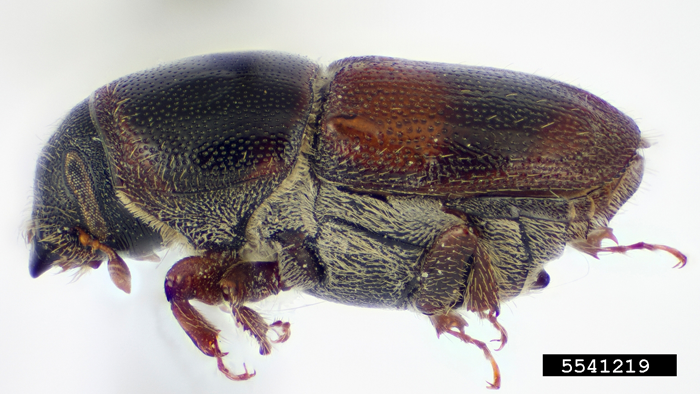
The beetles breed under the bark of dead or dying elm wood. The new generation of beetles emerge from a diseased tree, carrying the fungal spores with them. The beetles then infest healthy elms on which they feed — spreading the disease.
“We have identified a few trees that have evidence for banded bark beetle and removed several of those ones, including a large cluster of city trees near the Rossdale detection,” Jenkins said.
Locating and eliminating sources of infection will be critical to limiting the disease’s spread.
“It’s going to be the key to stopping Dutch elm disease within the city — finding those reservoirs and getting rid of them,” he said.
The bugs are very small — the province says banded elm bark beetles are an average of 3 mm long.
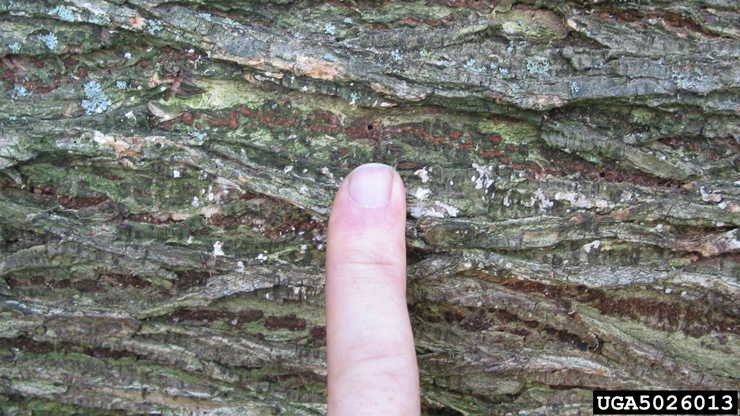
If the beetles are present, their emergence holes can sometimes be found on the bark and are the size of the diameter of a pencil lead. You may also find sawdust on the bark, indicating burrowing beetles.


The banded elm bark beetle is expected to be more resilient than other beetle species previously associated with the disease.
“Probably going to survive our winters much better than the European bark beetle ever did,” Jenkins said.
The city says crews are intensifying surveillance and monitoring efforts in response to the beetle’s presence and the growing number of Dutch elm disease cases.
Dutch elm disease is caused by a fungus that blocks a tree’s ability to transport water and nutrients, eventually killing infected elms. Officials routinely monitor for symptoms and remove infected trees to help prevent further spread.
Before this summer, the city had confirmed infections in seven trees since the disease was first detected in Edmonton in August 2024.

At that time, the city said it was not possible to determine how the disease ended up in Edmonton, but said DED it is often introduced to new regions through firewood or by importing infected trees.
Since its introduction from Europe in about 1930, Dutch elm disease has destroyed millions of American elm trees across North America.
Signs of Dutch elm disease:
• From June to July, leaves on one or more branches of an infected elm tree may wilt, droop and curl. Infected leaves usually turn brown and stay on the tree
• Elm trees infected later in the summer will have leaves that droop, turn yellow and drop prematurely. It is easy to confuse these late-season infections with normal seasonal colour changes
• Peeling back the bark on infected twigs reveals brown staining in the sapwood
For more information, visit the city’s page on Dutch elm disease.


Comments
Comments closed.
Due to the sensitive and/or legal subject matter of some of the content on globalnews.ca, we reserve the ability to disable comments from time to time.
Please see our Commenting Policy for more.