


Bike Share Toronto is looking at introducing a loyalty program, among other revenue streams, in a bid to end years of operating at a financial loss.

The new revenue streams, which include digital advertising networks, feature upsells and advanced reservations, were detailed in a report adopted by the Toronto Parking Authority (TPA) on Friday.
That report detailed a new five-year strategy for the program, which is managed by the TPA and is set for yet another record year in ridership.
“By year-end, BST ridership is forecasted to reach a record 8.1 million trips powered by a fleet of 10,251 bikes including 2,319 e-bikes across all 25 wards,” the report reads.
“Our proposed strategy is thus grounded in a new aspirational vision: To inspire and mobilize one million unique BST customers and establish Bike Share Toronto as a trusted, valued and indispensable transportation option for residents and visitors alike. Our winning objective is to build a network that will generate 14 to 16 million trips per year by 2030 representing a 70 to 100 per cent increase versus 2025.”
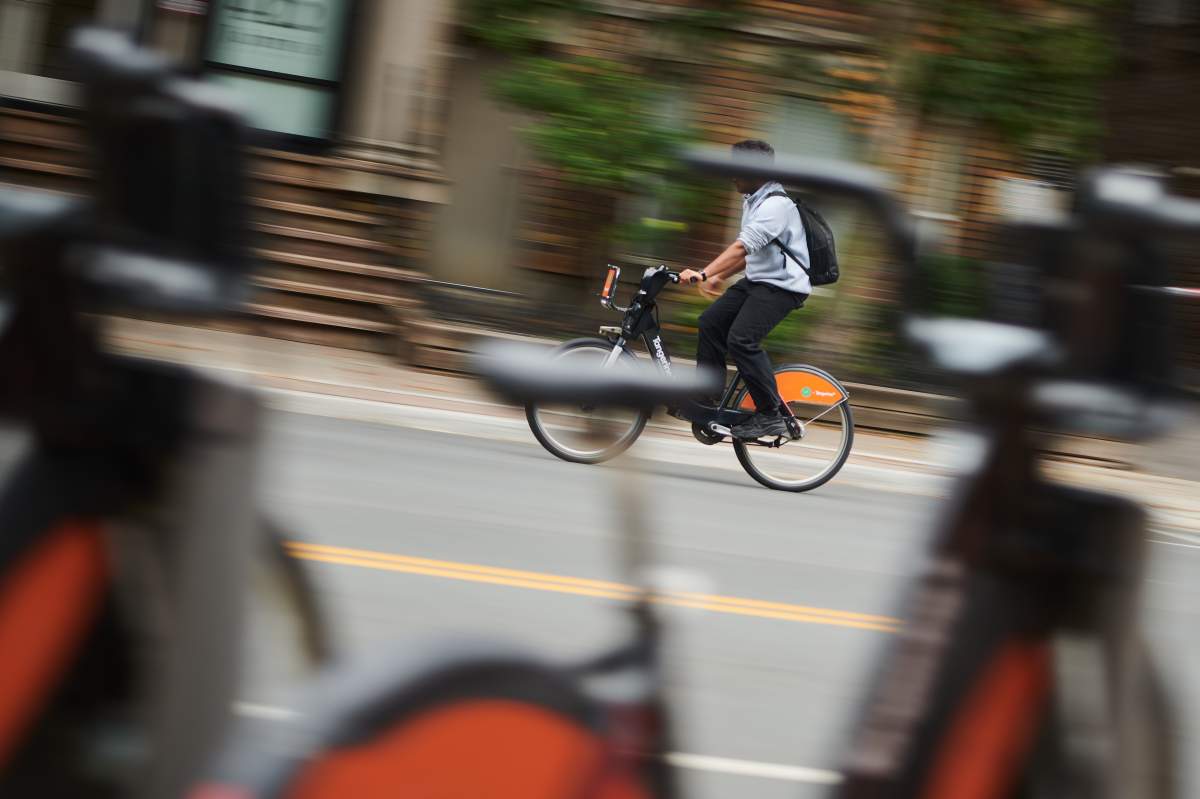
To execute its new strategy, the TPA is seeking $41.7 million over five years for e-bike fleet expansion, e-charging docking points, station densification and supporting digital infrastructure; $3.5 million annually will be allocated for state of good repair to enhance system reliability, resiliency and security.

Get daily National news
BST began as Bixi Toronto in 2011, with 1,000 bicycles available from 80 locations primarily in the downtown core.
The TPA took over the program in 2014, giving it its current name and expanding it into a citywide network.
Bike share users can access the system by either using the mobile application or by purchasing passes at a physical station. Pass options include pay-as-you-go, day trips or annual memberships, which include a certain number of unlimited-minute rides.
Ridership has soared annually over the past five years, the city’s transportation department said in its 2024 Cycling Year in Review report. In 2020, 2.9 million bike share rides were logged. In 2024, that figure sat at 6.9 million.
However, the program is still operating at a financial loss; in 2024, the network pulled in $13.4 million in revenue but had $16 million in expenses. However, that revenue figure grew by $2.9 million compared with 2023, the Bike Share Toronto 2024 Business Review indicates.
- Bodies of 2 paddleboarders recovered from Browning Lake in Squamish
- Calgary lost 23% of its treated water last year to leaks. What’s the plan to fix it?
- Heavy rainfall, snowpack melt has Canmore dealing with localized flooding
- Breakaway rope rodeo qualifiers win final spots for Calgary Stampede 2026


In its new five-year strategy, the TPA said BST will create a “sustainable funding model” through its new revenue streams.
“Integration with TPA’s future mobility loyalty platform will strengthen customer value and lifetime contribution. Strategic partnerships, sponsorships, and the City’s One Fare system will further embed bike share within Toronto’s broader transit economy, unlocking recurring opportunities,” the report reads.
“Together, these measures will create a durable, diversified, and affordable funding framework that positions BST for sustained growth and long-term financial resilience.”
The report added that electrification continues to be key for future growth, and the TPA plans to expand the network with 70 new e-stations, 1,660 e-docks and 2,550 additional e-bikes over the next five years.
“A next-generation e-bike platform, supported by GPS-based analytics, will optimize charging, rebalancing, and maintenance operations,” it reads.
“By targeting corridor-based density and bundling installations with planned civil works, BST will deliver a scalable, cost-efficient electrification model that accelerates growth while reducing congestion and emissions.”


Comments
Want to discuss? Please read our Commenting Policy first.