




The residents of Swan Hills were told Monday to be ready to flee within an hour’s notice — and by suppertime, that order came.

An Alberta Emergency Alert issued at 6:16 p.m. said the fire was seven kilometres away from the town — closer than in the morning — so the community’s 1,300 residents were told to evacuate south with their pets, important documents, medications, a full tank of fuel and enough supplies to be away from home for at least three days.
The Town of Swan Hills said a reception center has been set up at the Allan & Jean Millar Centre in Whitecourt, located about 80 kilometres to the south, and all residents were asked to register there.
For those who can’t drive themselves, the town said a bus at the Keyano Centre parking lot will give them a ride.

The Edith Lake wildfire broke out Sunday near the community.
As of Monday afternoon, the 2,000-hectare out-of-control blaze was about seven kilometres north of Swan Hills and three kilometres west of Highway 33 — the only road north of town. (That’s a change from the morning, when it was eight kilometres from the town and five from the highway.)

Get daily National news
On Monday afternoon, Alberta Wildfire said the highway had been closed due to smoke causing poor visibility and strong winds from the northwest caused the wildfire to increase in intensity on the east side.
On Tuesday, two wildland urban interface crews and a high volume water delivery system are being deployed to Swan Hills, when an incident command team and additional fire crews are expected to arrive.
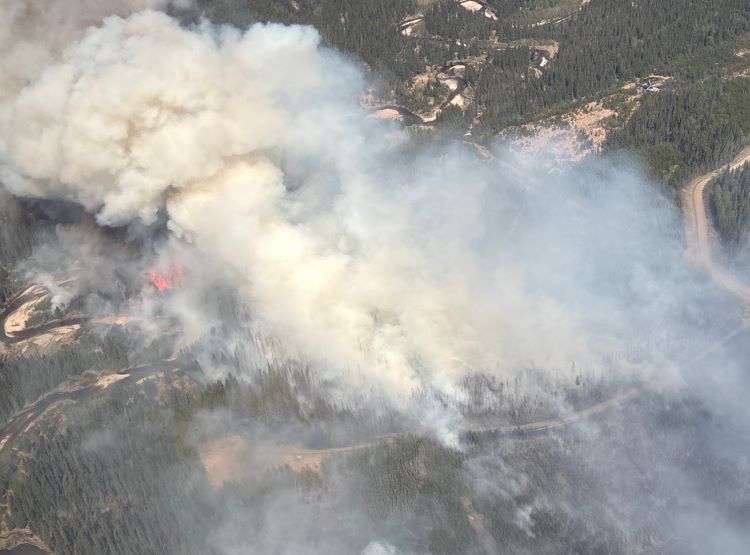
Monday will be an active weather day across Alberta, Environment and Climate Change Canada forecasted, and the emergency alert on Sunday night said a change of winds could force an evacuation.
The community was forced to flee under similar circumstances two years ago.


The fire risk in that part of Alberta was extreme on Monday — the top of the chart — Alberta Wildfire said in their daily update for the Slave Lake forest area, due to hot, dry and windy conditions.
Strong winds are gusting across Alberta, combined with rising temperatures in the mid-20s and thunderstorms in the forecast — all elements that help to fuel existing fires and provide the prime conditions for new blazes to break out.
“A north-south oriented trough combined with a cold front that will move from west to east across Alberta will initiate showers and thunderstorms,” Environment Canada said.
“These high-based thunderstorms will move quickly, making strong wind gusts, up to 100 km/h, the primary threat. Nickel-sized hail is also possible in central and northern regions.”
Alberta Wildfire said a night-vision-equipped helicopter, firefighters and three heavy equipment groups worked through the night to contain the southern side of the fire near Swan Hills.
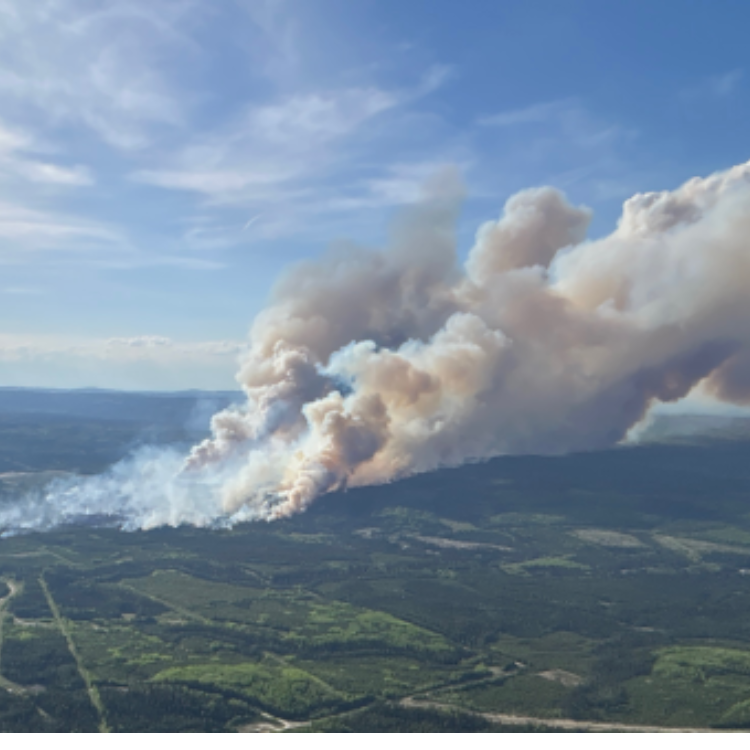
Water skimming air tankers also joined the fight against the fire on Monday morning, and a wildland urban interface crew will be joining firefighters to do assessments in the Swan Hills area later Monday.
Temperatures will be cooler on Tuesday, however by midweek, Environment Canada said daytime highs are expected to be near 30 C again for much of the province.
— More to come…


Comments
Want to discuss? Please read our Commenting Policy first.