


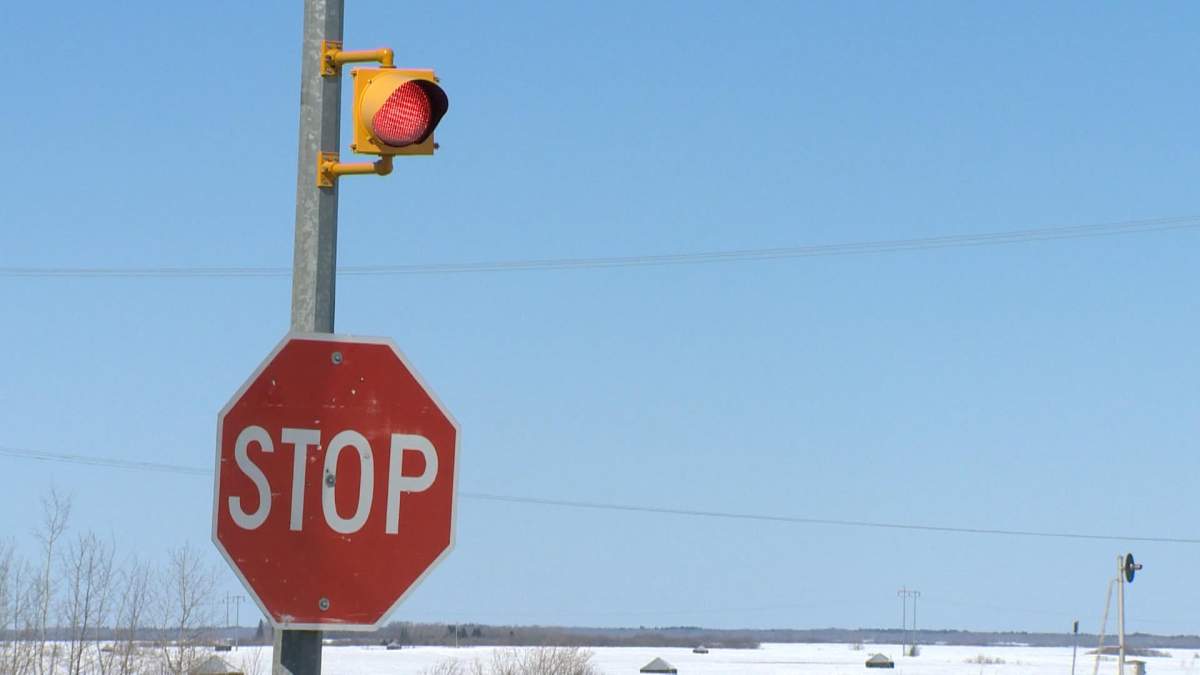
Putting your best wheel forward is crucial at intersections, especially during the winter when conditions may not be ideal.

That is why SGI said it is once again turning its monthly traffic safety spotlight for January on intersection safety.
“A lot is happening at intersections — lights are changing colours, pedestrians are crossing, and vehicles are stopping and going,” said Penny McCune, chief operating officer of SGI’s Auto Fund.
“That’s why it’s important for drivers to approach them carefully and cautiously.”
Read more: SGI rate rebalancing coming but not rebates
On average, 2,503 people are injured and 31 people killed yearly in collisions at intersections, SGI reported.
One of the leading causes of intersection collisions is road conditions. They can be prevented by slowing down when driving conditions are not ideal.

Get daily National news
SGI said if drivers reduce speed, they will have better control of their vehicles and have more time to stop.
Officials added that drivers should look for sand or bare pavement and drive in the lane or the part of the road that offers the best traction.
They also recommend switching to winter tires for maximum traction and control.
Other leading causes of intersection collisions are failure to yield, driver inattention and following too closely.
- Watchdog report prompts renewed calls for Indigenous people to run Indigenous procurement
- Nova Scotia tech experts say U.S. social media trial could have local ripple effect
- Ontario’s battered housing sector revises its projections down again
- Ontario moves to cancel SkyDome Act to free up downtown land. It’s not yet clear why


In November, SGI said 709 intersection violations were reported by police, including 270 drivers who disobeyed stop signs and 196 drivers who failed to obey a traffic light.
Those tickets can be avoided if drivers pay attention to what other road users are doing and by anticipating a change of a green light to avoid running an amber or red light, SGI said.



Comments
Want to discuss? Please read our Commenting Policy first.