




A Saint John-based group of volunteers has collected 250 masks for some of the city’s most vulnerable — in one week.

Masks in Need is a coalition of community members focused on getting homemade masks to members of the city’s shelter system during the coronavirus pandemic.
The masks can be helpful for recipients “if they’re going to go to the soup kitchen or they’re living together and they find it hard to distance,” said the group’s founder, Pam Pastirik.
Pastirik is a registered nurse who also teaches at the University of New Brunswick’s Saint John campus.
She saw the downtime created by the COVID-19 pandemic as an opportunity to put idle hands to work.
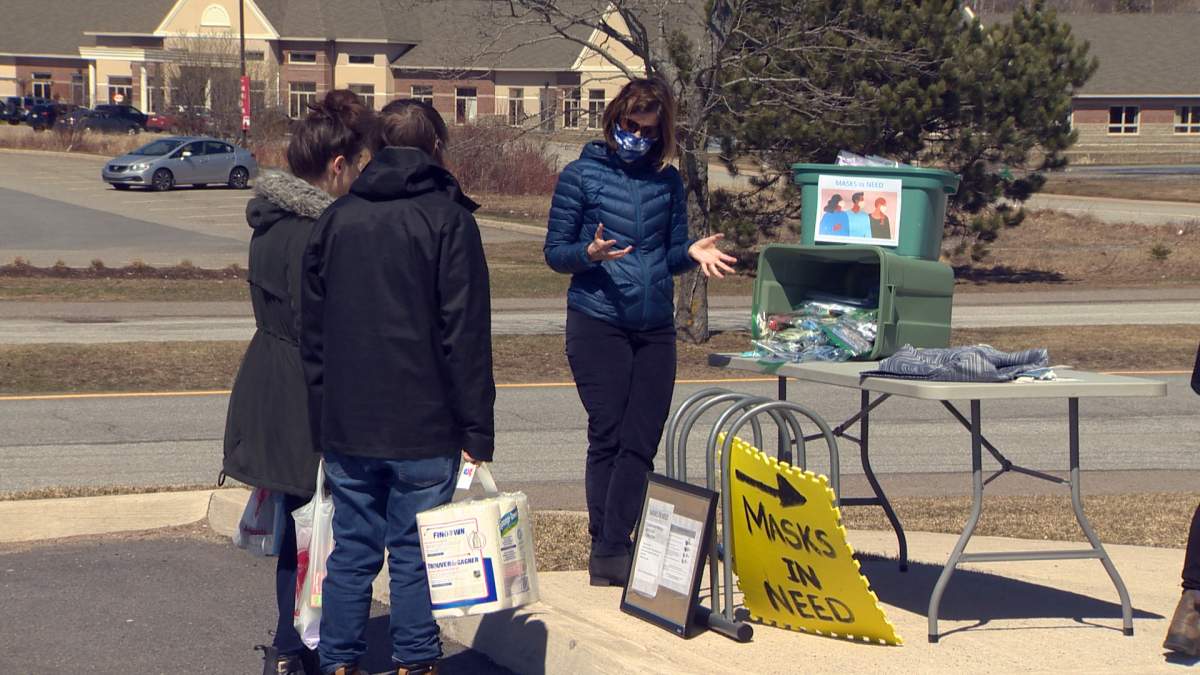
“All of the masks are sewn with love and care and a little bit of whimsy,” says Cathy Connolly, a member of Masks in Need.

Get weekly health news
“I think it’s an opportunity to show others that you do care and it will become a comfort measure as we go forward.”
The group got together in the University Avenue parking lot of Jean Coutu on Sunday, hosting a drop-off for completed masks and a material swap to get fabric and elastics into the hands of sewers.
“It was our first one,” says Pastirik. “We didn’t really know what the response would be.”
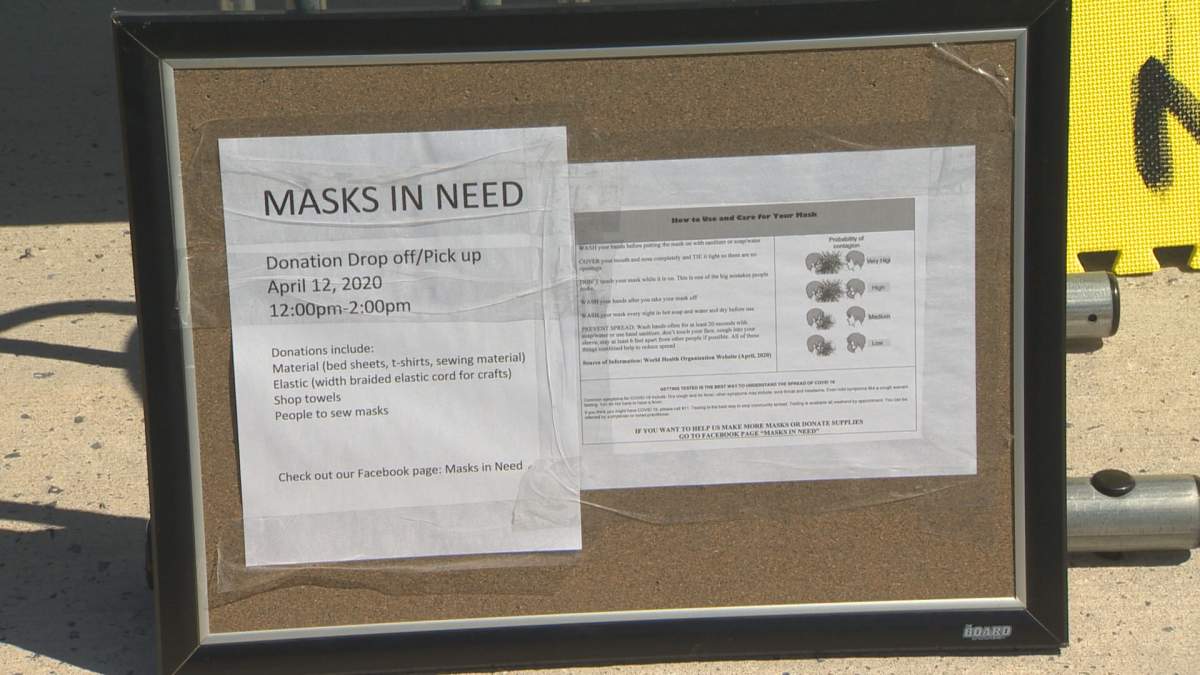


She says she’s encouraged by the turnout, and that the group will be back on April 19 from noon to2:00 p.m. for round two.
Pastirik says the group plans to take the masks to shelters in Saint John, like the Coverdale Emergency Women’s Shelter, Outreach and more.
“We’re trying to really just fill a need that is there,” she says.
Masks in Need co-ordinates through its Facebook page, where members also post pictures of some of the completed masks.
Questions about COVID-19? Here are some things you need to know:
Health officials caution against all international travel. Returning travellers are legally obligated to self-isolate for 14 days, beginning March 26, in case they develop symptoms and to prevent spreading the virus to others. Some provinces and territories have also implemented additional recommendations or enforcement measures to ensure those returning to the area self-isolate.
Symptoms can include fever, cough and difficulty breathing — very similar to a cold or flu. Some people can develop a more severe illness. People most at risk of this include older adults and people with severe chronic medical conditions like heart, lung or kidney disease. If you develop symptoms, contact public health authorities.
To prevent the virus from spreading, experts recommend frequent handwashing and coughing into your sleeve. They also recommend minimizing contact with others, staying home as much as possible and maintaining a distance of two metres from other people if you go out.
For full COVID-19 coverage from Global News, click here.


Comments
Want to discuss? Please read our Commenting Policy first.