

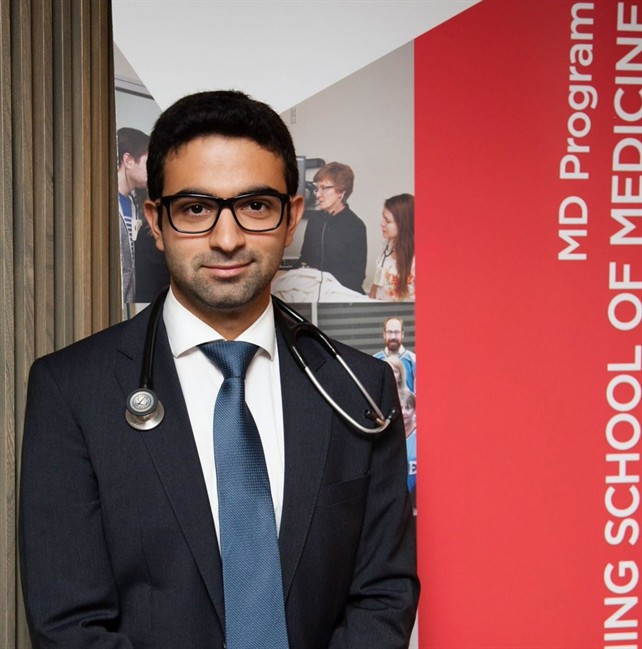
VANCOUVER – When Aref Bolandnazar flew home to New York 10 days ago after visiting family in Iran, he didn’t think to say a tearful goodbye to his wife — after all, she was just staying an extra week before she was supposed to return to the U.S.

But he hasn’t seen his wife since — when Roya Arabloodariche tried to check in on Saturday, she was told she was no longer admissible to the U.S. due to an executive order signed by President Donald Trump.

Get breaking National news
The couple are Iranian citizens who both hold advanced degrees from the University of British Columbia, and who obtained visas to live in New York while Bolandnazar completes his finance and economics PhD at Columbia University.
Arabloodariche, an electrical engineer, had hoped to get her green card and work in the U.S., but now, Bolandnazar says he expects them both to pursue their academic and career goals elsewhere — ideally in Canada.
The husband and wife are just two members of the academic community in North America who have been hurt by the order signed by Trump to ban entry of citizens from seven majority-Muslim countries for 120 days.
Universities Canada says the immigration ban is already having a “real, immediate and profound” impact on research partnerships, international students, academic conference participation and field visits, as well as family relationships.


Comments
Want to discuss? Please read our Commenting Policy first.