

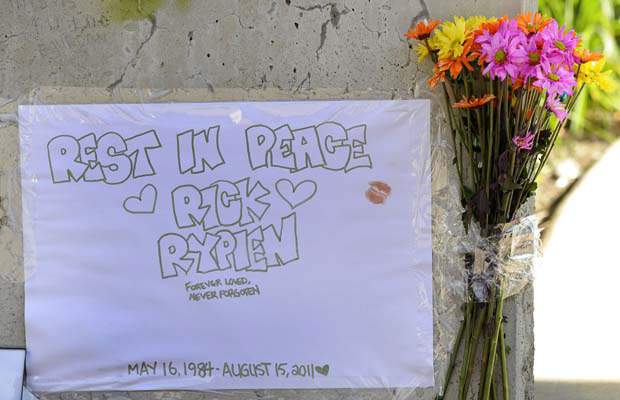
TORONTO – Alberta RCMP continue to investigate the “sudden
and non-suspicious” circumstances surrounding the death of Winnipeg Jets
forward Rick Rypien.

The 27-year-old was found dead in his Alberta home Monday
night.
Rypien had recently taken time away from the game to deal
with personal issues, rumoured to be related to depression.
On Tuesday, Winnipeg Jets assistant general manager Craig Heisinger confirmed Rypien had been dealing
with depression for at least a decade.
Longtime friend Jason Jaffray said Rypien appeared happy and
at peace, even talking about bringing the Stanley
Cup home to Winnipeg.
“Everyone knew he had some issues that he had to get
taken care of last year and he was definitely a new man when he came back,” Jaffray
told the Canadian Press Tuesday. “He was definitely the happiest I’d even seen
him.”
Though he played just nine games with the Vancouver Canucks
last season, Rypien was optimistic about his future in the NHL. Last month, the
scrappy enforcer signed a one-year contract with the Jets worth US $700,000.

Get breaking National news
In October 2010, Rypien was received a six-game suspension
for an altercation with a fan during a game against the Minnesota Wild, the
longest NHL suspension for a player-fan interaction since 1982.
Rypien took a leave of absence from the league one month
later, his second temporary withdrawal to deal with undisclosed personal
issues.
Depression and hockey
Though seldom discussed, depression and mental health issues
remain prevalent in professional sport.
Retired Maple Leafs right wing Ron Ellis wrote extensively of
his bout with depression in the 2002 book, Over The Boards: The Ron Ellis
Story.
Late Red Wings goalie Terry Sawchuck struggled with
untreated depression until his death in 1970.


Depression and anxiety are symptomatic of post-concussion
syndrome, common with hockey players, though PCS has not been linked to
Rypien’s condition.
While individual cases of PCS differ, athletes who have
suffered traumatic head injuries often experience a range of emotional,
behavioural and psychological changes such as mood swings, stress, apathy,
insomnia and depression.
The effects of a head injury can last several weeks or as
long as one year.
Facts on depression
According to Health Canada, major depression is defined by a
period of feelings of worthlessness and hopelessness lasting more than two
months. About 11 per cent of men and 16 per
cent of women will experience major
depression at some point.
Symptoms vary, but generally include: detachment from life, family and friends;
crying without apparent reason; lack of concentration; apathy; thoughts of
death; loss of appetite; change in sleep patterns; lethargy; and headache.
For help
with depression, including recovery methods and ways to minimize your risk,
visit Health Canada’s Healthy Living website, www.hc-sc.gc.ca.
—
With files from The Canadian Press


Comments
Want to discuss? Please read our Commenting Policy first.