

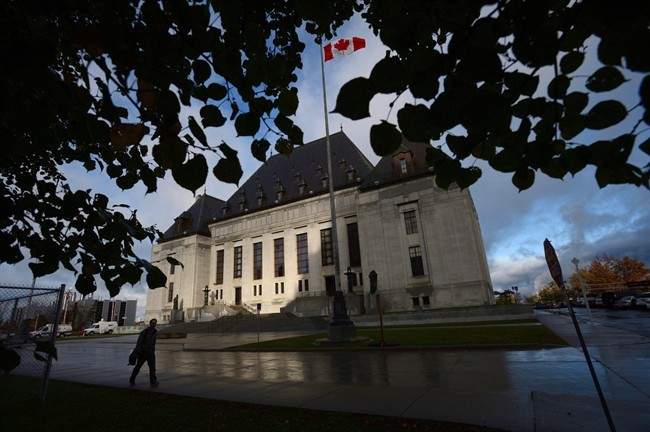
OTTAWA – The Supreme Court of Canada has ruled that retroactive changes to parole eligibility brought in by the Harper government are unconstitutional.

The top court was the third successive court to find that the March 2011 legislation was in clear breach of the Charter of Rights because it imposed new punishment on people who had already been tried and sentenced.

Get daily National news
READ MORE: Feds want to throw away key for ‘most heinous’ offenders: MacKay
The retroactive changes – which lengthened the amount of time a non-violent, first-time offender had to spend behind bars before being eligible for parole – were deemed by the court to be a form of double jeopardy.
- Penticton residents displaced due to safety risk from compromised crane following fire
- Late spring start, dry conditions to blame for intense Edmonton allergy season
- Lightning sparks out-of-control Saskatchewan wildfire, community on evacuation alert
- Marigold fined $120K for injury on Valley Line West LRT construction site in 2023


The ruling means dozens or more prisoners may be locked up illegally under the Conservatives’ Abolition of Early Parole Act.
The Supreme Court ruling is just one of a number of constitutional challenges being launched against the Harper government’s tough-on-crime legislative agenda.
It comes after a Justice department lawyer blew the whistle on what he says is lax vetting of new federal laws for their ability to withstand Charter challenges.


Comments
Want to discuss? Please read our Commenting Policy first.