

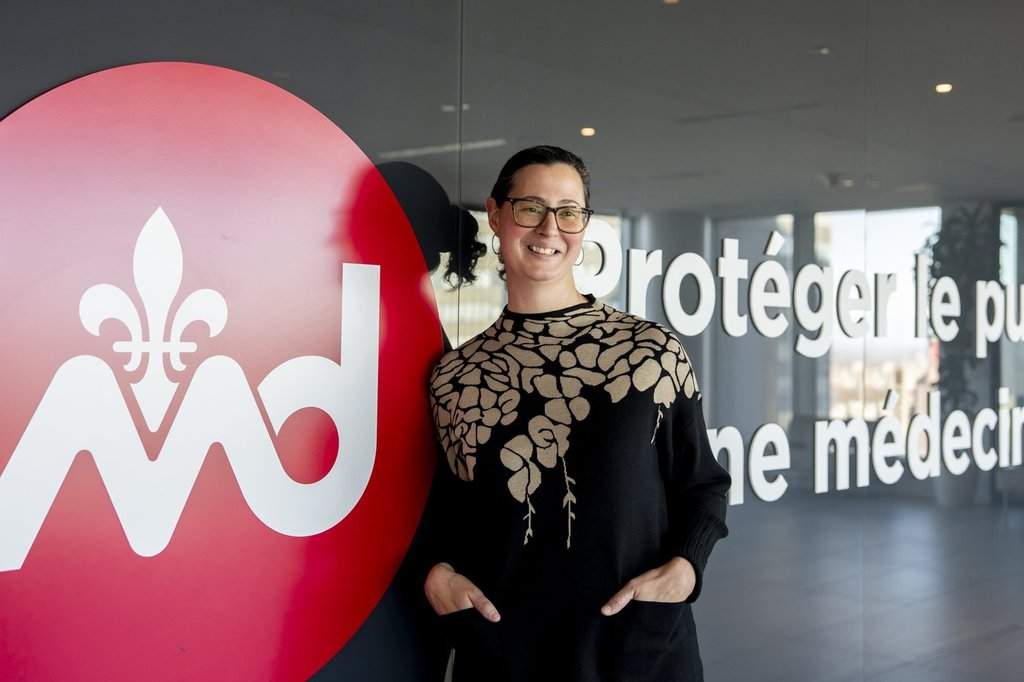
The new president of the Quebec college of physicians says her profession’s code of ethics needs to be modernized.

Dr. Nathalie Saad says medicine is practised differently from when the code of ethics was first written.
The code was overhauled in 2002, followed by another major revision in 2014.
Saad says she wants to incorporate new technologies into the code, including telehealth, as well as artificial intelligence and other digital tools.
She is the first woman to become president of the Collège des médecins du Québec since it was founded in 1847.
She says this is a reflection of the profession’s evolution.
Medicine is no longer a male-dominated profession. Among the college of physician’s active members, 56 per cent are women, and 67 per cent of medical school students are women.
Saad says she also wants to emphasize the importance of teamwork as she steps into her new role.

Get daily National news
The order’s board of directors will hold a first “reflection day” in December with a focus on interdisciplinarity in primary care.
She said the order will need to work hand-in-hand with other professional orders as it adopts changes.
“The codes currently operate very independently of one another. It’s a bit ironic because no one practices medicine in a silo anymore. Nurses, physical therapists, pharmacists — everyone works together,” said Saad, who is a pulmonologist.
Her presidency lasts four years, which means that during her term, the two physicians’ union will have to renegotiate their respective comprehensive agreements with the government, which expire in 2028.
- Canada-U.S. defence spat heightens as Pentagon prepared to ‘up the ante’
- Nova Scotia launches Support Our Troops licence plate benefiting military charity
- Nova Scotia pulls amusement ride’s licence after 5 children hurt at Christmas event
- Stellantis talks in ‘solution mode’, Joly says after meeting automaker’s envoy


Saad said the college of physicians will not interfere in the upcoming negotiations.
“That’s none of our business,” she said. “We already have our hands full with challenges as it is.”
One of these challenges is the digital transformation currently underway in the health care system.
Saad points out that not all professionals have access to the health records of patients under their care. For example, paramedics don’t have access to medication lists and other basic health information, she said.
“It’s very difficult to work as a team and ensure effective care pathways when information is fragmented,” said Saad, adding that her organization cannot address this issue alone.
Adapting to an aging population is also one of Saad’s key priorities. By 2030, one in four people in Quebec will be over 65.


Comments
Want to discuss? Please read our Commenting Policy first.