






This story is Part 5 of the Road to the Referendum series.

Part 1 on regular folks for and against separation can be found here. Part 2 about the border city of Lloydminster can be found here. Part 3 about the impact to First Nations can be found here. Part 4 on the possible economic impacts can be read here.
Albertans will decide whether or not the province should begin the process to pursue the idea of leaving Canada on Oct. 19.
A referendum to have a referendum, so to speak.
While the day will be a first for many, it’s the third time for Robert McAlear has participated in process of a separatism referendum.
“A pattern has emerged for me,” McAlear explained. “It’s trailblazing for people out here, but it’s my third time through this exercise.”
McAlear calls Edmonton home now, but he used to live in la belle province. First in 1980 and then again in 1995, McAlear cast his ballot during Quebec’s two referendums on whether or not to leave Confederation.
“I remember being nervous,” McAlear said. “I don’t know if it was ’cause it was the first time going to the polls, or because this was an important question that was being asked.”
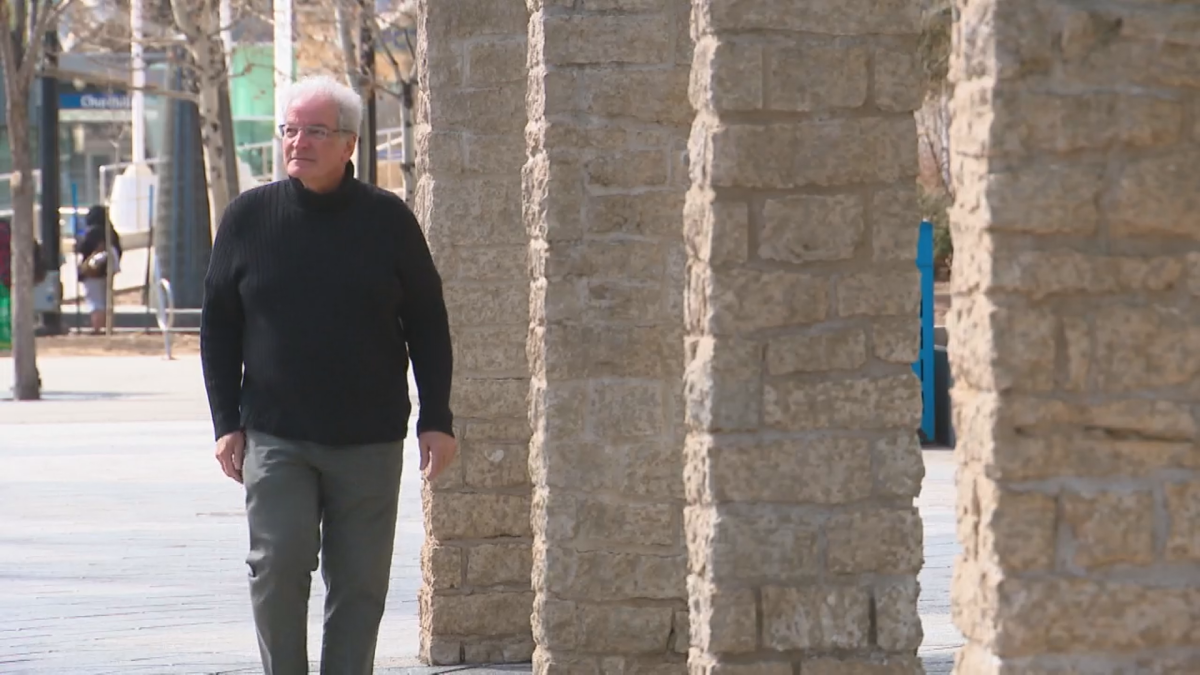
And each time the question was put to voters, McAlear began to notice similarities.
“What happened in 1980 and 1995, that I don’t think any politician would have anticipated, was the fact that politics sort of was turned into the kind of religious fervour that really pitted people against each other,” McAlear recalled.
“I don’t know if they’re unintended or intended, but it happened, I saw it happen in Quebec.
“Friendships ended, marriages ended.”
Both times, Quebec ultimately ended up choosing to remain in Canada.
The 1980 vote was 59.56 per cent in favor of staying in Canada to 40.44 per cent wanting sovereignty.
McAlear recalls at the time, only one political figure seemed to realize once the separatist door was opened — it couldn’t be closed.
“It was only Pierre Trudeau after the first referendum said, ‘We all lost a little,'” McAlear said.
“He was the only one that actually realized what had happened to society, that society had unravelled.”
The 1995 vote also rejected pursuing separation — albeit by a much smaller margin (50.58 per cent to 49.42 per cent.)

The societal change means the sentiment in Alberta could go from a referendum to a ‘never-end-dum,’ according to University of Alberta political scientist Jared Wesley.
He believes a push for independence will now be part of the province’s identity going forward.

Get breaking National news
“Separatism is now part of our public discourse — it’s now part of the governing party,” Wesley noted.
“It’s unlikely, if Quebec is any indication, to leave our politics any time soon.”
Convincing Albertans one way or another will be a challenge — polling this week by Ipsos for Global News indicates just two in 10 Albertans plan to vote on Oct. 19 in favour of holding a future binding separation vote.
But if a vote succeeds, convincing the rest of Canada after a yes vote? Even more so.
“As we saw in Brexit, if you’re campaigning for the status quo and not offering something better, then the vast majority of people who want to see things improved will be left unsatisfied,” Wesley said.
“You can imagine that scenario unfolding; most provinces are not going to be in a giving or generous mood to Alberta.”
The question residents will answer is: “Should Alberta remain a province of Canada — or — should the government of Alberta commence the legal process required under the Canadian constitution to hold a binding provincial referendum on whether or not Alberta should separate from Canada?”

But even with that finalized, those spearheading independence efforts — like Jeffery Rath, the lawyer for the Stay Free Alberta separatist group leading the movement — have complaints on how the question is being asked.
“Let’s have a referendum on having a referendum! Does that even kick it into 2027? Because there’s a law in the Alberta books that says you can’t have a referendum on independence in an election year,” Rath said.
-
![]() Alberta, Saskatchewan premiers reject Musk suggesting their provinces leave Canada
Alberta, Saskatchewan premiers reject Musk suggesting their provinces leave Canada -
![]() Alberta orders reversal of Edmonton’s infill housing rules amid complaints from homeowners
Alberta orders reversal of Edmonton’s infill housing rules amid complaints from homeowners -
![]() ICE defends New York shooting as Mamdani calls for agency to be abolished
ICE defends New York shooting as Mamdani calls for agency to be abolished -
![]() Edmonton mayor Andrew Knack responds to provincial infill intrusion
Edmonton mayor Andrew Knack responds to provincial infill intrusion


Alberta’s next fixed provincial election date is scheduled for October 18, 2027.
“We would all have to wait and work to get Danielle Smith re-elected as premier before we could have an independence vote.”

While polling has consistently shown Albertans would choose to remain in Canada over leaving, Rath claims any and every problem Albertans have would be gone with a ‘yes’ vote.
“The bumper stickers write themselves,” Rath said.
“No to federal income tax, no to Mark Carney, no to Ottawa, no to capital gains tax, not to industrial carbon tax, no to federal regulation of pipelines, no to federal oppression.”

Provincial and federal politicians of every stripe have stated their support for Alberta to remain in Canada.
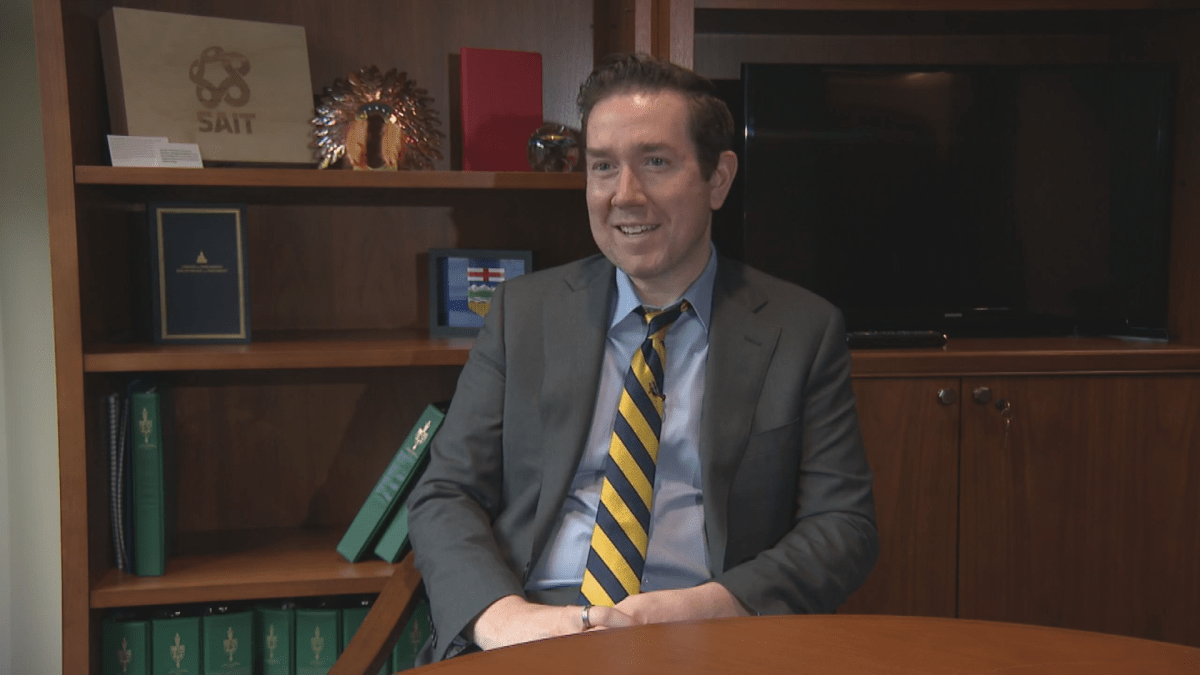
Corey Hogan, Liberal MP for the riding of Calgary Confederation, says the sentiment of separation didn’t just come out of nowhere, and says more can be done to ensure all Canadians feel respect.
“It’s got to work for Quebecers, it’s got to work for British Columbians, it’s got to work for Albertans,” Hogan said.
“The best defence against anything that assaults our country, whether it’s from external forces or internal forces like separatists, is to make sure this country is working as best as possible.”
After the 1995 referendum in Quebec, the federal government passed the Clarity Act, which created the legal framework for a province to pursue separation.
Prime Minister Mark Carney has already confirmed that October’s question will not be subject to the Clarity Act, however, as a ‘yes’ vote would only mean the province would look into starting the process of separating from Canada.
But if Albertans did vote to leave Canada, Hogan says it would be disappointing.
“In the House of Commons, I think we would be dumbstruck. ‘How did we get here?’ And I know the Alberta MPs — Conservative, Liberal, New Democrat — we would all be sitting there saying, ‘How do we undo this?'” Hogan said.
“This is something that will damage our province and our country for years to come, and that would be the root of the conversation. It would have to be.”

Albertans will make that decision on whether or not to remain in Canada or begin the process of separation on Oct. 19.


You can suck my coc bwana4
Comparing Alberta to Quebec? Quebec doesn’t have a trillion dollars of oil under their feet.
Canada ignoring an Alberta independence vote? If Alberta votes for independence, Canadian laws don’t apply to Alberta anymore.
The other provinces giving Alberta the cold shoulder if they separate? Well maybe instead of selling millions of barrels of oil to BC and Ontario, Alberta will just sell that oil to the USA or pipe the oil through the USA to the west coast.
It’s Saturday night. I should be out sucking someone’s c o ck, but i’m at home worrying about a potential Alberta referendum question.
Idiots abound in Alberta BUT they’re just a noisy minority. Thank God!
THIS WILL NEVER HAPPEN, RELAX
See we do not need to leave canada just claim to be a nation like forst nations. We stay in canada but pay no taxes and get free education. You want to fish for free out of season? Me too, we can then spend billions a year on strengthening the alberta culture and demand CBC have 30% albertan content on their programing. Want anything done in Canada? Not without alberta consultation you won’t, and they will give alberta half of any major project just to stop us from protesting of going to the UN for more dripa revisions and maybe even the pope will apologize for not treating alberta better.
Alberta Can NOT separate .Carney has to much investment in Brookfield Asset Management, a trillion-dollar global investment firm where he previously served as board chair before entering politics. don’t think about your self . weather you can afford food or not think about Carney!! he’s our prime minister we all voted for!!! he is a VIP
I haven’t taken my meds in months.
hah’s comment below nails it. The media is hyping this beyond belief.
If separation is so unpopular… why does every news outlet cover the topic every single day? Propaganda much?
Canada needs to stay together, we need to suck Alberta dry for its natural resources . we need billions of dollars to go to the Ukraine and other countries. some one has to pay for all the education , government grants we give the new Canadians that arrive here from India and other countries because they are more important then you , if Alberta was to separate the liberal government would have no more control . we need communism.. elbows up!!!
Some people think a no vote on seperation will be the end of the seperatist movement? Separation has been going on since the National Energy Program back in the 1980s when Pierre Trudeau severely damaged the Alberta economy for the sake of eastern Canada votes. If the vote fails the separation movement will just wait until Alberta is suppressed by Ottawa in more severe ways.
Canada is going down the toilet quickly. Because of Carney’s failure to negotiate a deal with the USA, CUSMA will be cancelled causing hundreds of thousands of people to lose their jobs. Alberta will NEVER get another pipeline with the current political climate in BC. Increased Chinese influence in the Federal Government, censorship, deepening recession all will change the minds of a lot of Albertans.
Danielle Smith for PM!
No. If the vote is to stay in Canada, there is no more separatist movement. They have to follow the will of the people. And that will be to stay in Canada.
The more important questions are Smith trying to take over Ottawa. She wants a US system, where we have a united provinces. All power is in the provinces and we no longer have a Canada, except in name.
BTW Aydon, there are lots of negatives to separating. Look at the costs. Look at how hard it is going to be to get our oil out to the west coast, if we cannot say that BC should behave like a fellow province, when they will be a foreign country. Look at how hard it is to deal with Trump…
We will have to honour the treaties. So Alberta will have to pay for their healthcare, education, welfare. We will not have to pay the extras, but look up how much the actual treaty costs are.
There are no negatives to separating.
The extremely dangerous position of the federal government with the recent bills put forth is all the justification anyone west of ontario should need to be encouraged to leave.