


For decades, lawyer Jeffrey Rath built a career helping First Nations sue Canada and Alberta, securing treaty and claims settlements worth tens of millions of dollars.

A Global News investigation, however, found those victories were often followed by another fight: former clients challenging Rath over his fees, conduct and, in some cases, control over settlement money.
These court battles now shadow Rath’s new role as a legal architect of Alberta independence. The lawyer who told courts that governments had failed First Nations is now being accused by some First Nations of failing them himself.
He declined to answer specific questions from Global News as the matters remain before the court, but said: “Suffice it to say, clients are always happy when you spend years funding and pursuing cases on their behalf.”
“Many are unhappy when they are rewarded for the hard work of their legal counsel and are billed exactly what they agreed to pay on a percentage basis at the outset of the case.”

Court and disciplinary records reviewed by Global News show that at least 10 First Nations have been involved in court or Law Society proceedings against Rath.
None of the allegations has been proven in court.
Rath was a prominent voice during the pandemic: he sued Alberta on behalf of clients over COVID-19 restrictions, briefly supported so-called “Freedom Convoy” organizers and helped build the Alberta Prosperity Project into what is arguably the province’s most visible separatist vehicle.
Once broadly aligned with Alberta Premier Danielle Smith’s sovereignty agenda, he reportedly attacks her from the independence wing of Alberta politics, arguing she has not moved far or fast enough toward separation.
Rath is also acting for Stay Free Alberta’s Mitch Sylvestre in the independence petition fight, which was halted after First Nations successfully argued that Alberta failed to consult them. In June, the Court of Appeal allowed Elections Alberta to count and report the signatures while the case continues.
Last month, Tallcree First Nation’s long-running fight with Rath escalated from a fee dispute into a battle over trust money that court documents indicated was earmarked for minors.
In 2021, Alberta courts slashed the 20 per cent fee Rath & Company charged for Tallcree’s $57.6-million Treaty 8 settlement, ordering an $8.5-million refund into the First Nation’s trust. According to an affidavit filed by Tallcree Chief Rupert Meneen, the trust distributed settlement money to beneficiaries and held minors’ shares until they reached adulthood. Rath’s firm was the fund’s sole trustee.
On July 10, a judge granted an interim Mareva order temporarily freezing up to $8.5 million in assets belonging to Rath and his firm, finding reasonable grounds to believe assets could be moved or dissipated before judgment. It remains in effect until July 15, when a further hearing is scheduled.

New court filings underpinning the injunction allege Rath withheld financial statements from the trust.
It was only through those filings, Tallcree’s lawyers say, that the nation’s leadership discovered he had charged it more than $6 million in 2024 — the same fiscal year Rath was required to repay the $8.5-million. Tallcree’s lawyers argue the trust may have effectively paid for much of its own repayment.
“Challenging contingencies is uncommon. The fact that he’s had multiple challenges is a little unusual,” University of Alberta law professor Gerard Kennedy says.
Sturgeon Lake Cree Nation is embroiled in a similar fight with Rath.
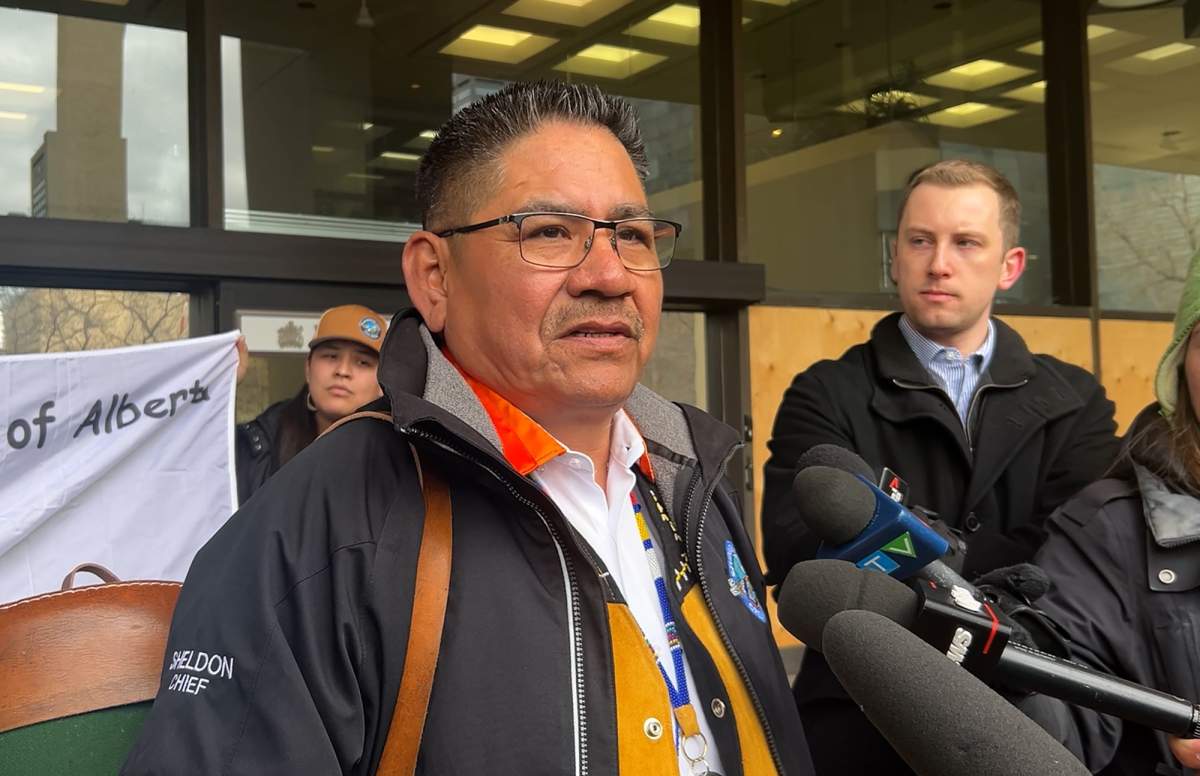
In February 2025, Alberta’s Court of Appeal upheld a ruling that Rath could not enforce the 20 per cent contract behind his $28.6-million fee from the nation’s Treaty 8 settlement. Chief Sheldon Sunshine says he believes Rath is delaying a court review to determine a fair fee.

The First Nation is also seeking to remove Rath’s corporation as trustee of its own fund, which now holds money for minor beneficiaries, alleging incorrect payouts, difficulty getting information, rude treatment by Rath & Company staff and incomplete financial statements.
Several First Nations leaders, including Sunshine, say Rath is now publicly threatening the very rights he once fought to enforce.
“They’re thinking that … they could move into our house, rent a room and take that room with them when they leave, but that’s not happening,” Sunshine says.
The contingency question
Rath built his reputation by securing major legal victories for First Nations.

Get daily National news
In 2005, he helped Mikisew Cree First Nation win a landmark Supreme Court ruling on the Crown’s duty to consult before decisions affecting treaty rights. He also appeared as an intervener in 2013 for Treaty One First Nations in a Supreme Court case over Canada’s failure to honour historic Métis land promises.
He earned a Bachelor of Arts with honours in political science and government from the University of Alberta and a Bachelor of Laws with honours from the London School of Economics, according to his LinkedIn profile. Rath founded his law firm in the small town of Priddis in 1995.
In 2017, Rath represented Sturgeon Lake and Tallcree First Nation on their Treaty 8 agricultural benefits, or “cows and plows,” claim against Canada, enforcing 20 per cent contingency fees, should he prove successful.
Contingency fees shift the financial risk of litigation to lawyers, who are paid only if a case succeeds, allowing them to take a share of any settlement rather than bill hourly. The arrangements are more commonly used in personal injury litigation. In First Nations cases, supporters say the structure can help fund costly claims, but critics say it can turn treaty payouts into windfalls for lawyers when communities lack leverage or independent advice.
Both agreements were later challenged in court.
In 2020, Alberta Court of Queen’s Bench Justice Donald Lee found Rath & Company’s 20 per cent Tallcree contingency fee unreasonable. He later noted that Rath had kept no time records in the file and later produced reconstructed estimates worth less than $392,000 against the $11.5-million fee he charged — even with a $500-$600 hourly rate. Lee also found that “most of the work product found in the Record is actually simple emails created and signed by his paralegal.”

While the Court of Appeal rejected parts of Lee’s reasoning — including the suggestion that Rath’s lobbying and settlement work was not real legal work — it still dismissed Rath’s appeals and left the reduced fee in place.
“We generally do want to uphold contingency fees in the face of certainty, and because we know that some cases will otherwise not be brought.… Having said that, that one pushed the envelope of reason, to put it mildly.”
But Tallcree’s fight with Rath over settlement money continues.
On June 24, court documents show that Meneen’s lawyers filed an “urgent” application with the Court of King’s Bench, alleging that his corporation had misappropriated approximately $6.4 million, according to newly filed court documents.
Meneen’s lawyers gave Rath until June 17 to explain and document the disputed trust charges. Rath’s counsel replied that day, stating he had been unavailable since June 5 due to a death in the family and could not meet the deadline.
According to an online obituary, Rath’s wife of 25 years, Dayna Laverick-Rath, died on June 5.
The day after Rath said he couldn’t meet the deadline, he nonetheless appeared in the Court of Appeal to argue a stay application on behalf of the Stay Free Alberta group.
After Rath was removed as interim trustee and replaced by BMO, Tallcree’s lawyers said an $8.5-million cheque had been issued to “Jeffrey R.W. Rath Professional.” That suggested, according to Tallcree’s lawyers, Rath “used his office as Trustee to extract for himself the precise amount that multiple courts — after years of contested litigation — determined he was not entitled to retain.”
That led to the application for a Mareva order, which was granted on July 10.
Other First Nations have launched challenges regarding Rath’s fees.
Prophet River First Nation is headed to a three-week trial in Calgary in May 2027, alleging Rath collected about $10.8 million in fees and payments — approved by the band’s council — after securing a $130-million settlement, despite a retainer that entitled his firm to just $2.6 million. Rath’s statement of defence says council resolutions authorized the payments and argues the lawsuit is a “collateral attack” that can only be heard in the Federal Court.
A growing backlash
Chief Sunshine was not in a leadership role when Sturgeon Lake approved its Treaty 8 agricultural benefits, or “cows and plows,” agreement with Rath. But he says he was already hearing similar complaints from other First Nations and tried to raise concerns, though he felt there was not enough support to challenge it.
When Canada settled that claim for roughly $143 million, Rath & Company’s contingency agreement meant they took about $28 million. Sunshine says the nation “didn’t realize the amount of money that they were giving up.”
- $11.5M from Sturgeon Lake trust helped fund Rath firm’s Tallcree payment: receiver
- Alberta separatist leader Rath faces $109M debt claim from US investors
- Canada gave contracts to Iran VP’s son while investigating role in regime missile program
- Immigrant groups say racism rising in Alberta as referendum looms


“When you’re talking to people who haven’t seen that kind of money before, [whether it’s] $43,000 as opposed to $34,000 or whatever the numbers were, it really didn’t matter to them.”
But Rath did not keep most of the funds he was granted.
Court records from 2022 indicate that Rath was advanced $10 million by litigation funders for the Sturgeon Lake case and repaid them $23.3 million after settlement funds were received. Litigation funding is a controversial practice in which a third-party funder finances a legal dispute and receives a percentage of the settlement.
Authority in question
Rath has faced at least 10 Alberta Law Society citation allegations across four disciplinary matters since 2024.
Five have resulted in findings or admissions of conduct warranting sanction, including reprimands and cost awards; three remain outstanding, and two were dismissed.
Across multiple disputes, two themes emerge. First Nations allege Rath either continued acting after being fired or made major legal decisions without consulting them.
In September 2019, Rath represented Thunderchild First Nation in Saskatchewan at a court hearing, two months after they had fired him.
The Law Society found that Rath delayed transferring the file after the nation fired him, pending recognition of his contingency fee agreement, and then attended a Federal Court case-management conference without advising the court or Crown counsel that his retainer had ended. He was reprimanded in May 2025 and ordered to pay $10,000 in costs.
Rath is now suing them. In 2024, he filed a claim for his contingency fee, which was $38-85 million of Thunderchild’s $155.4-million Treaty 6 settlement.

Saskatchewan’s Moosomin First Nation took more drastic action against Rath.
In December 2022, a month after replacing Rath & Company, Moosomin council passed a resolution barring Rath from its lands, alleging he attended a members-only meeting after being told not to, tried to re-enter after being asked to leave and went to two council members’ homes. Council said his “physical and verbal attempts of intimidation and baseless accusations” caused members to fear for their safety.
Rath challenged his dismissal, accusing the new lawyers and the Moosomin leadership of misconduct, including bribery, and later sought an order to force the new lawyers to answer 161 cross-examination questions, according to court documents.
The Federal Court dismissed the motion and ordered Rath & Company to pay $32,392.50 to the new lawyers and $10,435 to Moosomin, plus interest. A later appeal was dismissed.
In December 2025, he launched a lawsuit against Moosomin for $19.2 million, claiming that, despite being replaced years before the case settled, he is entitled to a 15 per cent contingency fee from its $127.8-million settlement with Canada.
Rath also sued Stoney First Nation. According to court documents, the Alberta Court of Queen’s Bench found that, after representing them in an election dispute, he had represented the nation without authority. The court also found that hundreds of thousands of dollars in legal bills were never properly authorized because he was retained by the chief, and the council did not authorize the retainer.
The business of litigation
Critics say such cases reflect a broader concern about how contingency-fee litigation can blur the lines between legal advocacy and commercial interests.
A fight with Peguis First Nation shows that business side.
Peguis sued Rath in Alberta in 2014 over the Assiniboia Downs redevelopment, alleging that he placed $22 million in trust with Rath & Company and that he wrongfully withheld funds; the claim also alleged that his retainer gave him a four per cent share of future revenues and raised a potential conflict involving the Manitoba Jockey Club. Rath denied wrongdoing, said both sides had received independent legal advice, and counterclaimed, alleging that Peguis insiders had sabotaged the project.
The case was later discontinued without a merits ruling.
“To see him take so much from so many nations and now lead the separation in Alberta is appalling, with total disregard of the treaty nations’ inherent rights,” Sweetgrass First Nation Chief Lorie Whitecalf told Global News.
Sweetgrass also challenged Rath & Company’s legal bills in court – but Rath was largely successful on appeal.
For many First Nations leaders who have hired Rath, his new role as public advocate for Alberta’s autonomy has been especially galling.
A new cause
Global News visited Rath’s Foothills property in 2025 to speak about the independence movement gaining traction. He was quick to answer questions about that, but when the talk turned to the Law Society citations he was facing at the time, he turned sombre.
“These things are very embarrassing to me,” Rath said, sitting at his kitchen table.
“When people accuse me of unprofessional conduct … I take that very seriously. I take it very personally. Am I perfect? Have I had a tendency over the years to say or state things very strongly in a way that’s probably not appropriate at a very polite university gathering? Probably.”
Declining to answer a list of Global News’s questions for this story, Rath said: “I’m not litigating these issues in the press.”
Because while much of the defence of his legal work has unfolded far from the public spotlight, Rath has publicly evolved into a legal advocate for Alberta’s future.

The independence push Rath helped champion meant Stay Free Alberta submitted 301,620 signatures, far above the 177,732 required under Alberta’s citizen-initiative rules to request a referendum.
He rejects suggestions that Alberta’s independence efforts would sidestep treaty rights, arguing any move toward separation would require negotiations with First Nations under the Clarity Act.
“If anybody understands First Nations, Jeff should,” Sylvestre told Global News.
But for First Nations leaders, the issue is not how many Albertans signed a petition. The question is whether Alberta can even begin a process that could alter treaty relationships without them.
“We’re the first inhabitants of this land. We made concessions, we made agreements in order for these lands to be settled, and that’s what these people are forgetting.”


The racism in these comments is unacceptable. People should check the history books and learn something. Indigenous Nations have dealt with generations of broken promises, withheld funds, and legal battles just to access what was already theirs. Tall Cree Nation is doing exactly what they should — demanding accountability. Politics and ideology don’t change the facts: a lawyer took trust money, didn’t return what the courts ordered, and Tall Cree Nation deserves justice.
Rath is being dishonest. He’s a lawyer — he knows trust money must never be moved into a personal account. That’s one of the most basic rules of the profession. If the trust was properly set up and handled correctly, he’d have the documents ready to prove it. He hasn’t. And the fact that a judge froze up to $8.5 million of his assets tells you exactly why. Courts don’t take that kind of action unless there’s evidence the funds weren’t where they were supposed to be. He owes Tall Cree Nation $8.5 million, plain and simple.
I’m glad Tall Cree Nation is finally getting this investigated. They deserve every chance to question where their money went and why. Too many promises to Indigenous communities have been broken by people in positions of power, and this looks like yet another example. Strip away the politics — a lawyer took trust money, didn’t return what the courts ordered, and Tall Cree Nation deserves full accountability.
Doesn’t mean it was ever mine!
You hear they want Canada’s national parks now, too?
They are NOT the first inhabitants of this land! And either way, it doesn’t matter who or what was!
I sat in a chair in the food court at the mall. Doesn’t mean it’s still mine tomorrow.
I find it so odd that FNs are fighting so hard to keep what they call unfair treaties with a government that they accuse of genociding them with residential schools. Maybe the treaties aren’t that bad, after all? And maybe it wasn’t a genocide?
What’s that phrase fie when you offer to give something, then change your mind?
Indian Giving?
Sounds like First Nations. Agree a 20% fee up front to retain the best talent they can find and then after they win they want to negotiate the fee amount they previously agreed to.
Screw them.
I don’t agree with what Rath now stands for or even with the work he was doing for the FN in the past but a deal is a deal.
@Canadian by choice, etc.:
FNs are not pro-Canadian as they openly and repeatedly proclaimed their sovereignty and self-governance.
FNs are only pro-Canadian when it suits them, as in when there’s free money in it for them. This latest lawsuit is just one instance of FNs blatant ignorance.
But, sure, call us racists, after all, this is exactly what happens when a Leftie loses an argument – they start the name-calling.
A bag of turds this lawyer is.
I’m on a strict diet of sperm and male anal leakage. Just like my Father and his Father and so on….
Proud Albertan here…
Canada’s indigenous are a joke to the whole world. There’s a reason the Americans got rid of all theirs; because there’s no reasoning with these people.
Looks like a lot of the separatists on here are also virulent racists. Can’t say I blame the FN for being pro-Canadian.
Well, well, well – there you have it Mr. Rather, First Nations used you to get what they wanted, now they turn on even backstab you because they see the advantage of getting more if they encourage Alberta to stay. Isn’t that the FN way? Lawyer Jeffrey Rath built a career helping First Nations sue Canada and Alberta, securing treaty and claims settlements worth tens of millions of dollars. Now they turn on him and make false claims & accusations!! Can’t trust them!!
Rath is an Alberta patriot. I have nothing but complete respect for him.
This is a smear campaign against Rath orchestrated by FNs, Carney, Nenshi, and eastern Canadian socialists that are scared of the Alberta Independence Movement.
FNs are grifters and have zero credibility.
Dogshite tribe?
I dont think you guys hav e a clue about the workings of the law society or how you become a canadian judge.
Who would think a chug would dispute or be upset about a deal they agreed too?
Be careful working for a band you will get screwed. Then the government will go out of its way to defend them.
2 stories about this? slow news day or what. alberta needs to pull out asap regardless of rath. and also if the fns agreed to have him represent them then he won for them now they don’t want to pay how is that right. lawyers are expensive.
Feather clad d*ckheads.
Hard bias in this article is overflowing, like not stating the fact the fees were set at certain percentage but now FNs think they deserve to get the legal services for free. Just like everything they always mooch off the the taxpayers.
If this goes before courts guess who’s going to pay the chugs’ legal fees? That’s right, the taxpayers.
Oh, and the name actually was Freedom Convoy, not “so-called Freedom Convoy”.
Which makes Ms Ashleigh Stewart a so-called op-ed writer, not a facts following journalist.
The public record is full of instances of his misconduct and malpractice. Not surprised to see a client taking him to court.
Yeah I bet white people wish they could not pay their lawyers too after a settlement is reached, we pay 30% by the way, 20% is a bargain.
Maybe first nations should get a job rather than sue Canada as a sole income source
First Nations are first class citizens. They think they can get everything for free, including lawyer fees…
“The personal and professional bank accounts of lawyer Jeff Rath, one of the leaders of Alberta’s separatist movement, were temporarily frozen as part of a legal dispute over millions of dollars in trust funds that a First Nation alleges were misappropriated.”
Only fools follow scam artists like this.
Guess what Sam? You ARE a Canadian, like it or not. Separatists are traitors plain and simple and should be dealt with as such. Alberta is, and always will be, a PROVINCE of Canada.
So the indigenous agreed to a 20% lawyers fee and now that they have won the settlement they want to renegotiate so the lawyer fee is lower? Hmm where have I heard that before about someone giving something to another person then later wanting it back?
Ah yes. How is it remotely possible that someone with the moral and ethical principles of Mr Rath possibly fall into greed. It’s got to be an evil conspiracy. Have another cool aid.
A crook just like the extortionists who call themselves ‘first nations’.
When Alberta separates we’ll give them all a square mile to live on
This is a smear campaign against Rath who represents the group for Alberta Independence.
Glad to see that Global does great journalism, reporting 300k signatures that have been unverified by elections alberta so they’re just repeating seppie propaganda uncritically
Chugs gonna chug and that’s why they are always thirsty for more cash! Btw nice headdress grifter
Rath like trump fights for one man and one man only. Himself.
a crook???????
Alberta Strong.Never a canadian!
Canada Strong. Forever Canada. Yes, I’m an Albertan. However, I’m a still Canadian.