



A Winnipeg man’s home care services have been reinstated, after they were put on hold due to a security camera in his home.

John Giardino, 80, says the issue arose when he and his son started having concerns about his home care services. John says he’s been receiving home care for about 20 years and has mostly had positive experiences.
“You get to know the people coming and going,” John told Global News. “So you don’t treat them as strangers coming in, you treat them as friends coming in.”

But John’s son Gio Giardino says they’ve had some concerns with home care workers as of late.
“Some people care, and some people really don’t care. And you can tell the difference between the two,” Gio said.
Gio says they’ve had concerns with home care workers not following proper protocol, including not using the door code to let themselves into the home and not asking his father his name and date of birth. He also says home care workers have given his father scalding hot water to take his pills with on two occasions.
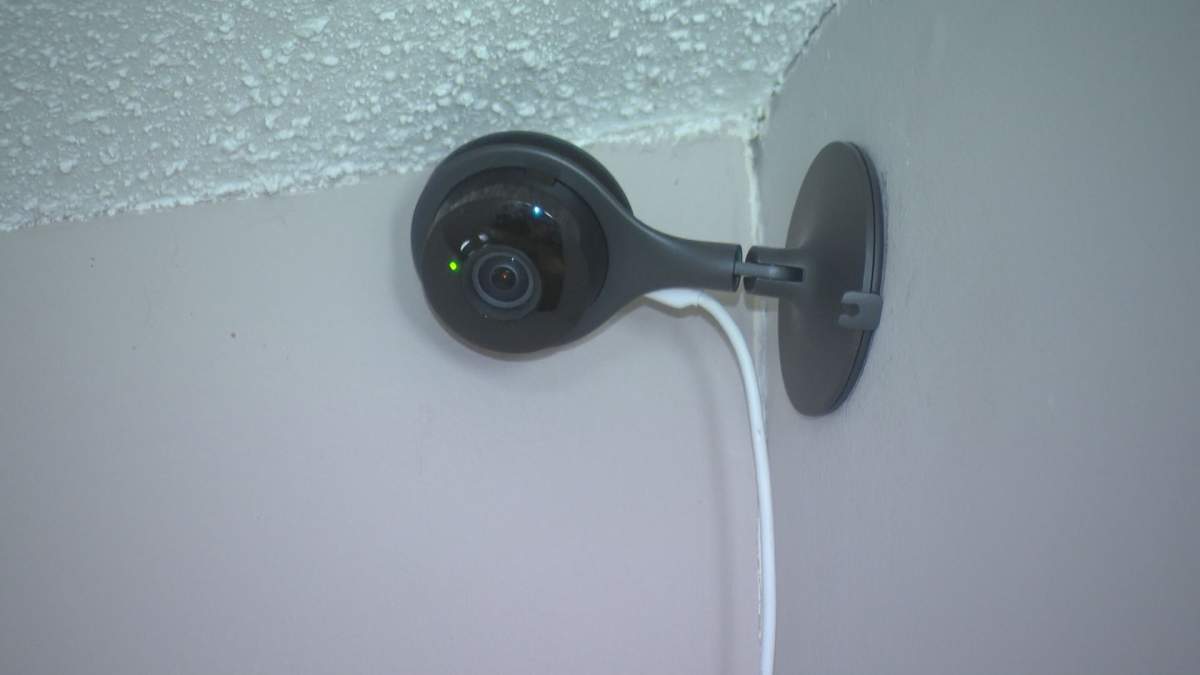
All incidents captured on a security camera installed in John’s living room. Gio took their complaints, and the video footage, to the Winnipeg Regional Health Authority (WRHA).
“I sent them the video because I thought this would be a great training video because this guy had done everything wrong, from the door code to checking the name to giving scalding hot water,” Gio said.

But the response came as a surprise to Gio and his father.

Get daily National news
“They were very concerned about it,” Gio said.
“But they also said, you can’t have the camera, because you’re not allowed to have cameras in your house.”
Gio says the camera was installed for his father’s own safety and security after an incident with an intoxicated intruder that resulted in John calling the police.
“I have a camera in my home for my personal security,” John said. “I can know who’s coming and who’s leaving and what they’re doing while they are here.”
Gio says as a result, the WRHA paused his father’s home care service.
“My dad is a member of the most vulnerable part of society, the elderly people of Manitoba. He’s been here for 80 years contributing; he worked for the government for 33 years,” Gio said.
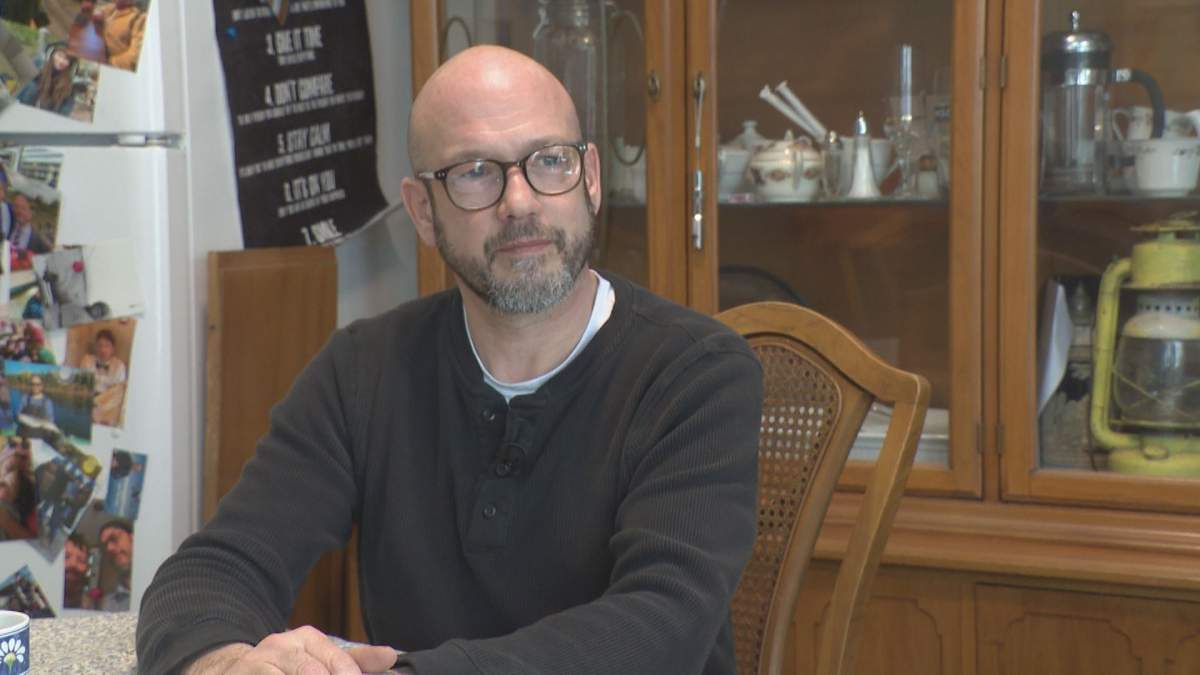
“And now they’ve paused his home care because he won’t allow them to turn the camera off when they come in and then turn it back on again when they leave.”
After Global News reached out on Friday, a spokesperson for the WRHA said on Monday it recognizes why clients may use cameras in their home for security and peace of mind reasons, but must balance those concerns with staff members’ right to privacy while providing care. The spokesperson said the WRHA would be reinstating home care services to John.
“While this is a complex issue, first and foremost our responsibility is to provide safe, timely care to all clients, patients and residents who need it. As such, we will be reinstating care to this client while we continue to work with them on a fair and reasonable solution that respects the needs and rights of everyone involved,” the statement read.
- Manitoba man convicted of 1st-degree murder in death of Mackaylah Gerard-Roussin
- N.S. advocacy groups, opposition calling for more workers’ rights protections
- Canada’s provinces have made ‘little to no progress’ on arthritis treatment: report
- Province to spend $15M on revamping Winnipeg’s Pantages Playhouse Theatre


“Additionally, the WRHA will formally review and update policies on cameras and recording against the realities of their role in our society today. As always, we are committed to supporting both safe care for clients and respectful working conditions for staff.”
Meaning John soon won’t have to rely on help from his son to take his medication and change his compression stockings.
“I do not understand why they object to the camera being there if they’re not doing anything improper,” John said.
They’re hoping the WRHA will move to change its policy, to allow John to continue to receive care while also having security in his own home.
“When I go to the gas station, I’m on camera. When I’m at work, I’m on camera. When I’m driving under a traffic light, I’m on camera,” Gio said. “But when we send new employees into elderly people’s homes, they should be afforded absolute privacy? It doesn’t really make sense.”
In a statement to Global News, health minister Uzoma Asagwara says they understand why families would choose to have cameras in their homes.
“There are regional policies that protect the privacy and consent of health-care staff providing care in private homes. Under current policy, cameras can remain in the home, but recording during the provision of care requires the consent of the individuals being recorded,” the statement said.
Tech, legal experts weigh in
Tech analyst Carmi Levy says recording in your own home should be your right.
“If it’s your home, it’s your rules,” Levy told 680 CJOB’s The Start.
“And you should have the absolute right to install whatever cameras you want, whatever software you want on these cameras to make sure that when a service provider comes into your home to provide care, that they’re providing exactly the care that they’re supposed to and that nothing untoward is going on.
“To draw a line there, I find really odd.”
But Bruce Curran, an associate professor in the Faculty of Law at the University of Manitoba, says from a legal standpoint, it isn’t so black and white.
“Here what you are seeing is a real tension between, on the one hand, the owner’s property rights and interests in terms of making sure that their loved one is adequately taken care of, and on the other hand, the dignity of the WRHA workers and making sure that privacy in general is being framed as a way of protecting individuals’ dignity,” Curran told Global News.



Global is biased.
Why was my comment deleted?
What agenda does Global have?
The client should be able to have a camera on in their residence at any time they want. Workers should have no expectation of privacy. Workers at banks, retail stores, factories, busess and everywhere are on camera. Vulnerable clients have a right to safe and secure care in their homes and cameras are a way to support that right.
It’s unnerving that the employees of WRHA homecare workers are nervous about their clients in home cameras. You’re a public servant giving care to the most vulnerable. It should be a welcome safety measure for all concerned. Unless, of course you’re not really interested in providing the proper care or following proper procedure for the client as it relates to them. Big red flag! Plus the fact that the WRHA is claiming this as as legitimate concern for homecare workers who are concerned about their privacy is a huge concern.
…… ewed. Sorry, previous is mined. I pressed too soon.
The father made a very true comment. If they do nothing wrong, why worry about camera. I recently witnessed in a hospital, someone recording what was done wrong, and they were swarmed by hospital staff. Told they have to turn off their recording. The swatming looked scary am sure she felt threatened. I myself witnessed what she was recording. It was indeed wrong. In a healthcare situation, where mistakes could be very costly to the patient, it seems privacy laws could be revi
Walk into almost any retail store and your on camera. If the home care workers don’t like it don’t go shopping anywhere or wear a mask all the time. My home my castle, the WRHA needs to wake up!
Those with nothing to hide, hide nothing. The workers shouldn’t have any concerns about cameras if they are performing their duties properly. In fact I would like a camera for my own protection if anything ever happened such as an injury to a client or an accusation of theft. As well their reason for wanting privacy is bogus. There is nothing private about their job. They identify themselves to the client and family members. they wear an ID tag. It’s not like they are being recorded somewhere where they have an expectation of privacy.