


NASA unveiled close-up pictures on Wednesday of the interstellar comet that’s making a quick one-and-done tour of the solar system.

Discovered over the summer, the comet known as 3I/Atlas is only the third confirmed object to visit our corner of the cosmos from another star. It zipped harmlessly past Mars last month.
Several NASA spacecraft at and near the red planet zoomed in on the comet as it passed just 18 million miles (29 million kilometers) away. The European Space Agency’s two satellites around Mars also made observations.
Astronomers are aiming their ground telescopes at the approaching comet, which is currently about 190 million miles (307 million kilometers) from Earth. The Virtual Telescope Project’s Gianluca Masi zoomed in Wednesday from Italy.
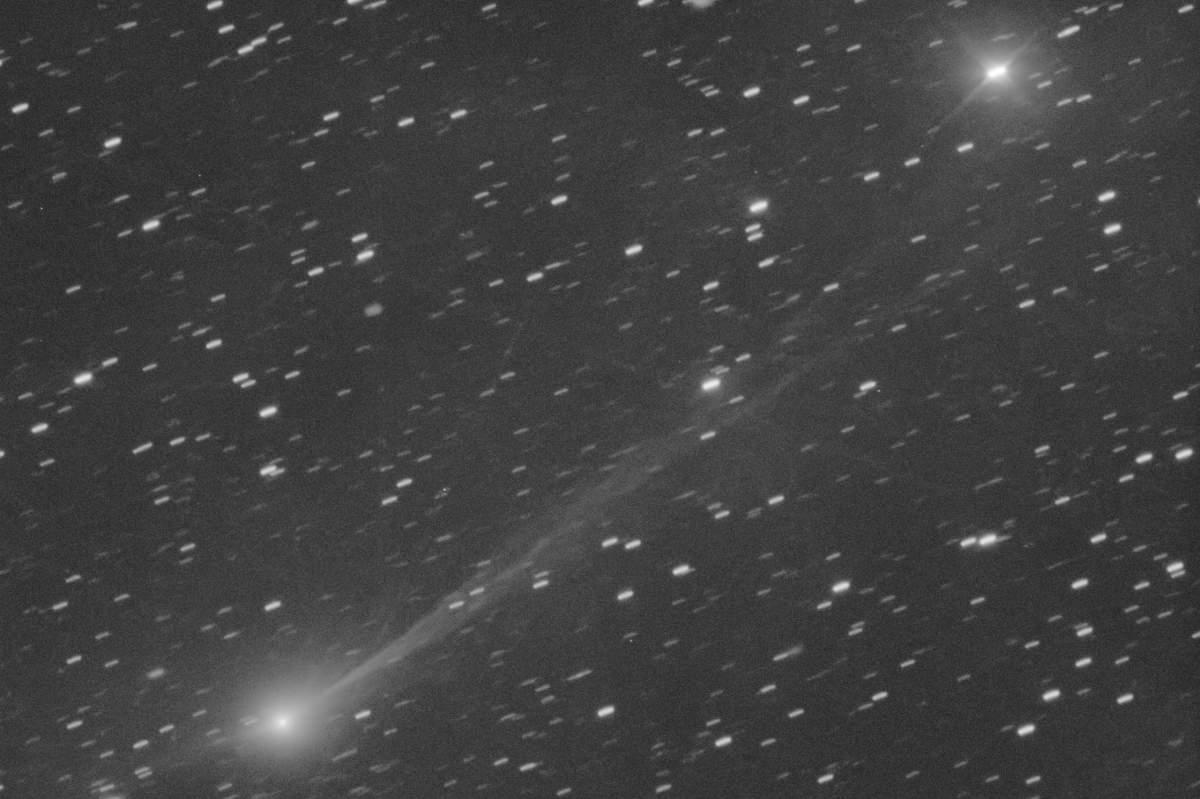
The closest the comet will come to Earth is 167 million miles (269 million kilometers) in mid-December. Then it will hightail it back into interstellar space, never to return.
Named for the telescope in Chile that first spotted it, the comet is believed to be anywhere from 1,444 feet (440 meters) across to 3.5 miles (5.6 kilometers) across.
- Residents of Peace River warned of possible flooding, to be ready to evacuate
- Coastal B.C. First Nation leaders go to Calgary to dissuade pipeline investors
- Many Albertans welcome daylight time but expert warns of serious health impacts
- N.W.T to follow Alberta in ditching clock changes, will adopt permanent daylight time


The European Space Agency’s Juice spacecraft, bound for Jupiter, has been training its cameras and scientific instruments on the comet all month, particularly after it made its closest pass to the sun. But scientists won’t get any of these observations back until February because Juice’s main antenna is serving as a heat shield while it’s near the sun, limiting the flow of data.
The comet is visible from Earth in the predawn sky by using binoculars or a telescope.


Comments
Want to discuss? Please read our Commenting Policy first.