


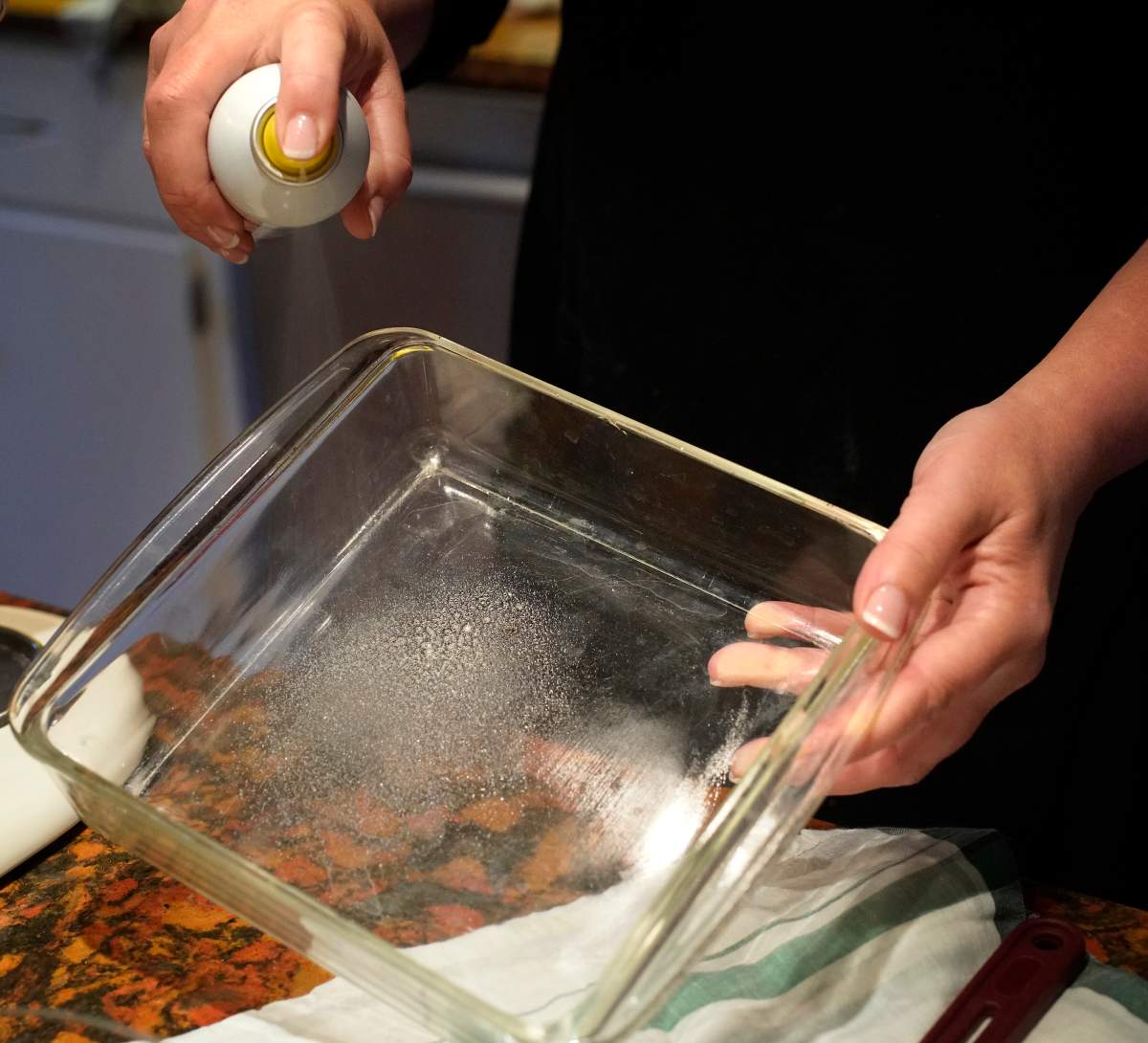
A burn victim from Pennsylvania has been awarded US$7.1 million (over C$9.7 million) as part of a lawsuit that alleged the woman was badly injured when a can of cooking spray exploded in a kitchen at her workplace.

A jury in Illinois issued the verdict on Monday, declaring the Chicago-based company Conagra Brands owed damages to Tammy Reese of Shippensburg, Penn., The Associated Press reported.
(Conagra makes multiple cooking spray brands, including the popular grocery store brand Pam, and other products like Reddi-wip and Chef Boyardee.)
According to a lawsuit filed by Reese in 2019, she was working at a kitchen in Hub City Club in Shippensburg at the time of the incident. She said a can of Swell cooking spray — a common cooking lubricant — “suddenly and without warning” over-pressurized and “exploded into a fireball.”
The can of cooking spray was on a shelf about 46 centimetres above the stove when it exploded, the lawsuit alleged.
Reese said she was left with second-degree burns on her head, face, hands and arms. Her lawyers told the jury the scar tissue that formed as a result of the burns has restricted her movement since the incident.

Get daily National news
She was awarded US$3.1 million (almost C$4.3 million) in compensatory damages and US$4 million (about C$5.5 million) in punitive damages. The jury made the decision on counts including liability, design defect, failure to warn and negligence, according to The New York Times.
Reese’s case against Conagra is one of many. Forbes reported there are 60 other allegedly injured plaintiffs who have also sued Conagra in 56 different lawsuits claiming they were injured when the same or similar cooking spray cans exploded.
Conagra has refused to issue any recalls.
All of the cooking spray bottles made by the company include warning labels about the contents being flammable. The products also feature text stating the spray should not be stored near the stove or other hot surfaces.
The company told The Associated Press in a statement that it disagreed with the jury’s verdict. Conagra said product and consumer safety is “always a top priority” for its business.
“We continue to stand by our cooking spray products, which are safe and effective when used correctly, as instructed. We are evaluating our legal options, including appeal,” the statement reads.


One of Reese’s lawyers, Peter Flowers, told AP the cans of cooking spray used by his client and all other allegedly injured persons who filed lawsuits against Conagra were manufactured from 2011 to 2019.
In the lawsuit, Reese’s legal team said these cans used a venting system that could not withstand temperatures as high as other models. The vents eliminate pressure when a can becomes too hot, releasing flammable contents into the air.
For concerned consumers, this venting system (which is no longer manufactured) was used in cans that are 10 ounces or more. It can be identified by four small U-shaped slits at the bottom of the can.
In a 2019 lawsuit, Conagra claimed the venting system was used only on a select number of cans, then eliminated in a redesign to standardize the cans the year after.
As part of a statement to Forbes, Flowers called Reese’s case — and the several dozen others awaiting trial — “one of the most shocking examples of corporate negligence that I’ve seen.”




Comments
Want to discuss? Please read our Commenting Policy first.