




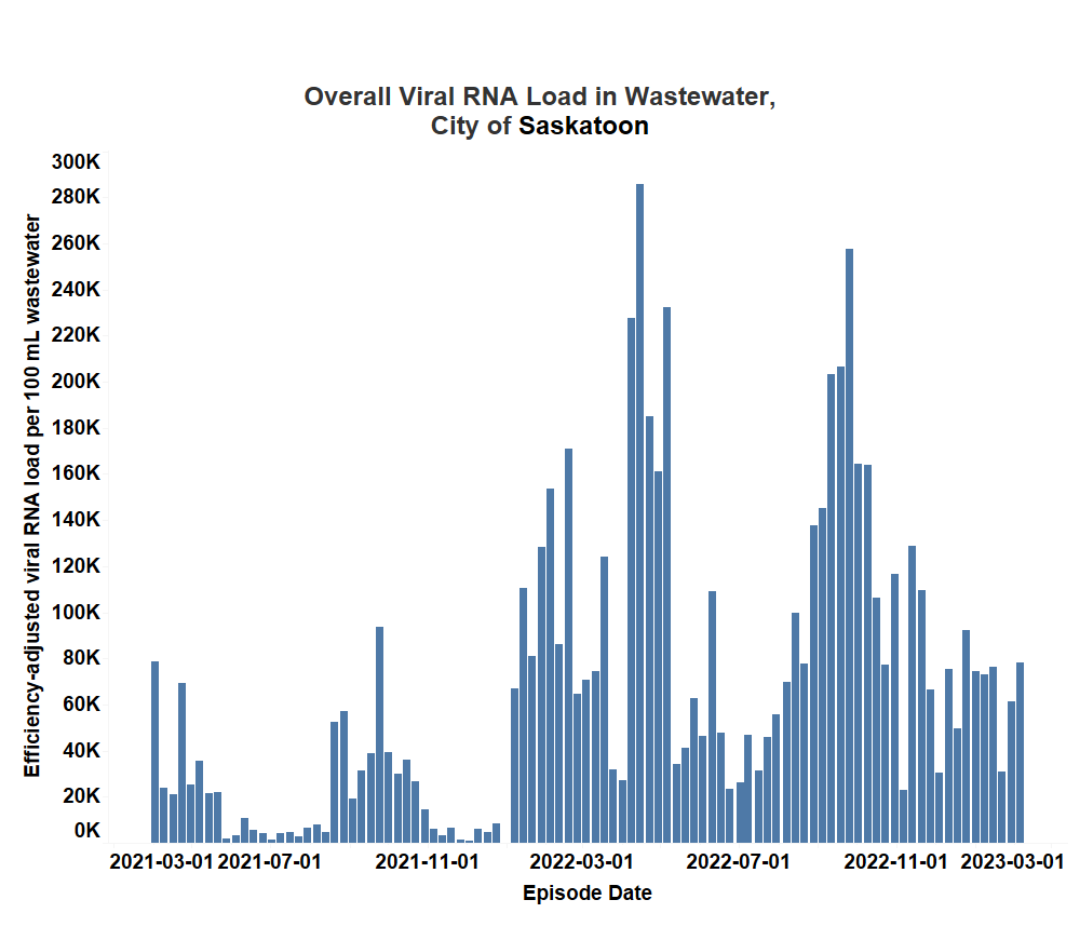
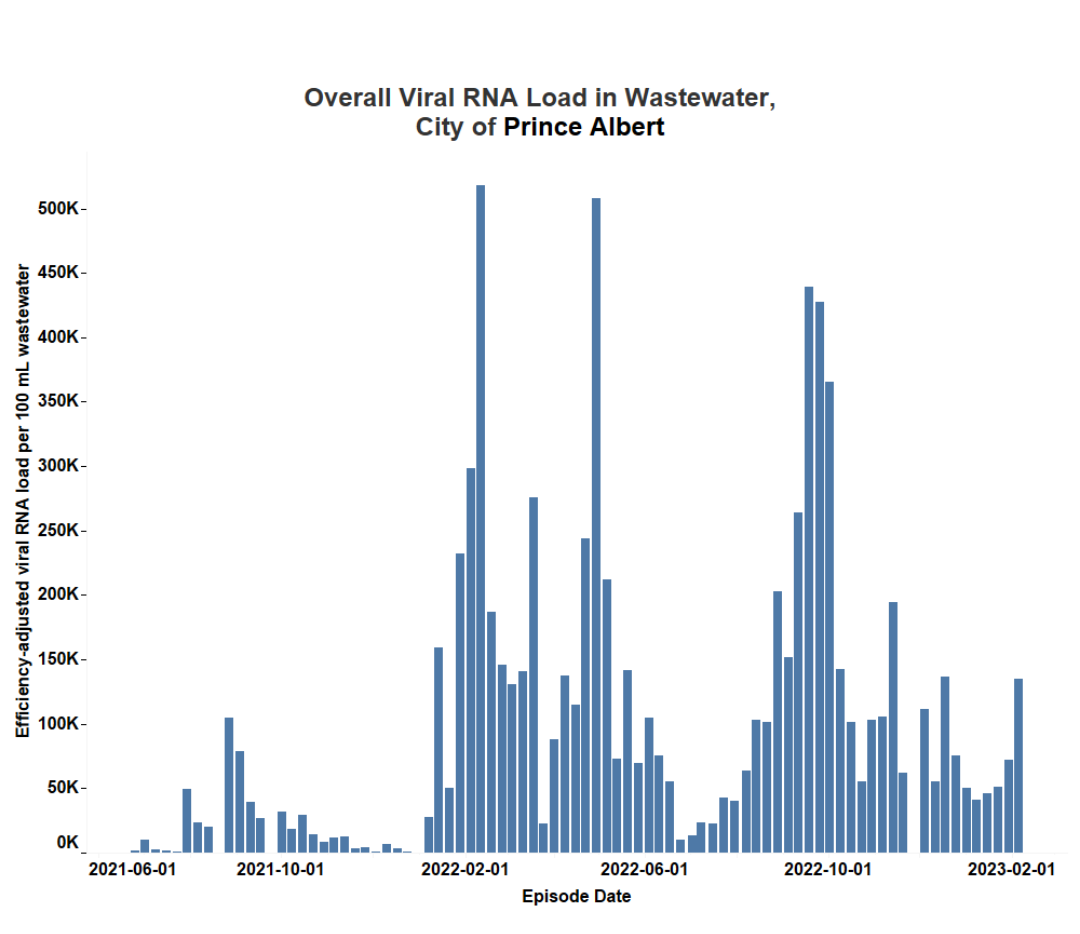
Since the previous wastewater-based epidemiology report, data shows that Saskatoon’s wastewater has increased as well as in Prince Albert.

The viral RNA load in Saskatoon’s wastewater has increased by 27. 6 per cent as of Feb. 1, 2023. This week’s 79,000 gene copies/100 mL viral load is the 29th highest viral load observed during the pandemic in Saskatoon.
“This level of the viral RNA load indicates that SARS-CoV-2 infection in Saskatoon needs continuous monitoring,” the report read.
In Prince Albert, levels increased by 86.5 per cent in the period up to Feb. 1, 2023. The viral load of 14,000 gene copies/100 mL measured this week is the 23rd highest value observed during the pandemic in Prince Albert.
The viral RNA load in North Battleford’s wastewater has decreased by 33.6 per cent up to Jan. 30, 2023. According to the report, the viral load of 42,000 gene copies/100 mL measured this week is considered medium level in North Battleford.
- Toronto hospital to greatly expand permanent housing program that reduces ER visits
- Calgary cyclotron to make radiopharmaceuticals for fighting cancer expected by 2029
- Severely disabled 18-year-old denied AISH benefits — until media made aware
- Edmonton plane pull supports Hope Air flights taking Canadians to medical appointments


“This concentration is the 41 highest value observed during the pandemic in North Battleford,” stated the report.
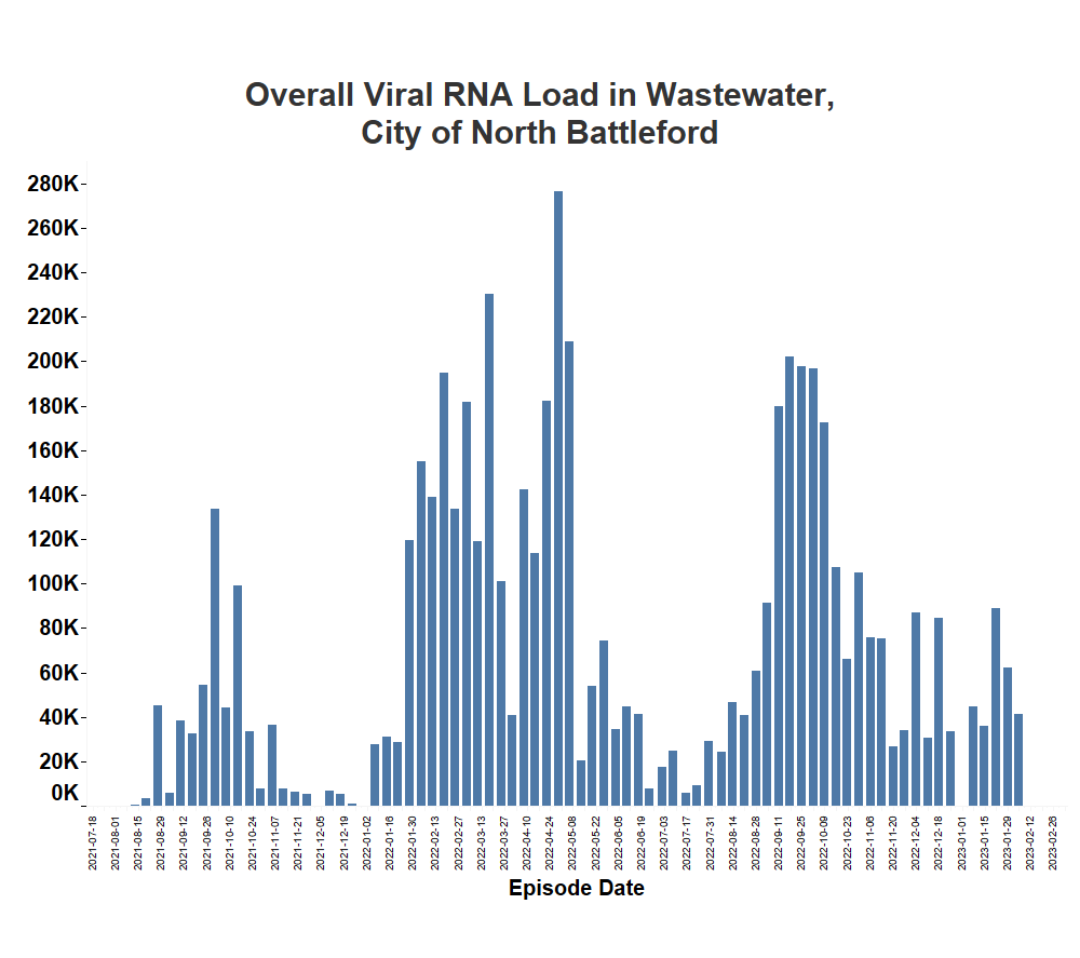
The wastewater-based epidemiology monitors for SARS-CoV-2 by the University of Saskatchewan (USask) and Global Water Futures researchers in Saskatoon, Prince Albert, and North Battleford. This reporting provides an early warning of infection outbreaks.



Comments
Want to discuss? Please read our Commenting Policy first.