



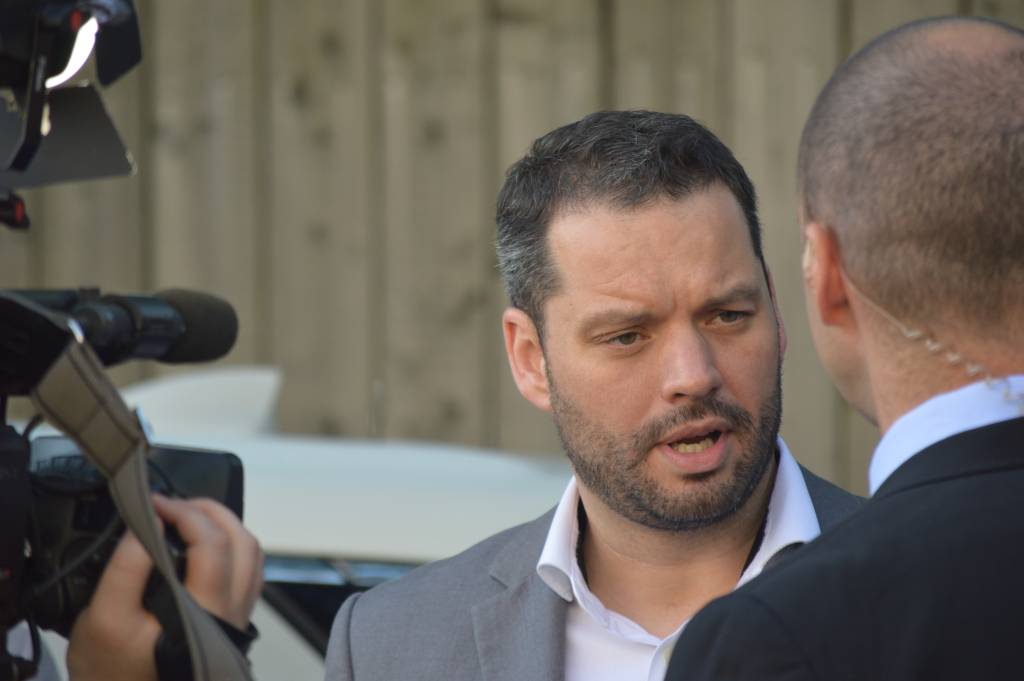
Nova Scotia’s education minister says schools were safe for the entire year and there were no major issues during the COVID-19 pandemic, a contradiction to the viewpoint of the president of the province’s teachers’ union.

Derek Mombourquette said in an interview with Global News that schools were not spreaders of COVID-19 because proper protocols were in place, like masking and the use of hand sanitizer.
On top of that, he said at the beginning of the 2020-21 school year the province spent about $1.7 million to do extra checks on the ventilation systems.
READ MORE: Poor ventilation in N.S. classrooms continues to be health risk, says teachers union
But in an earlier interview with Global News this week, Nova Scotia Teachers Union president Paul Wozney cited poor ventilation in classrooms as being one of the biggest issues schools still face, especially during the pandemic.
Wozney also said rather than installing improved ventilation systems in every classroom, the province had schools bank on hand sanitizer and masking to prevent the spread of COVID-19 among students and staff.
Mombourquette responded by saying the health recommendations for schools worked in preventing the spread of COVID-19, and ventilation wasn’t an issue.
“We spend millions each year working with the regional centres on the upgrades that they want to bring. This year, we’re spending a significant amount of money to upgrade a lot of those systems within the schools,” Mombourquette said.

Mombourquette said the province has spent in total about $25 million on upgrading ventilation systems, windows, and other systems in schools.

Get weekly health news
He said even more money is ready to be spent for 2021-22.
“We’re spending more money to prepare for next year,” Mombourquette said.
He said more than 80 per cent of COVID-19 cases related to schools were confirmed to be in schools that had a ventilation system.
READ MORE: COVID-19: Nova Scotia teachers prepare for the end of a tumultuous school year
“As I’ve said, our schools are safe and they’ve been safe all year. We take our advice based on science and what Dr. Strang and Public Health and everybody tells us around what’s the best environment during COVID-19 for our kids,” Mombourquette said.


Based on the recommendations of public health, Mombourquette said Nova Scotia was able to keep its students in class more than any other province in the country.
“It’s been a tough year. … We’ve had scenarios where we’ve had individual schools shut down, where we’ve had to go through that process of tracing. We’ve had larger shutdowns. All that being said, … everybody in the system really rallied around love and support for our students,” he said.
He said about 95 per cent of students were able to come back to their classrooms.
‘Need for air cooling, not just ventilation’
During the time the students returned to classrooms in early June, the weather got warmer, with Wozney saying the heat had exceeded levels of comfort and safety.


“I’m born and raised in Nova Scotia. I can’t ever remember there being a heat warning like it’s so hot that it’s dangerous for your health kind of heat. It’s the first time it’s ever happened in my lifetime,” Wozney said.
He said that government talks about the fact that people are in the middle of a climate crisis, but no real measures are being taken to keep students and staff safe.
“We closed schools in the wintertime because of snow and ice that it’s not safe. It represents a risk to the life and health of our students and our staff. I mean, that’s the right thing to do,” Wozney said.

Now students and staff are facing temperatures that may expose kids to heat exhaustion and heatstroke, all while having to wear masks.
“If we are not going to create schools that have air cooling, not just ventilation, we’re going to have to wrestle with cancelling school on days where it’s so hot in the classroom it is physically not safe for students and teachers to teach,” he added.
But Mombourquette said “everybody adjusted” to the heat in schools.
“A lot of the teachers were taking their students outside and they were adjusting accordingly. Again, for me, we weren’t at a place where I believe that school should have been closed,” he said.
“I’ve had these conversations with many teachers around the province. And I know that they adjusted to those warm days and there’s going to be other warm days and we’ll do whatever we can to support them, to adjust,” Mombourquette added.
“I think the message I want to reiterate is that we’ve had a very successful school year.”
Comments