

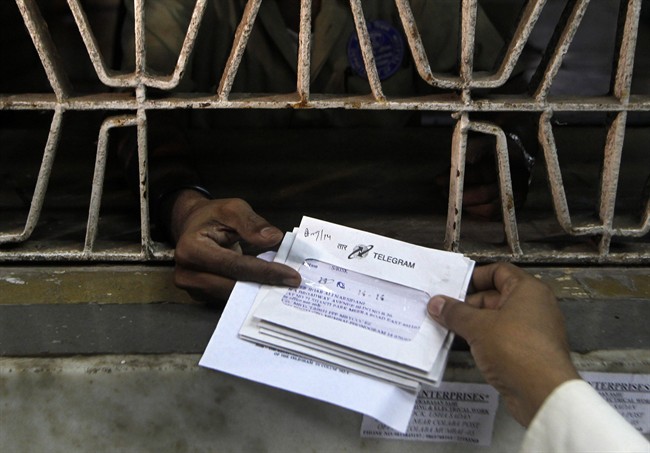
NEW DELHI – India’s last telegram went out late Sunday, marking the end of a service that millions of Indians had relied on for fast communication for more than 160 years.

Hundreds of people thronged the 75 telegraph offices remaining in the country to send their last telegrams to friends or family as a keepsake.
The company cancelled holidays for staff at the offices to handle the rush, Shameem Akhtar, general manager at the Bharat Sanchar Nigam Ltd., which runs India’s telegram service, said Monday.
The company says declining revenues forced it to end the service, which had become obsolete in an age of email, reliable landlines and ubiquitous cellphones.
Some of the last-day users sent telegrams to Kapil Sibal, India’s minister for telecommunications, pleading for the service to be continued.
“The losses were mounting. It was not viable to have kept it going much longer,” Akhtar said. That was especially true as the number of cellphone users exploded, with 867 million subscribers as of April.

Get breaking National news
The telecommunications ministry said it lost $250 million in the last seven years and that it was time to put an end to the service.
India’s telegram service began in 1850, when the first telegram was sent from the eastern city of Kolkata to Diamond Harbor, a southern suburb nearly 40 kilometres (25 miles) from the city centre.
Over the next few decades, telegraph offices proliferated, wiring the vast subcontinent with a network that became known for its speed and dependability.


At its peak in the mid-1980s, more than 45,000 telegraph offices dotted the country, with tens of thousands of telegraph workers and delivery men dispatching more than 600,000 telegrams a day. From birth and death announcements, to college admissions, job appointments and court summons, the telegram was the main way tens of millions of Indians __ in the remotest parts of the country and in its teeming cities __ received important news.
Until recently, the government used telegrams to inform recipients of top civilian awards and for court notices. India’s armed forces even recognized telegrams from troops extending vacations or from soldiers’ families requesting their presence at home for a funeral.
It was not immediately known what mode of communication the government will choose to replace the telegram for these types of announcements, but officials said since a lot of work was now done electronically, government departments will likely opt for email.


Comments
Want to discuss? Please read our Commenting Policy first.