


Those heading to the Rocky Mountains this week should pay close attention to avalanche conditions, as Parks Canada says natural avalanches are possible and human-triggered ones are likely because of Monday’s strong winds and Tuesday’s heavy snowfall.

Avalanche danger ratings
Tuesday’s avalanche danger rating was upgraded to considerable for the following locations:
- Banff, Yoho, and Kootenay National Parks (alpine + treeline)
- Kananaskis Country (alpine)
- South Rockies (alpine)

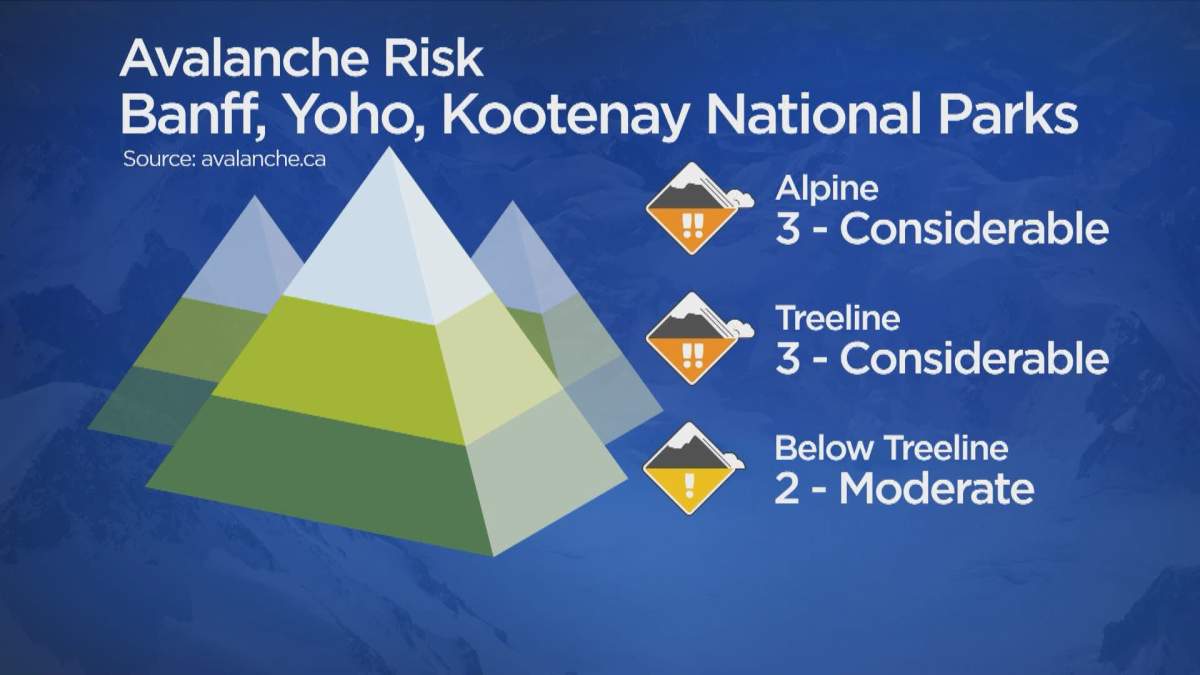

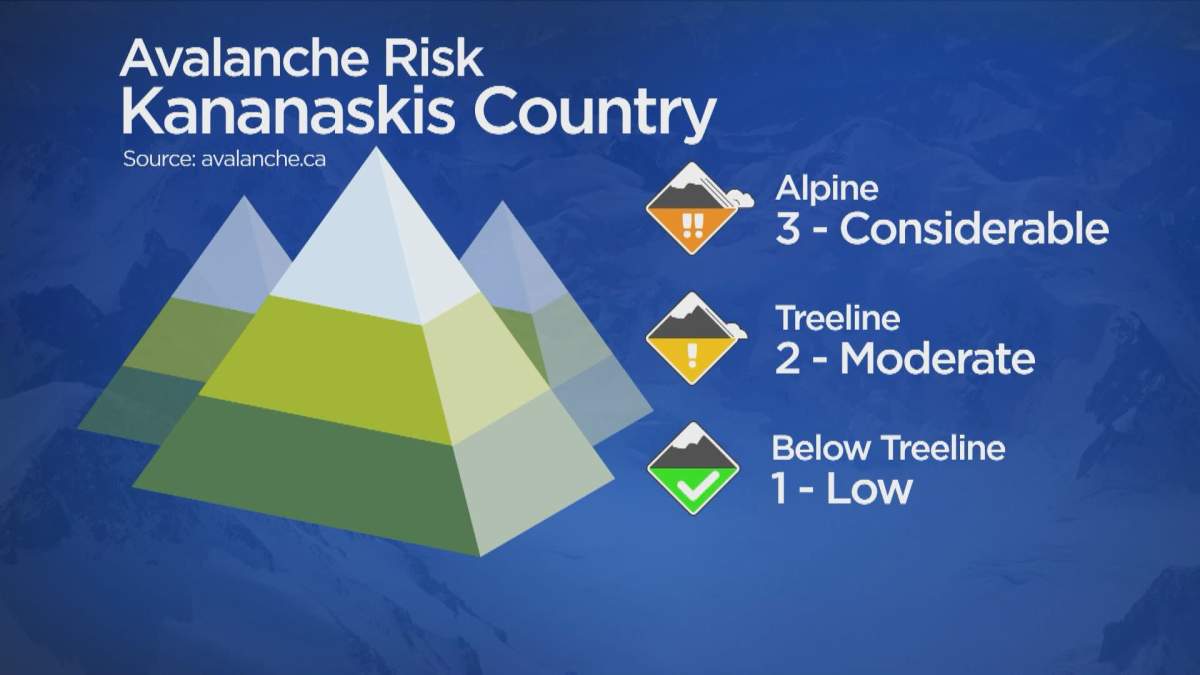
There are a couple of weather-related factors that are driving up the avalanche risk — here’s a breakdown:

Get daily National news
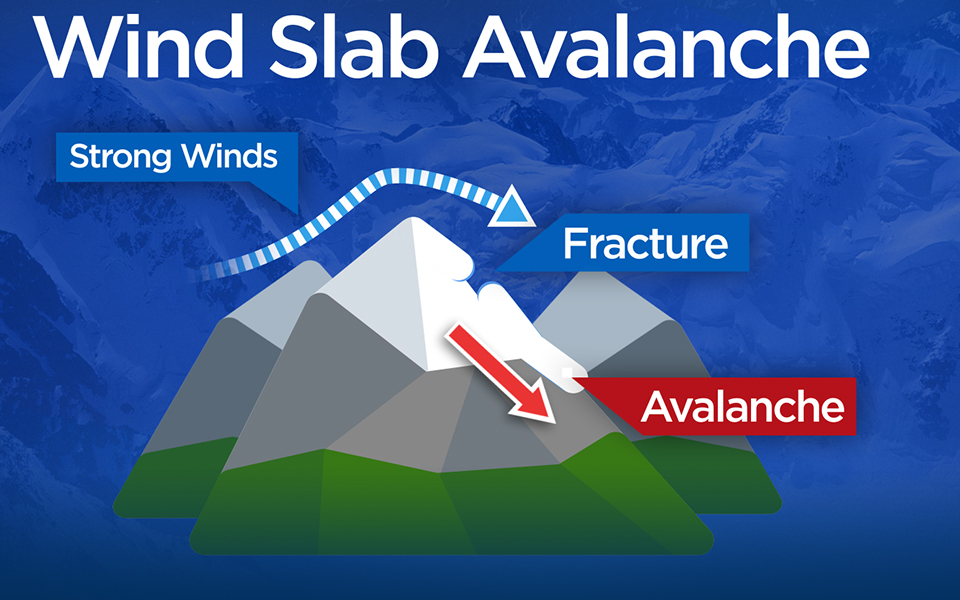
Wind Slab Avalanche
On Monday, the Nakiska ridgetop weather station clocked wind gusts at 168 kilometres per hour.
Strong winds in the Rockies can form wind slabs, which are pillows of round, smooth mounds of snow over top of weaker snow that can easily fracture and break away.
Wind slabs are most commonly created on the lee side slopes and cross‐winded terrain.
When they break away and cause an avalanche, it can be dangerous and even fatal to anyone below.


Loose Snow Avalanche
Snow started to fall in southwest Alberta overnight and was forecast to continue throughout the day on Tuesday.
Kananaskis Country was placed under a snowfall warning as Environment Canada said 10 to 20 centimetres of fresh snow could fall by Wednesday morning.
Loose snow avalanches are also known as sluffs, and are usually small with a very low danger risk.
They are typically triggered below by a disturbance — natural or human– instead of above like slab avalanches.
Sluffs can be dangerous to climbers, who could end up caught below a loose snow avalanche.

To stay updated with radar and weather alerts in your area, download the Global News Skytracker weather app for iPhone, iPad or Android.
- PetroChina meeting obstacles as it seeks to buy South Bow pipeline stake
- Canadian ice master makes Olympic history with 1st indoor temporary speedskating rink
- Alberta man nabbed for speeding in B.C. told RCMP he was trying to avoid an elk
- Calgary water usage spiked Sunday as testing on feeder main set to begin


Comments