


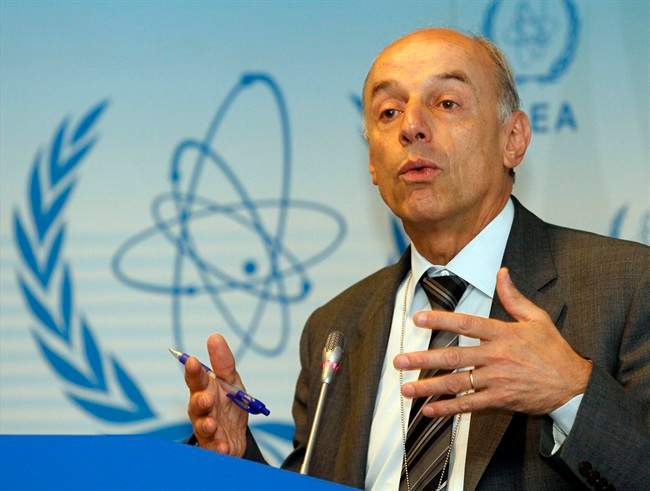
VIENNA – The U.N. nuclear agency called Thursday for stricter implementation of safety standards at plants around the globe in an effort to restore confidence in the use of atomic energy in the wake of the accident at Japan’s Fukushima Dai-ichi plant.

The International Atomic Energy Agency’s deputy director general Denis Flory said he expected a discussion about implementation of safety standards regarding the use of nuclear energy to feature at next week’s meeting of ministers representing the governing nations.
“There is a need to rebuild the confidence of the public toward their government, when their governments have decided to use nuclear energy,” Flory said.
The giant tsunami, triggered by a magnitude 9.0 earthquake that hit Japan on March 11, causing explosions, fires and meltdowns at the Fukushima Dai-ichi facility has provoked global soul searching in the use of nuclear energy.
While nations who rely on nuclear power plants for part of the energy supply, from the United States to France to China, have begun examining safety issues, Germany decided to scrap its nuclear power altogether, announcing last week it would shutter the nation’s 17 plans by 2022.

Get daily National news
Chancellor Angela Merkel has said she hopes Germany, through increasing its reliance on renewable energy sources can serve as an example for other nations, encouraging them to reconsider their own nuclear programs. Germany’s neighbour France is the strongest defender of using nuclear power in Europe.
Flory – a Frenchman – insisted that confidence between governments regarding the use of nuclear energy must also be restored and urged nations using nuclear power to implement common safety standards.
“Confidence can be rebuilt only if it is more visible, only if all states use this common safety basis,” Flory said.


In a preliminary report released on Wednesday, the IAEA praised Japan for its “exemplary” response to the nuclear crisis, although they faulted the nation for failing to be sufficiently prepared for the impact of the tsunami and earthquake.
Fukushima operator, Tokyo Electric Power Co., suggested last week that the severity of the accident was greater than officials had previously acknowledged, and that Units 1, 2 and 3 had all melted during the early days of the crisis.
Asked whether TEPCO’s roadmap of six to nine months to cool down the nuclear reactor was realistic, Flory told reporters that would “depend on what they will discover en route during working.”
He said the IAEA continued to monitor radiation levels at the plant and in the surrounding area and that incoming information would continue to influence the final report, to be presented at a conference later in the month.
“When you are working on such a complex facility you set yourself goals, but you have to take reality with you,” Flory said.


Comments
Want to discuss? Please read our Commenting Policy first.