


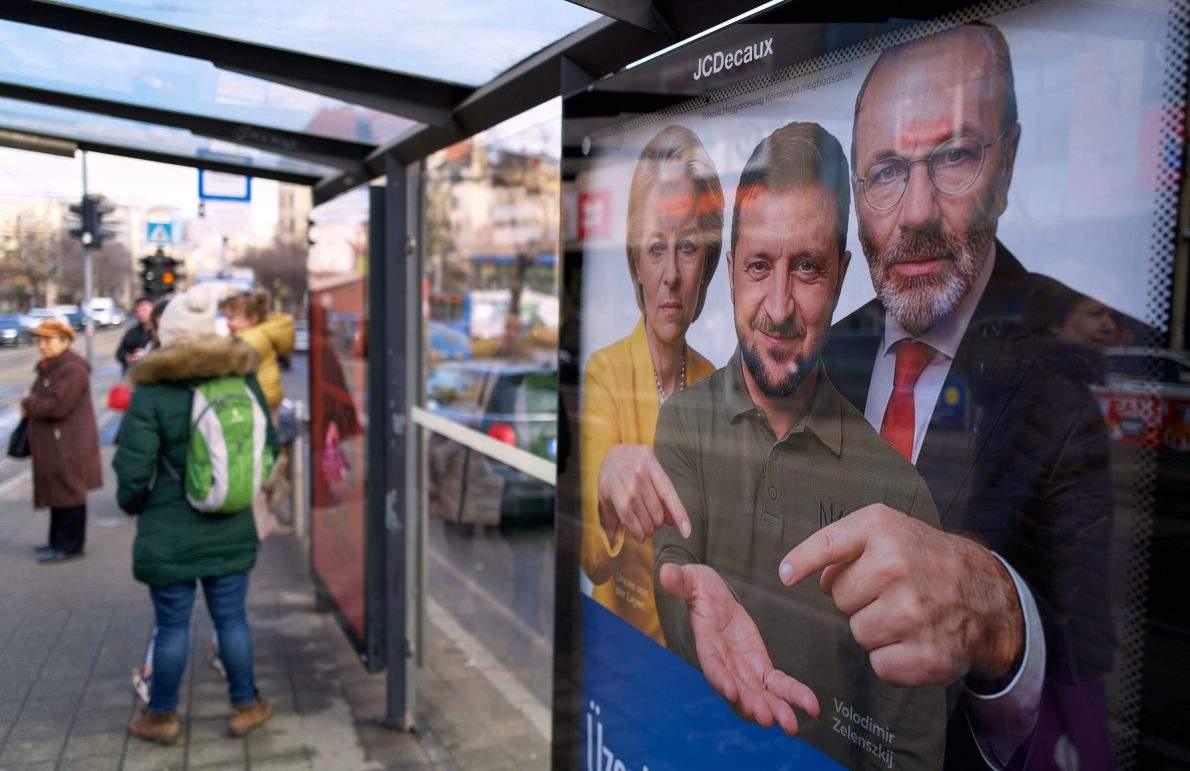
The European Union’s new artificial intelligence transparency rules that aim to make it easier to spot AI-generated content and systems took effect this week, and experts say Canada should model them — and fast.

As of Sunday, AI systems operating in Europe must be designed to explicitly notify users when they’re dealing with AI instead of a human. Additionally, platforms and services that use those systems are now required to clearly label AI-generated or manipulated content like deepfakes that are designed to look real.
Canada has launched public consultations on how to develop its own AI transparency rules, with AI Minister Evan Solomon saying it matters “more than ever” as AI continues to become part of everyday life.
But AI researchers say the clock is ticking as systems get smarter and the line between what’s real and fake gets blurrier.
“We are in an arms race around disinformation and misinformation with those actors who are using generative AI to misinform and attack the institutions of societies,” said Brian McQuinn, an associate professor at the University of Regina and co-director of the Centre for Artificial Intelligence, Data, and Conflict.
What are the EU's new AI rules?
The new European rules are part of the EU’s sweeping AI Act, which took effect in August 2024 but gave two years for the transparency obligations to come into force.
The rules differ somewhat between providers — companies like OpenAI that create AI systems — and deployers — platforms and entities that use those systems — with some companies like Meta and xAI falling into both categories.
Providers must not only ensure their systems are designed so that users are notified when they’re interacting with AI, but also that content generated or manipulated by those AI systems contains “machine-readable” marks, so it can be detected as AI.

Deployers of AI systems must clearly label deepfake videos, images and audio files, as well as AI-generated or manipulated text “on matters of public interest.” Only deepfakes that involve real and existing people, places, events or objects need to be labelled.

Get daily National news
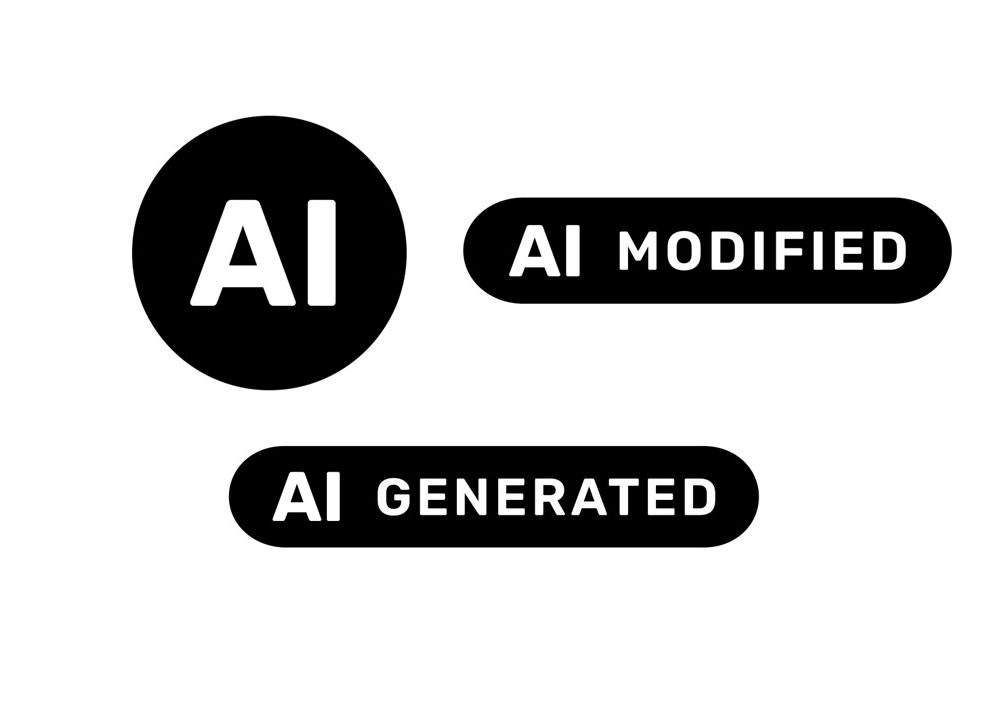
The European Commission has introduced a set of icons that can be used depending on how much AI was used in the creation of a deepfake.
For example, a fully AI-generated video would use the “AI Generated” icon, while an authentic photograph that swaps in the face of a politician using AI would need the “AI Modified” icon. The basic “AI” icon can be used in text labels specifying which part of a deepfake was generated with AI, such as the voices or audio in a video.
Some platforms like TikTok and Instagram have already begun labelling AI-generated and manipulated content with their own icons and text disclaimers, and the EU rules make clear those labels would suffice. While the EU icons themselves are optional, and can be used instead of platforms creating their own, “the labelling requirements … are not,” according to the commission.
Deployers of AI-based emotion recognition and biometric categorization tools must also clearly inform users that they are interacting with AI.
The new transparency rules come with strict penalties. Companies that fail to comply could face fines of up to 15 million euros ($24.2 million Canadian) or three per cent of their global annual revenues, while EU institutions and agencies risk fines up to 750,000 euros ($1.2 million).
The rules also emphasize that “artistic, creative, fictional or satirical works” created with AI do not need to be labelled, or face “limited disclosure requirements.”
“It’s clear that they’ve been working to try and balance different interests — for example, not to have to create disclosure fatigue by having too many disclosures so that people stop paying attention to them,” Teresa Scassa, a professor and Canada Research Chair in Information Law and Policy at the University of Ottawa, said of the new EU rules.
“One of the challenges though is to know whether it’s the right balance, since we’re dealing with something that’s new, and the EU is out on the forefront of that…. It’ll be something I think that will be evaluated over the next couple of years to see whether the rules need to be tweaked or adjusted.”
What is Canada doing on AI transparency?


Canada’s new AI for All strategy, launched in June, promised action on improving transparency as part of its first pillar that focused on safety and “protecting Canadians.” The strategy specifically mentioned watermarks for AI-generated content as a capability the government would work on.
Last month, Ottawa launched a public consultation on the issue, with Canadians asked to submit their thoughts by Sept. 23.
The consultation focuses on five areas where “further action may be warranted” to address transparency:
- Detecting and identifying AI-generated content.
- Ensuring individuals know when they are interacting with an AI system.
- Improving understanding about AI systems and their “development, capabilities and limitations.”
- Allowing “serious incidents” related to AI systems to be tracked.
- Identifying and tracking the behaviour of AI agents deployed in customer service and assistance roles.

A discussion paper from the federal government says the consultation will seek feedback on how best to enact transparency rules through “the range of policy instruments available,” including legislation or regulations.
A spokesperson for AI Minister Solomon’s office told Global News it was too early to speculate on the specific policy instruments the government may use, or when they might be introduced, while the consultation is underway.
“Canada is closely examining the European Union’s AI transparency requirements that took effect this week, alongside work underway through the G7, OECD and other international partners,” the office said in a statement.
“Canada’s approach will reflect Canadian needs and values and will be informed by what we hear through the consultation.”
McQuinn, the University of Regina professor, said the consultation could be useful to help the government address uniquely Canadian concerns, like Indigenous issues and French language requirements, when developing its own transparency rules.
But he stressed that work needs to be focused and accelerated to keep pace with both rapidly developing AI technologies and bad actors’ efforts to get around these rules.
“This stuff is moving so fast that we just need to put the legislation into place, because we’re going to need new legislation in a year because things are going to exist that we don’t even know about now,” he said.
“Our legislative process is designed for something you study for a few years, you do consultations for a year and ‘a-ha, we have a solution,’ and now we legislate that solution…. It’s not designed to tackle problems that are as profound and as fast-moving as these are.”
Both McQuinn and Scassa said Canada would be wise to use the EU’s rules as a model — not just to ensure they can be drafted and adopted quickly, but also to follow what Prime Minister Mark Carney has called the “middle powers” approach of banding together to create influence in the global debate around AI regulation.
“The EU is large enough to carry some influence on this type of thing,” Scassa said.


I refuse to enter a mall or store with my phone on me for this very reason. Certain “Canadian” stores use new digital price tags (they have LCD screens) on the shelves which change price. If I see digital tags I just walk out.
Average returd under 30 to dumb to recognize AI, it’s only woman they’ve had
If all the thirsty old men chasing AI girls on social media are any indication (and they are) the Average Canadian over 30 is too stupid to recoginize AI.
I guess we need to label it.
But the Canadian goverment wont do anything because they are all being paid handsomly to turn our jobs and privacy over to AI bots.
Paul Coker nailed it
Having a question in the title means this article will soon be followed by an Ipsos poll that says 77% of Canadians agree to whatever the government is trying to push.
This is how propaganda works.
Benoît
August 6, 2026 at 4:35 pm
The Carney government is currently working on this important issue which affects all Canadians. The Poilievre conservatives have made it clear they support ZERO regulation of AI, like the Trump administration. The conservatives would leave us woefully unprotected from dangerous AI technology if they were in power.
Id*ots abound.
I don’t think AI should be allowed at all. More specifically, I’m referring to facial recognition and AI that tracks and builds profiles about us. Humans shouldn’t be monitored and watched like animals in a cage.
The idiots in Ottawa are incapable of crafting serious policy so might as well steal it from somewhere else
Benoit. AI technology is not dangerous, we using it everyday already.
Only dangerous thing is when Liberals try to control it same as canadian economy for last 12 years.
Blaming Poliviere for liberals shortcomings is disingenuous
Build AI data center size of universe, then use parallel universe to power it
canada third world country, their AI data center consists of two pigs grunting
The Carney government is currently working on this important issue which affects all Canadians. The Poilievre conservatives have made it clear they support ZERO regulation of AI, like the Trump administration. The conservatives would leave us woefully unprotected from dangerous AI technology if they were in power.
Well, we know our current leadership has no clue, so best to have something in place.
No. Ban data collection and AI surveillance, and stop trying to be like other countries.
Don’t copy anything from Europe we have too much of socialism here already!
And don’t give any more stupid ideas to liberals