



As Edmonton’s snow removal process continues to be the talk of the town, ahead of budget deliberations some city councillors want to make a plan on how to better handle future winter seasons.

They also want an emergency plan for any extreme winter weather events, like the heavy snowfalls the city had in December and early January.
“We do need to build a new foundation to our entire budget, and that includes significantly better resources to snow and ice control,” said Edmonton Mayor Andrew Knack, adding the city’s base service level is not good enough right now.
In Tuesday’s city council meeting, Coun. Aaron Paquette was set to present a motion asking administration to build a report, based on public feedback, to create a Snow and Ice Control Surge Capacity strategy.

He described it as an emergency service plan for any future extreme winter weather.
“It’s not actually asking for a budget increase or anything like that. It’s saying ‘What would the plan look like?’ so we can show Edmontonians what that looks like, and then we can have the discussion ‘Is it worthwhile to put that money into the preparedness?” Paquette said.

Get breaking National news
“What I’d really love to see is an analysis of what the potential need would be and how we would address that.
“How would we bring in the private sector, how do we carry the cost of equipment at the city — and potentially personnel — and what that looks like in terms of real results for residents.”
Rookie Coun. Jon Morgan, who before being elected worked at Edmonton transit and has experience with the city’s roads, was also set to present a similar motion.
He’s looking for administration to review the Snow and Ice Control Policy to include things like risk analysis, what kind of resources would be needed for different service tactics, and potentially bringing back calcium chloride as a snow removal tool.
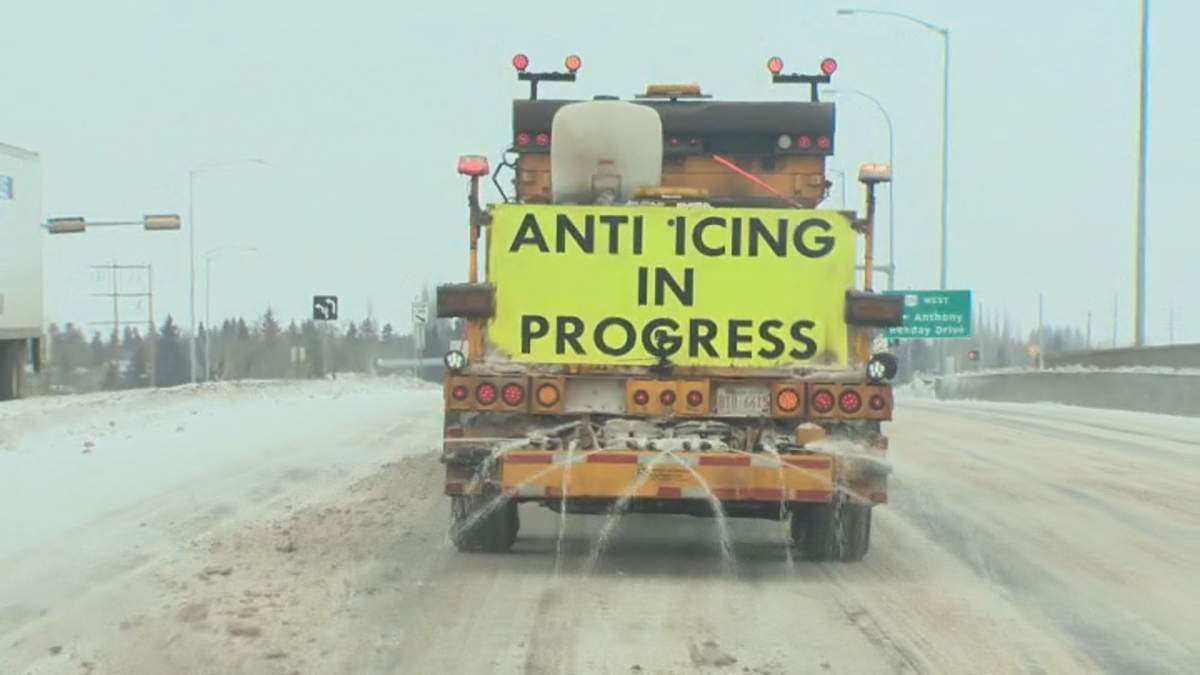


The anti-icing agent was highly controversial in Edmonton when the city used it on arterial and collector roads during a two-year pilot project in 2017 and 2018.
The solution was applied in a thin layer once per snowfall and designed to prevent snow from sticking to the pavement. It has a lower freezing point than sodium chloride, making it easier for crews to remove snow from the streets.
The city stopped using calcium chloride because of vocal concerns raised around damage people claimed it was causing to vehicles and concrete.
Both Knack and Paquette say public engagement will play a big role in decision making during the upcoming budget reviews and deliberations.

-
![]() City preps for winter snow clearing without calcium chloride
City preps for winter snow clearing without calcium chloride -
![]() City Councillor Andrew Knack on Edmonton scrapping calcium chloride this winter
City Councillor Andrew Knack on Edmonton scrapping calcium chloride this winter -
![]() Edmonton council says calcium chloride program likely to be put on hold
Edmonton council says calcium chloride program likely to be put on hold -
![]() Test reveals calcium chloride exceeds Edmonton bylaws; councillors not briefed
Test reveals calcium chloride exceeds Edmonton bylaws; councillors not briefed -
![]() Lawsuit filed against City of Edmonton over its use of calcium chloride
Lawsuit filed against City of Edmonton over its use of calcium chloride -
![]() Reports examine effects of calcium chloride on Edmonton roads
Reports examine effects of calcium chloride on Edmonton roads -
![]() Controversial calcium chloride program debated at Edmonton city hall
Controversial calcium chloride program debated at Edmonton city hall


— With files from Karen Bartko, Global News


Comments
Want to discuss? Please read our Commenting Policy first.