


A coroner’s inquest into the 2024 death of a Saskatchewan man who was working at a wind farm construction site in New Brunswick has concluded, with improper equipment use identified as the root cause of the fatal accident.

Matthew Brawn, 46, was killed on July 18, 2024, in Springdale, N.B., while workers were erecting wind turbines at the Neweg Energy Project. He was working for a trucking contractor at the time and was struck by a runaway trailer.
According to WorkSafeNB, he was “run over by a Dolly Snappel trailer, a specialized heavy-duty transport trailer designed to move extremely large, heavy and irregularly shaped cargo.”
Woodturbine Construction Team Inc. pleaded guilty to a charge under the Occupational Health and Safety Act in January 2025 for failing to ensure that an industrial lift truck was not loaded beyond its capacity. The company was fined $25,000, plus a $5,000 victim surcharge.
The inquest, which took place in Saint John, N.B., this week, heard that Brawn was helping to unload a wind turbine tower from the trailer that had just arrived.
The truck driver was moving the front half of the two-part trailer into its designated spot. WorkSafeNB investigators later found that Brawn then asked to use a telehandler — a large forklift — instead of waiting for the truck to return to move the rear half.
WorkSafeNB investigator, Michael Cyr, told the inquest the telehandler was attempting to move a load of about 27 times its rated capacity when the incident unfolded.
Six witnesses testified, including Laurence MacDonald, the ironworker who was operating the telehandler.

Get daily National news
In an audio recording played for the jury, MacDonald told WorkSafeNB he had never used a telehandler to tow a trailer before, especially on a four per cent slope, and he did so at Brawn’s direction.
MacDonald said he was using the wrong driving mode, causing the telehandler and trailer to turn in the opposite direction. He said Brawn, who was directing him, had walked to the front of the trailer.
“(Brawn) continued walking towards the back of the trailer. He bent down. I figured it was to put the chuck in or lock the brakes out, and then got back up. He started walking back up the hill,” he said.
MacDonald said he moved a bit and that’s when the trailer came off the forks and started rolling down the hill. He said Brawn ran towards the front of the trailer.
“It just started to move, that’s when I seen him go under the f–ing back wheels,” he said.
Brawn was killed by blunt force trauma.
Cyr said that using the telehandler to move the trailer was not approved by the employer but “acknowledged” it was regularly done.
He said WorkSafeNB couldn’t review the trailer or its training requirements because the company that owns it is federally-regulated, which puts it outside provincial jurisdiction.
The inquest’s jury made several recommendations, including training that equipment should be used as intended, establishing an active on-site supervisor and having morning safety meetings to establish roles and review equipment, while also reminding workers they should refuse unsafe work.
- Flight controllers allegedly punched out early before Air Canada plane crash
- Partial lunar eclipse will be visible across parts of Canadian skies soon
- Winnipeg Jets goaltender Connor Hellebuyck goes public with trade request
- Transportation Safety Board investigating after fatal small plane crash in Mission


Deputy chief coroner Emily Caissy told reporters following the inquest that the recommendations will be forwarded to the appropriate agencies, including Woodturbine Construction Team Inc., and its responses will be published in a report.
“It gives us a chance to look back (…) to identify maybe things that we can improve on and processes we can change,” she said.
“With the goal of trying to prevent something similar from happening, whether it’s death or injuries.”
She added that while Brawn’s family was following the inquest, they did not attend.
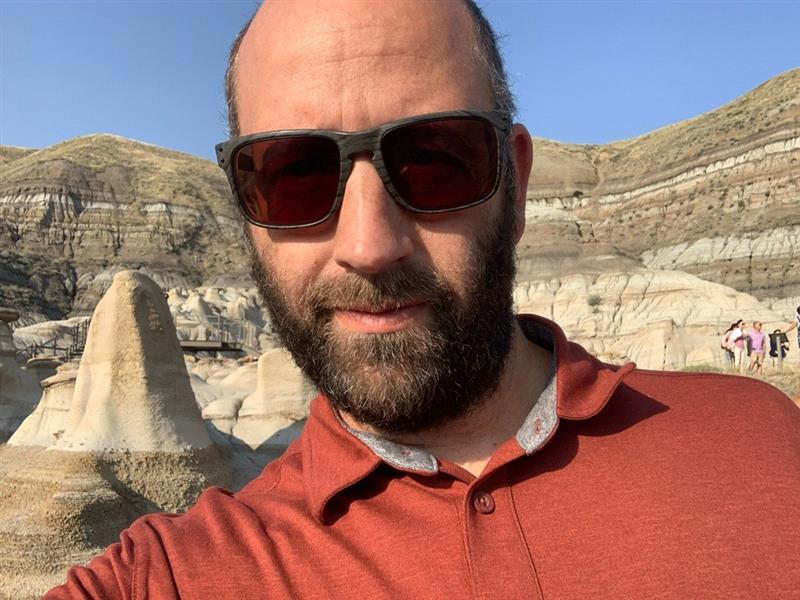
In an obituary, Brawn was remembered for his dry sense of humour and his love for food, his nephew and his dogs.
“Helping was what he wanted to do, and being relied on was his specialty,” the obituary read. “We didn’t lose the guy who did everything for us; we lost the guy we wanted to help us because we wanted to be with him.”
During the inquest, regional coroner Danny Mallet reminded the jury of the importance of their work.
“It is through this process that the community can be satisfied that this death has not been overlooked, concealed, nor ignored,” he said.


Comments
Want to discuss? Please read our Commenting Policy first.