


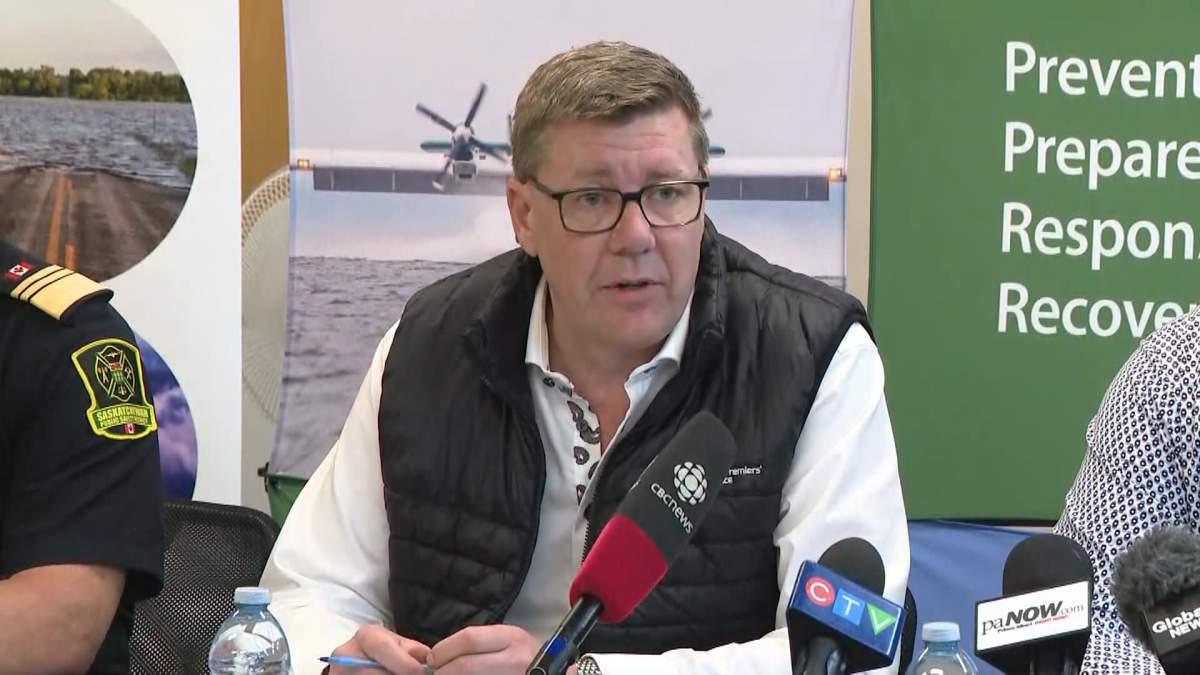
Saskatchewan Premier Scott Moe has declared a “provincial wildfire state of emergency” as firefighters and residents combat a growing number of wildfires, with no end in sight to the crisis.

Speaking at a news conference in Prince Albert, Sask., Moe said there are currently 17 active wildfires in the province that have forced the evacuation of about 15 communities.
“Just looking ahead to the weather forecast, it just doesn’t look good,” said Moe. “It looks like it is going to further deteriorate — there is no rain in the forecast — it’s a very serious situation we are faced with.”
The state of emergency declaration comes a day after the premier of Manitoba also declared a provincial state of emergency.
The declaration makes it easier for different levels of government to battle the fires that have forced more than 4,000 residents from their homes, mainly in Saskatchewan’s remote northeast region.

Get breaking National news
The state of emergency will remain in place for 30 days but can be extended.
Moe said he has not asked the federal government for assistance but may do so in the days ahead.
Three First Nations in Saskatchewan have also declared a joint state of emergency and called for help to fight the escalating wildfires.
The Lac La Ronge Indian Band, Peter Ballantyne Cree Nation and Montreal Lake Cree Nation cite “critical shortages” in firefighting resources, personnel and air support.
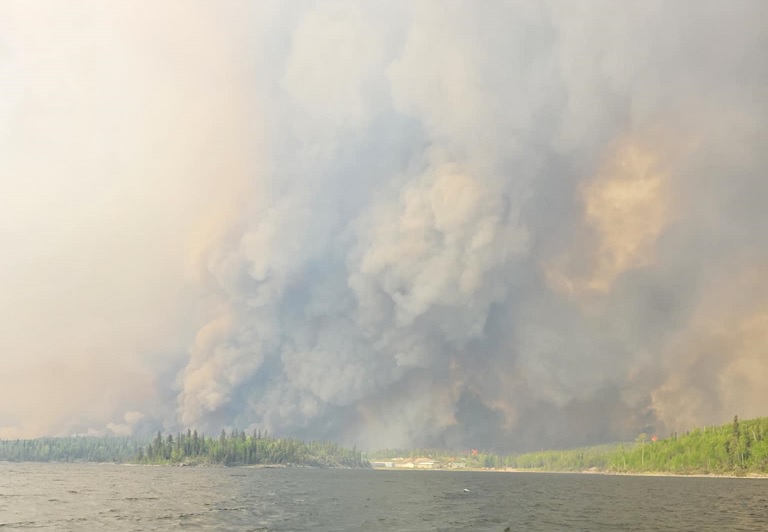
The hardest-hit area is in Pelican Narrows near the Saskatchewan-Manitoba boundary, where more than 2,000 residents have been forced to flee.
Kyra Wilson, grand chief of the Assembly of Manitoba Chiefs, said the resources made available to evacuating First Nation communities have been severely lacking.
“There should be no delays. There should be no wait times on any request for emergency services,” Wilson said.


Moe said Saskatchewan is working with Manitoba to fight the fires and offer support to evacuees, adding “We are in this together.”
A fire that started Monday near Creighton, Sask., forced the evacuation of Flin Flon, Man.
The 1,200 or so residents of Creighton and nearby Denare Beach are also out.
Crews struggled to fight the fire early on after a drone flew into the fire zone, forcing water bombers to stand down.
Federal rules allow for fines and jail terms for anyone flying a drone within nine kilometres of a wildfire without permission.
In Creighton, Mayor Bruce Fidler said nearly all of the residents have left and most are heading south to the town of Nipawin.
“We do have a few people here that we need, our essential workers and firemen,” he said. “The fire is still threatening the communities, but they’re holding it steady.”
With files from The Canadian Press.



Comments
Want to discuss? Please read our Commenting Policy first.