


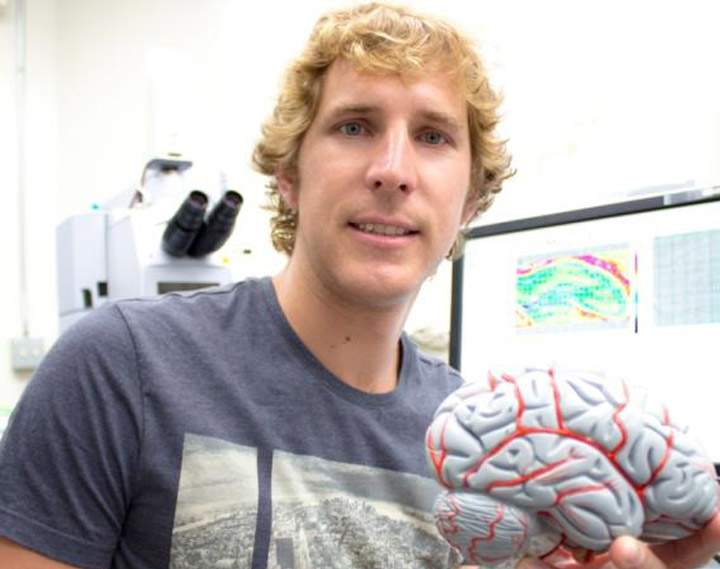
SASKATOON – Scientists have made progress toward dealing with the aftermath of stroke.

Using the Canadian Light Source located at the University of Saskatchewan in Saskatoon and the Synchrotron Radiation Centre in Wisconsin, scientists have uncovered a new method for better understanding how stroke damages the brain.
“I am fascinated by the chemical reasons behind how we think and how that information could be applied to help stroke victims,” said Dr. Mark Hackett, who led the team conducting the research.

Get weekly health news
Hackett said a stroke is like lighting the fuse on a bomb as it activates pathways in the brain that may later cause severe damage.
The research validated the use of a new imaging approach to study the chemical pathways in the brain.
“With such crucial responsibilities, it is important to thoroughly understand how these parts of the brain operate in order to protect them from a stroke,” said Hackett.
- Late spring start, dry conditions to blame for intense Edmonton allergy season
- Woman with terminal cancer climbs Mt. Everest to show possibilities are limitless
- N.B. should halt transition to new virtual-health-care provider: Opposition Tories
- Ebola outbreak is ‘very complex,’ but ‘can be stopped’, WHO chief says


The team will now study the mechanisms of the pathways initiated by a stroke with the hope of blocking them in the future and minimizing the aftermath of stroke.
The discovery of the new imaging tool could potentially be applied in the search for a cure to other brain diseases like Parkinson’s, multiple sclerosis and Alzheimer’s.
Stroke is the third leading cause of dead in Canadians.
Research for the project was funded by the Heart and Stroke Foundation of Canada and the Canadian Institute of Health Research.


Comments
Want to discuss? Please read our Commenting Policy first.