


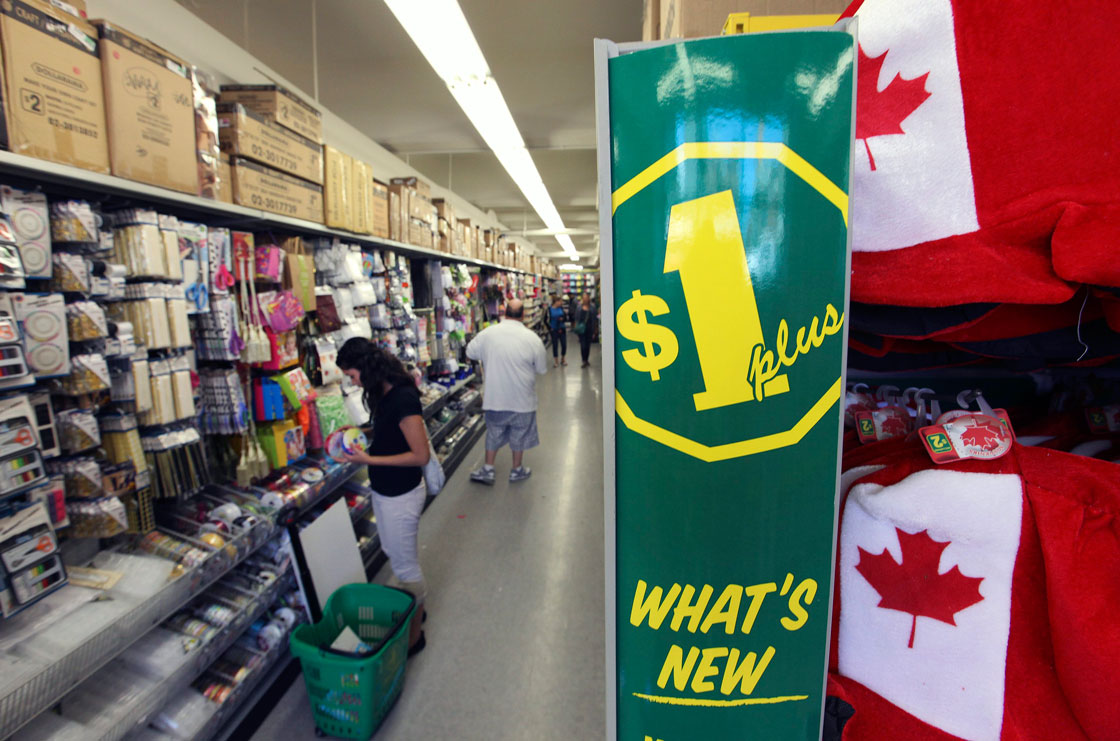
At what point should we start calling it Two- or Three-Dollarama?

If you haven’t noticed, the country’s largest chain of bazaars specializing in cheap day-to-day goods, Dollarama Inc., has shrewdly introduced higher-priced items in recent years, discreetly pushing price points up on several in-store products.
The plan has paid off for the Montreal company, which is seeing healthy increases in the number of return customers walking through the doors as well as the number of stores, period, which has risen to 806 (with intentions to add more). Profits are up, too.
The strategy has boosted sales with nearly six in 10 items crossing the checkout counter now priced north of $1.00, the price the company steadfastly stuck to for decades until April 2009, when if first began a plan to introduce higher-priced items.
Whether the company is done introducing pricier goods depends on who you ask.
“We’re very comfortable right now. There’s certainly no panic to increase price selection,” Larry Rossy, Dollarama’s long-time chief executive, said Wednesday.
Before the introduction of higher-priced goods, Dollarama’s stock in trade was cheap gift wrapping, birthday cards, plastic cutlery and other inexpensive items found in party shops and discount department stores.

Get weekly money news
The shift however has seen dozens of well-known brands and products enter the mix, designed to undercut competitors and keep customers coming back.
A 10-pack of Nestle hot chocolate will cost you about $4 at Loblaws or Walmart. Dollarama’s price? Two bucks. Ultra Palmolive dish soap – scented with green apple no less – is $2.79 at Loblaws compared to $1.25 at Dollarama.
“A lot of very savvy shoppers shop there because they know the prices are good,” Desjardins analyst Keith Howlett said.
And the company is profiting handsomely from it, earning $45 million during the first three months of the fiscal year – up $3 million compared to a year ago when it began rolling out $3 bags of candies, an assortment of gardening tools as well as office supplies among other costlier stuff.
The question is, will Dollarama continue adding more expensive merchandise – and if it does, will it lose some of the quaint charm that’s become part of its brand image?
“The question that always comes up is, ‘At what point are you no longer a dollar store,’” Lyla Radmanovich, a company spokesperson says. “The value proposition hasn’t changed,” except for the fact the prices have moved into “the ‘dollars’ range” now, she said.
Rossy told analysts Wednesday the rollout “will evolve as it evolved a few years ago when we went up from a dollar.”
“The company’s sort of said they’re where they are for awhile. But in five years, they might be at another price point,” Desjardins’ Howlett said.




Comments
Want to discuss? Please read our Commenting Policy first.