

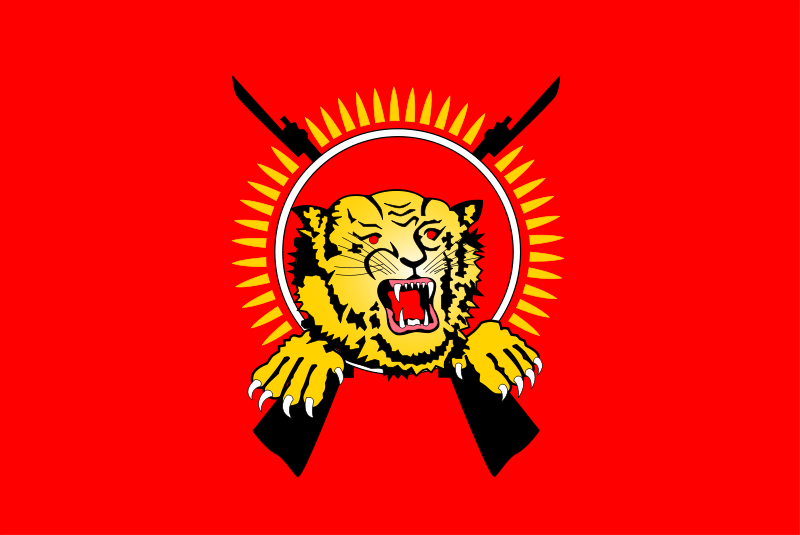
The 26-year conflict between the Sri Lankan government and the separatist Tamil Tigers was the longest war in modern Asian history.
More than 70,000 people lost their lives through massacres, bombings, abductions and even torture.
The conflict, rooted in ethnic divisions between the predominantly Sinhalese Buddhist majority and the mainly Tamil Hindu minority, extended from 1983 to 2009.
British departure
After Sri Lanka declared independence from Britain in 1948, nationalism began to grow among the majority and alienated many Tamils. They began pushing for a separate homeland in the northern part of the country.
The Liberation Tigers of Tamil Eelam was established in 1976. War broke out seven years later, when group members killed an army patrol.
A few years later, India signed a pact with the Sri Lankan government giving limited autonomy to the Tamils in certain areas of the north and east. But the people of Sri Lanka resented the presence of Indian troops in their country, prompting them to leave in 1990.
The rebels were blamed for the death of Indian Prime Minister Rajiv Gandhi in 1991 and for the assassination of Sri Lankan President Ranasinghe Premadasa two years later.
Peace talks started in 1994 but never gained traction. Violence escalated dramatically in the next few years.
At the time, the Tigers were based in a self-declared capital in the northern part of the country. They set up a small, shadow state and even had their own air force.
Peace talks started again after the 9-11 terrorist attacks against the United States; the Tigers were eager to shed the "terrorist" label they had been given.
A ceasefire was declared in 2002, and the rebels agreed to settle for regional autonomy rather than statehood. But the agreement didn’t hold.
Final stages
Civil war erupted again in 2005 and rebel strongholds started to fall to government troops.
International aid organizations accused government forces and the rebels of breaking international humanitarian laws.
By May 2009, government troops had cornered the Tigers and thousands of civilians in a small patch of land in the northeast.
On May 19, Sri Lankan President Mahinda Rajapaksa declared victory over the rebels. Authorities offered proof that rebel leader Velupillai Prabhakaran had been killed.
In the immediate aftermath of the war, the 300,000 civilians who were caught in the crossfire in the final stages of the conflict were transferred to camps. Their detention and conditions in the camps have been criticized in and outside Sri Lanka.



Comments
Want to discuss? Please read our Commenting Policy first.