


So you’ve graduated with a university degree in the arts, but did just you pour money down the drain?

“There certainly is anecdotal evidence that finishing with a B.A. means your initial job, or two even, can be in retail of various descriptions,” said Dr. Chad Gaffield, president of the Social Sciences and Humanities Research Council of Canada.
There has been a large focus on skilled trades recently, with more funding being allocated by both the provincial and federal governments, but a Humanities Summit at the University of Regina focused on the social sciences. Titled Balance and Change in the 21st Century, its aim was to discuss the future of the arts in the digital age.
In Gaffield’s presentation he pointed out an arts degree doesn’t always mean working as a barista, but that it could also lead to a promising career with leading technological companies – like Apple and Google.
“We interact with our users in so many different ways, whether it’s through Youtube, or through search or through Google plus, or through maps – our users aren’t one dimensional, so I don’t think Googlers can be one dimensional. I think we need people from a variety of backgrounds with a variety of skills,” said Google Canada spokesperson Aaron Brindle in a phone interview. He himself has a B. A. honours in History from McGill.

Get breaking National news
Dr. Antonia Maioni is the President of the Canadian Federation of Social Sciences and Humanities and the second presenter at the summit.


She said, “One of the things that we know about people who come out of the liberal arts or social sciences and humanities is that they’re nimble thinkers; they’re creative; they can adapt. We don’t know if those trades are going to be even useful in 20 years from now.”
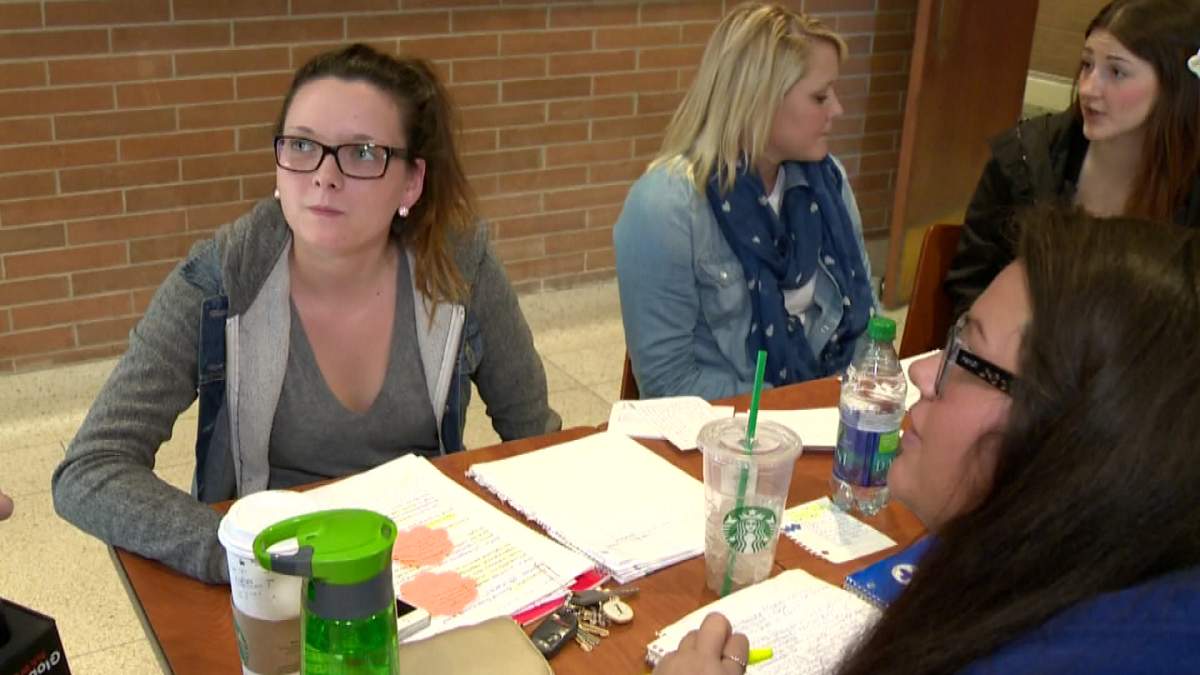
That might be why many arts students who don’t yet know what they want to do down the road aren’t worried about their careers.
“I think education is good no matter what it is. So even if it doesn’t directly pertain to what my job is in the future, it’s still education and I’m learning more,” said Lauren Gilmour, a U of R Classics major.
“My councillor kind of eased my worries about it,” added Amelia Gosselin, a first year English student. “Anything that you really don’t need specific training for, she’s like everybody needs communications, so job prospects are pretty good.”
Comments