

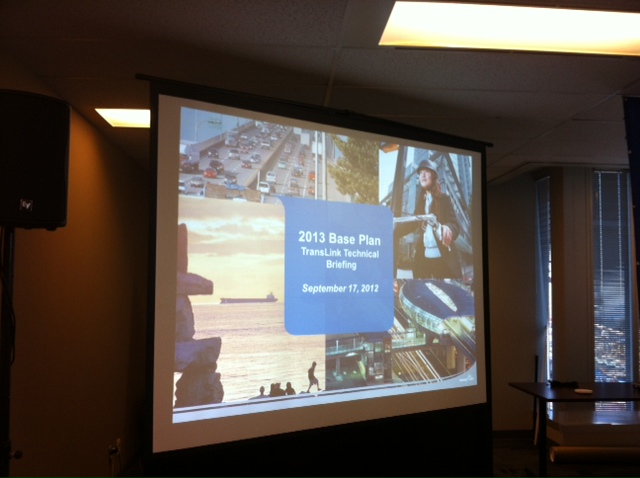
VANCOUVER – Curbing some expansion plans and aggressive cost cutting are in the future for Translink after a considerable revenue shortfall not foreseen by previous plans.

Translink says it is still committed to the Evergreen Line project scheduled for completion in 2016.
It also promises to provide 109,000 new hours of transit service.
Translink officials say there will still be room for rapid bus service on Highway 1 over the Port Mann Bridge from Langley to New Westminster, and B-line service between Newton and Guildford.
Translink is also not buckling on the upgrades envisioned for seven stations on the aging Expo Line.
But Executive Vice President of Translink Robert Paddon warns they are facing a number of fiscal challenges that are forcing them to rethink plans going forward, and reduce some of the services.
For one, Translink’s 2011 plan included additional 306,000 hours of bus service that the transit authority says it simply can’t afford.
Other victims of lower revenues include expanded SeaBus service on Sundays and holidays, Lonsdale Quay upgrade, funding for cycling programs, full Highway 1 Rapid Bus project and King George Blvd B-Line to White Rock.

Get breaking National news
“From here on in, Translink is going to be working within its means,” said Paddon. “This is going to have an impact on our customers. I don’t want to underplay that significance. A lot of people rely on our service…this will impact them, but at this point in time, we can still provide coverage, the bus will be there. We are not cutting bus services…we hope we don’t have to go there.”
He says the cuts will also affect Translink’s employees, including recovery time for bus drivers and getting rid of spare buses, which may mean delays during break-downs.
Paddon says there are a number of factors that are affecting their bottom line of $472 million in total revenue deficit.
The toll revenue from the Golden Ears Bridge is projected to be off by $38 million.
The total fare revenue is expected to be down by $108 million. Part of it comes from the decision of Translink commissioner to reject a proposed 12.5 per cent fare increase for 2013. Another portion comes from the expanded service not being put in place.
But the biggest hit comes from the loss of fuel tax revenue, which Translink predicts will be in the realm of 144 million dollars.
It says Metro Vancouver’s total fuel consumption fell considerably in recent years due to increasing gas prices and a growing number of people driving across the boarder to fill up.
On top of that, the transit authority is still missing an alternative for the $30 million revenue it was expected to get from the property tax hike, which got vetoed down by Metro Vancouver mayors earlier this year.
Translink Board Chair Nancy Olewiler says they are still in negotiations with the mayors despite their decision, at the time of which she says neither the mayors nor Translink were aware of the real extent of the fuel revenue shortfall.
“There’s new information that has come forward since then, and the mayors have that information now. We will wait and see what they wish to do. The world has evolved…, so we will see what unfolds” says Olewiler.
TransLink will be consulting with stakeholders and the public to discuss the draft plan before it is finalized by November 1 and submitted to the Transportation Commissioner for review.


Comments
Want to discuss? Please read our Commenting Policy first.