


With steady news of one MP after another deciding to bow out of federal politics, we had to wonder: are there more resignations now than before? And why do MPs leave the House of Commons anyway?

After crunching numbers spanning 27 years, we found higher rates of resignation during Parliaments when Stephen Harper was prime minister than others. (A slideshow of all Parliaments analyzed is included at the bottom of this post.)
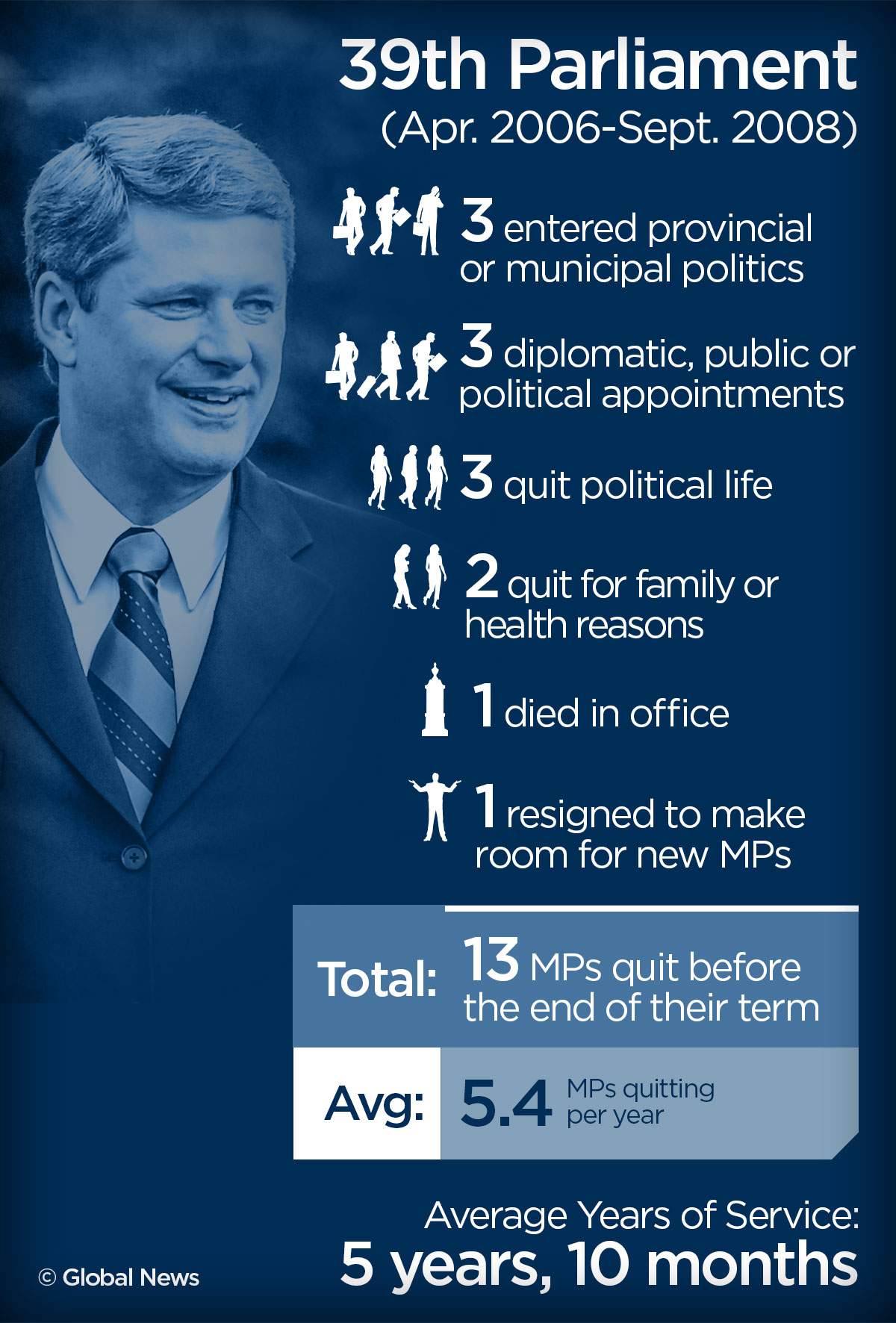
In fact, his first session leading the federal government, which lasted from April 2006 to September 2008 had the highest resignation rate of all years compared, coming in at 5.4 MPs per year (13 resignations over 29 months).
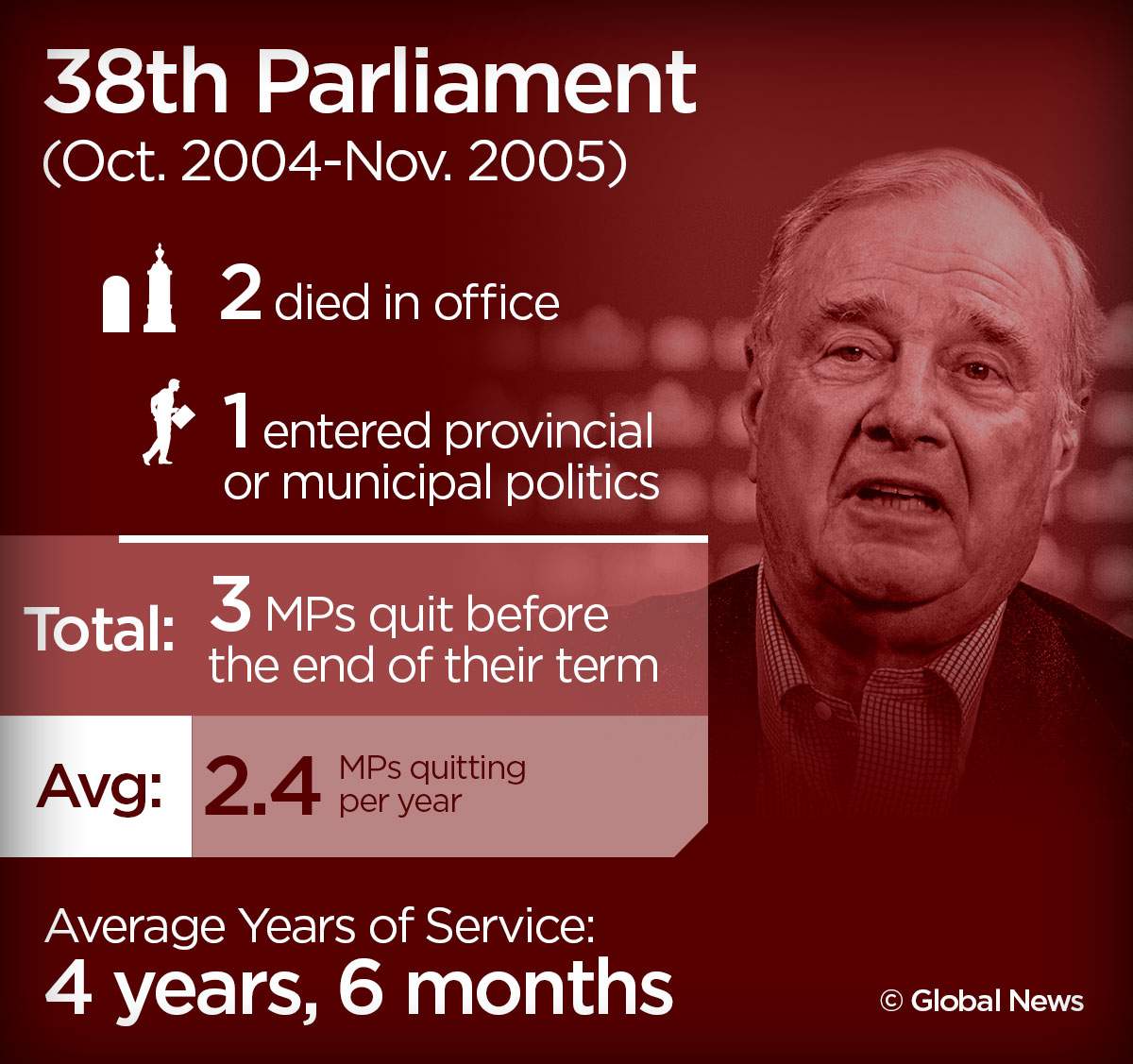
The lowest rate seen during the compared sessions came just before Harper won his first minority, when Liberal prime minister Paul Martin was leading the country.
During a Parliament that lasted 13 months, three MPs resigned, for a rate of 2.4 per year.
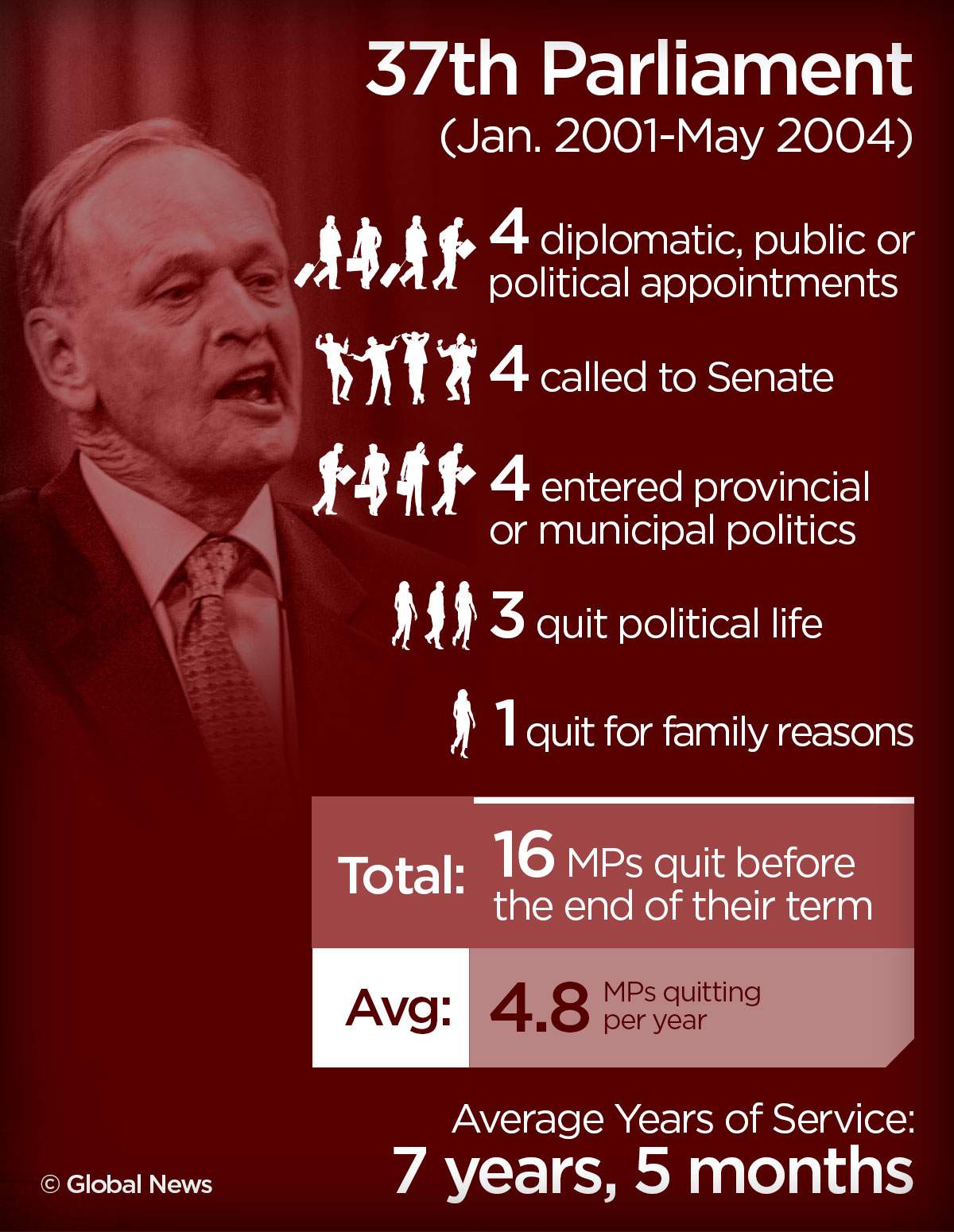
His predecessor, Jean Chretien, however, led the country during a high point in resignations. Throughout the 37th Parliament, which lasted 40 months from January 2001 to May 2004, there were 14 resignations before Chretien himself resigned. One more MP resigned after Chretien, giving that Parliament a rate of 4.8 resignations per year.
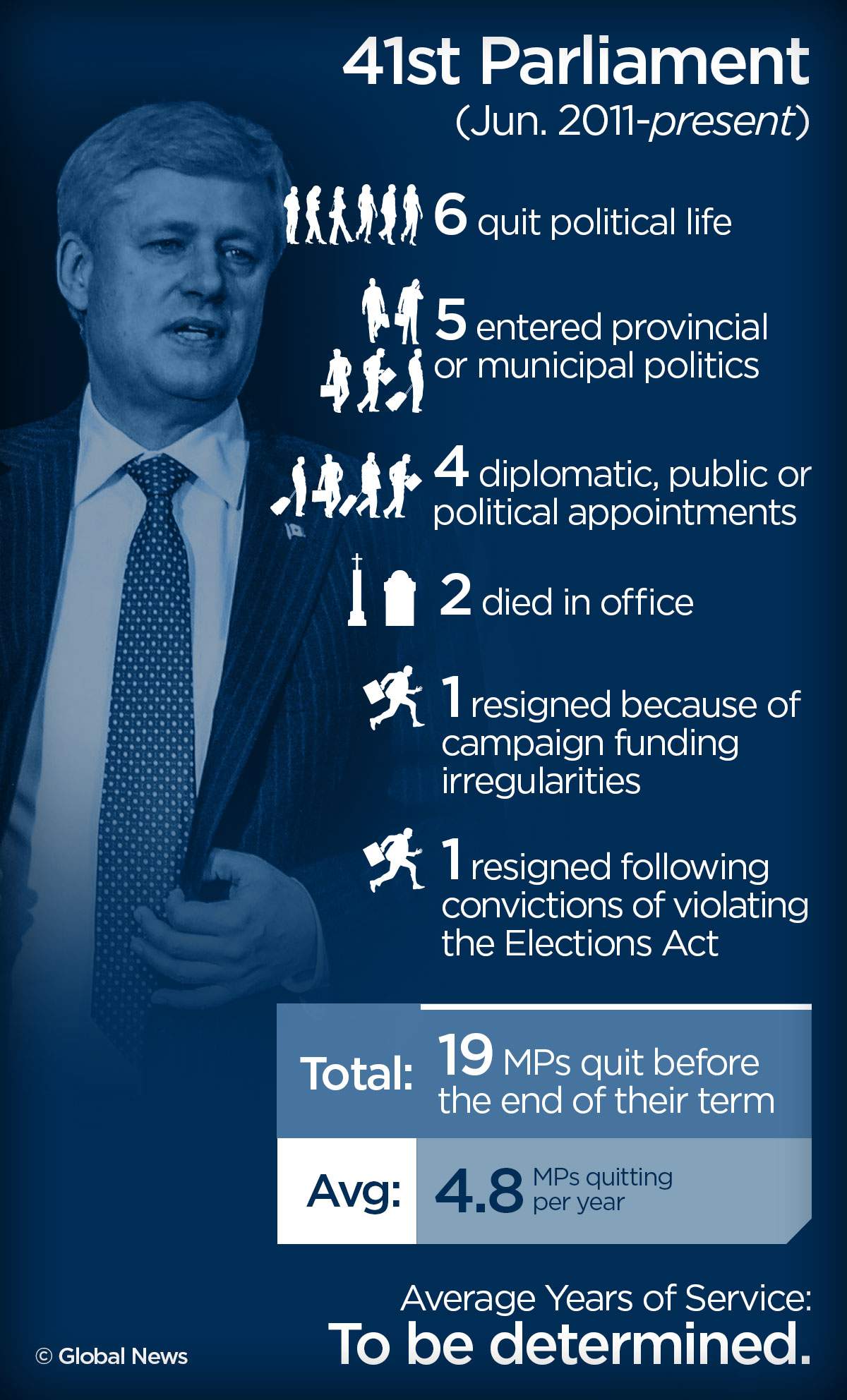
That rate happens to be the same as Harper’s current session (up until today, but not including any MP who has announced their intention to resign but will continue to serve until the election is called or session formally closes).
Looking at the information available, it’s possible the high rate during Chretien’s final government (4.8 per year) may have had something to do with the average length each MP had served his or her constituency by the end of it — seven years, five months and three days.

Get daily National news
For comparison, the average length of service during Harper’s first term was considerably lower, at five years, 10 months and two days, even though the rate of resignation was higher (5.4 per year).
The reasons MPs gave for leaving their post before the end of their elected term, meanwhile, ran the gamut from being called to the Senate (including one Liberal from Chretien’s time who’s now a convicted criminal and a second who is facing criminal charges from the RCMP), deciding to run in a different level of government, for family reasons or to let party leaders run.
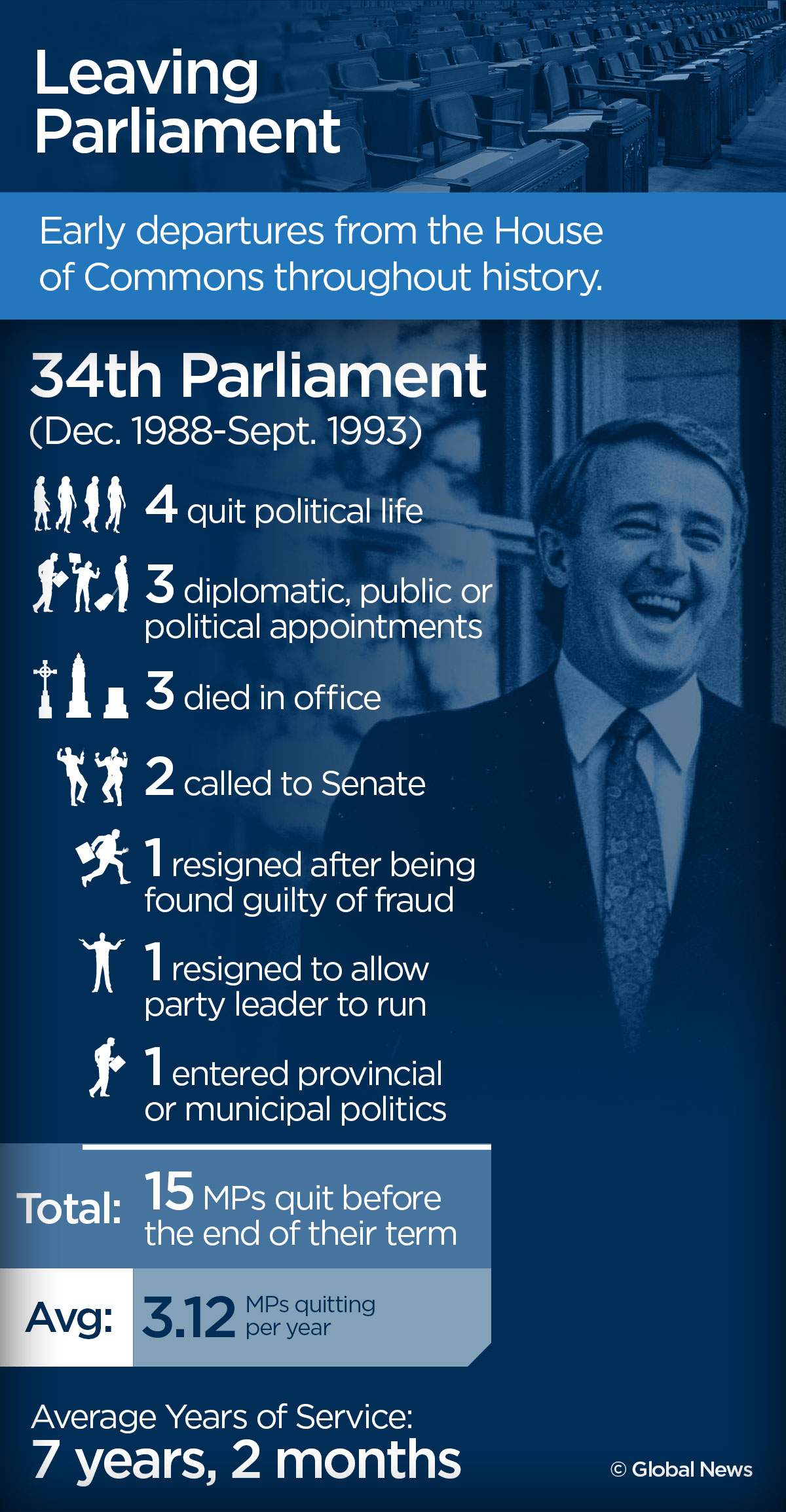
Here’s the tally for all the reasons given since Progressive Conservative leader Brian Mulroney led his final Parliament (the rate during that Parliament was 3.12 per year, but again, doesn’t include anyone who served until the session closed).
Diplomatic, public or political appointments: 24
Entering provincial or municipal politics: 24
Quit political life: 19
Died: 11
Took Senate appointment: 10
Family or health reasons: 4
Making room for other MPs or leaders: 4
Legal woes: 3
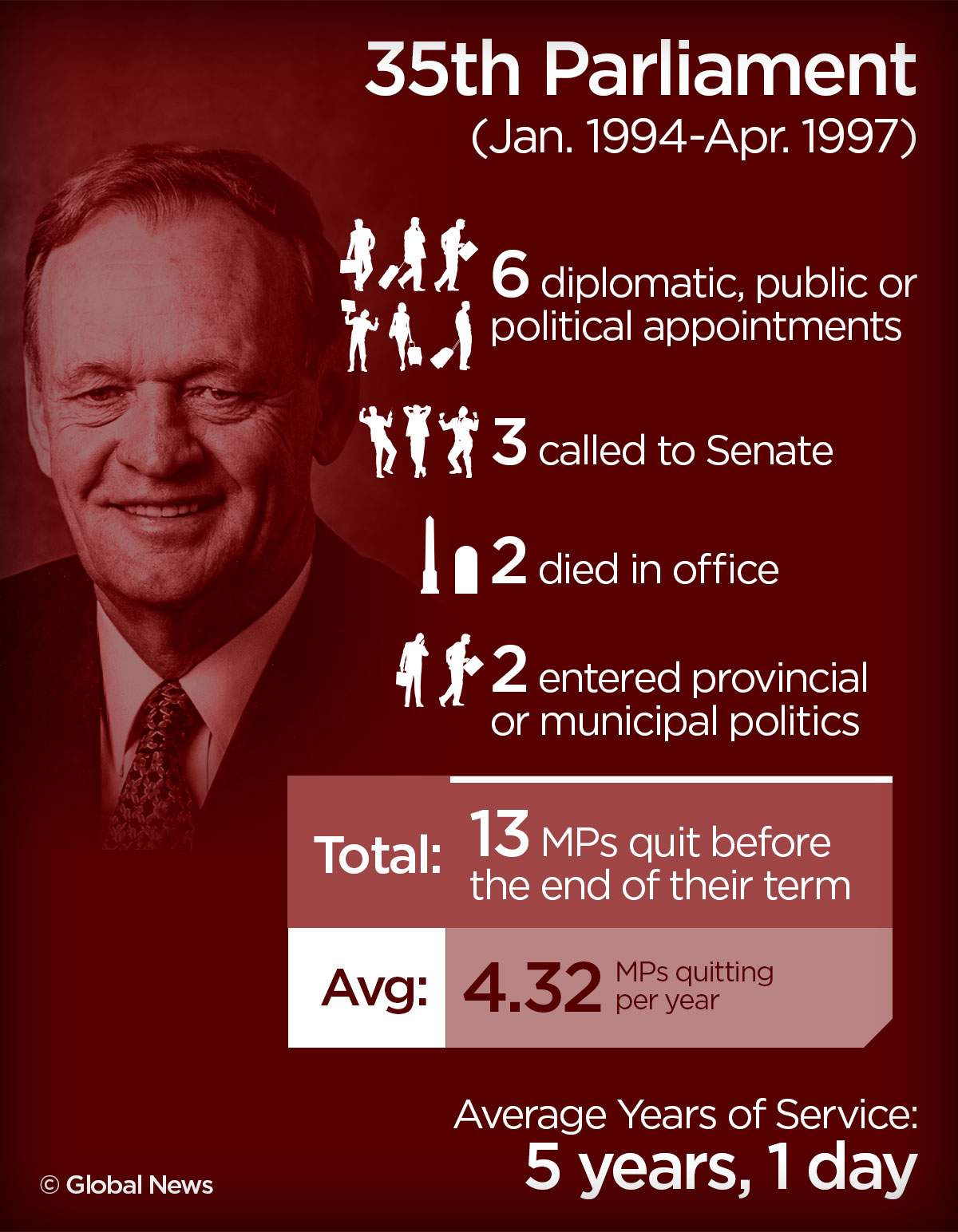
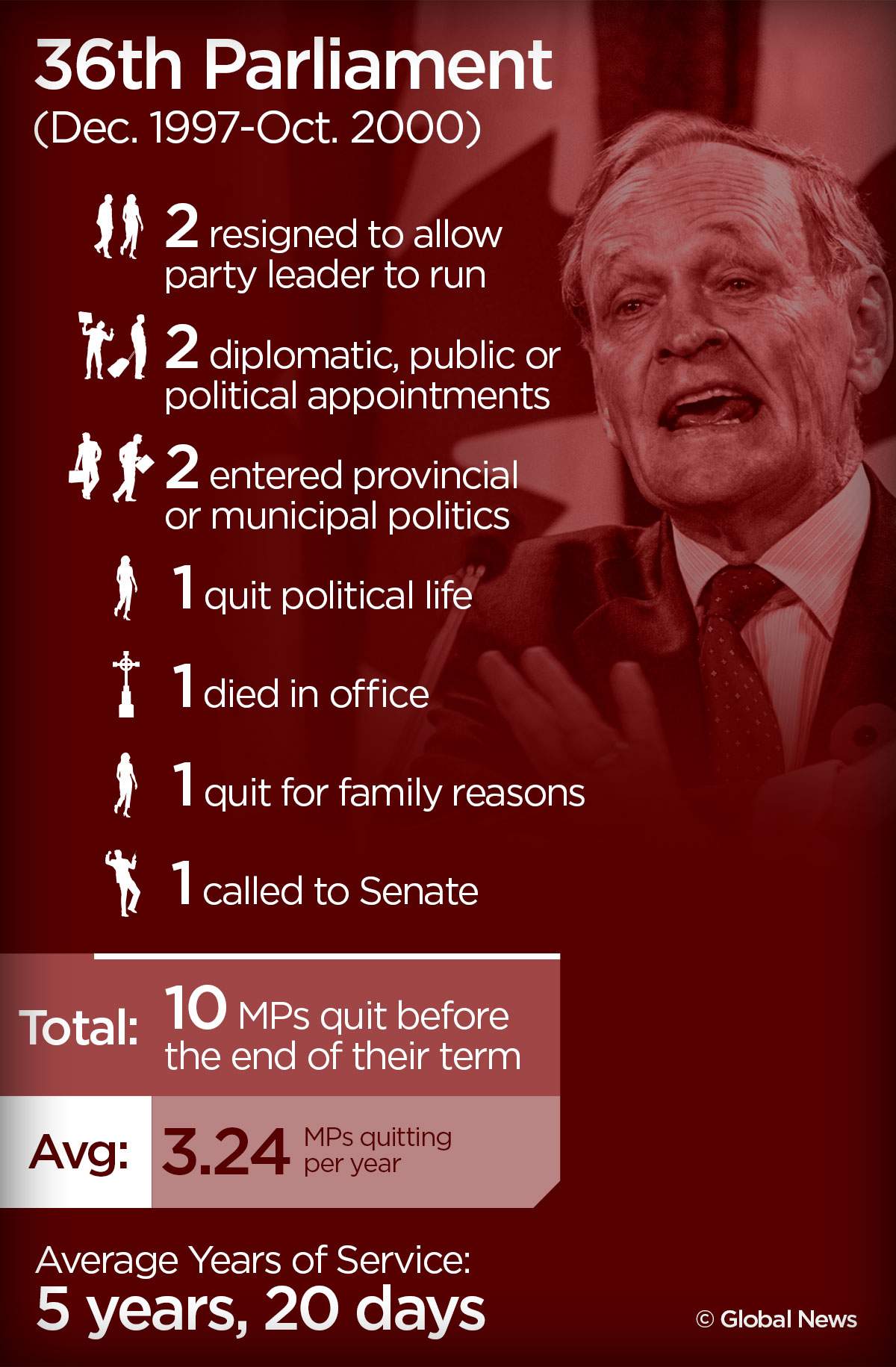
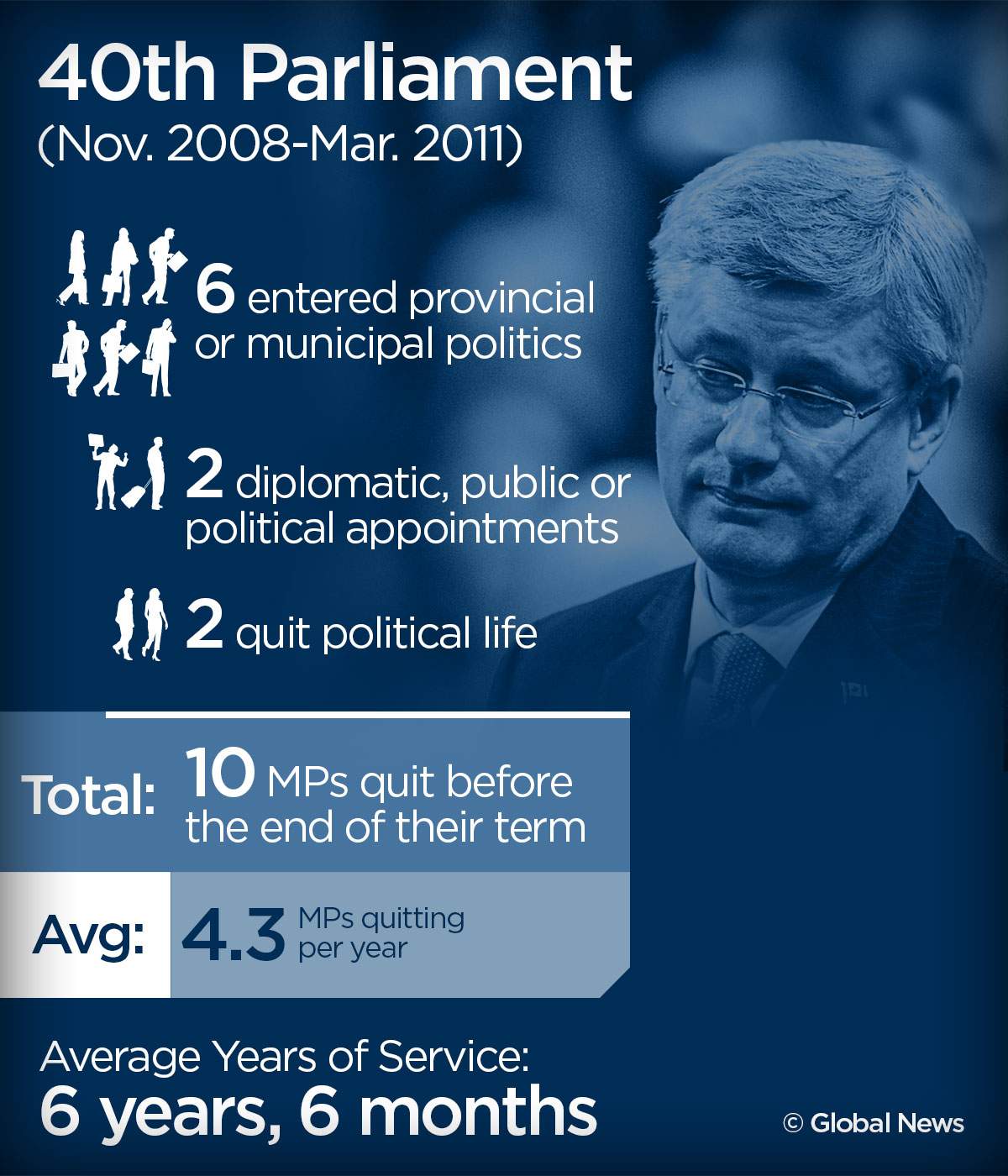
GALLERY: How many MPs left the House of Commons, why and when?






Graphics by Neil Joyes




Comments
Want to discuss? Please read our Commenting Policy first.