

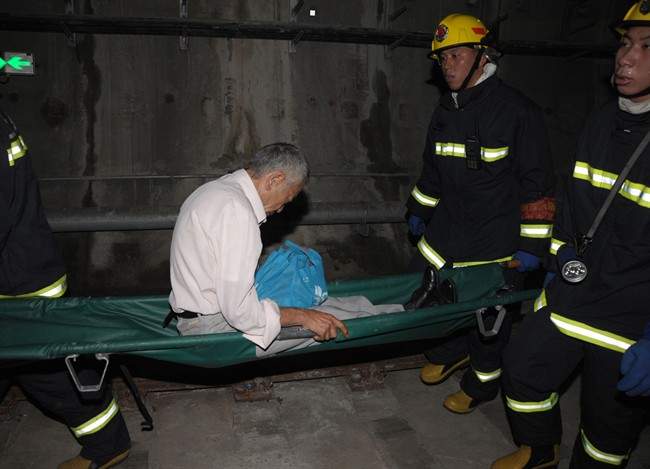
SHANGHAI – The China-based maker of signalling systems for the Shanghai subway line where two trains crashed this week, injuring 284 people, said Thursday that its equipment was not at fault.

“Our signal system has nothing to do with this incident,” Casco Signal Ltd., a joint venture of China Railway Signal and Communication Corp. and France’s Alstom, SA, said in a notice on its website.
The company earlier had refused comment on Tuesday’s accident.
The subway operator, Shanghai Shentong Metro Group, says initial checks found train operators violated regulations while operating the trains manually, attributing the crash mainly to human error.

Get daily National news
A loss of power on the line, one of Shanghai’s newest and most modern, caused its signal system to fail, so that the trains had to be operated manually, communicating through phones, Shanghai Shentong said.
Casco was set up in the mid-1980s and is a major supplier of signal systems and other equipment for China’s railways and subway systems.
The company also supplied the centralized traffic control system for the railway in east China’s Zhejiang province where two bullet trains crashed on July 23, killing 40 people and injuring 177.


High-tech automatic train protection systems are designed to improve safety while allowing more trains to travel within shorter intervals. Normally such systems prevent crashes by controlling train speeds and signalling the presence of any other trains on the line.
The subway crash was a shock for Shanghai, a city of 23 million that had its entire transport infrastructure – roads, airports, ports, tunnels and subways – upgraded ahead of the city’s 2010 World Expo.
___
Associated Press researcher Fu Ting contributed.


Comments
Want to discuss? Please read our Commenting Policy first.