


World leaders need to take decisive action to restore business confidence if they want to prevent a global recession, Prime Minister Stephen Harper told a U.S. television audience Sunday.

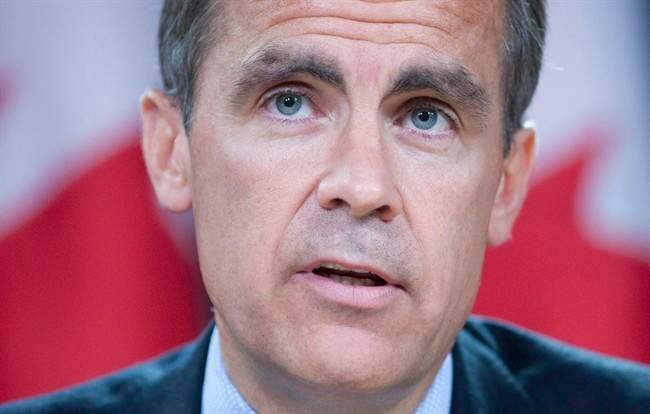
His message was echoed by a plea from Bank of Canada Governor Mark Carney, who first urged European leaders to double the size of their rescue plan, and then scolded the global banking community for balking at new rules that could save the sector from ruin.
“I remain convinced that if we as leaders make the right decisions, we can continue to keep the economy growing and avoid a recession,” Harper told NBC in an interview that aired Sunday morning.
“At this point if we were to fall into a recession, it would be strictly through frankly an accumulation of lack of confidence in tackling some of the big issues before us.”
He said companies that don’t have faith in the direction of the global economy are sitting on a large pile of uninvested capital – money that could be put into action to keep the wheels of the global economy well greased.
“There are literally trillions of dollars sitting on the sidelines throughout the Western world and we’ve got to find ways, you know, in other economies to restore confidence and get that money back into the economy.”
Financial markets around the world, including Canada, have plunged in recent days as warning signs of deep economic trouble mount. Europe is seized by a sovereign debt crisis, as Greece hovers at the brink of a default, and Ireland, Portugal, Spain and Italy face serious debt challenges as well.
Get weekly money news
At the same time, the United States is straining to deal with high unemployment and heavy deficits.
In Washington for meetings of the International Monetary Union and the G20 finance ministers and central bankers, Carney urged leaders to move beyond their rhetoric and take concrete action.
Canada, along with the U.S. and some other non-eurozone countries, applied pressure on European leaders to commit to an expanded emergency fund that would convince jittery markets they were serious about dealing with their sovereign debt problems and protecting exposed banks.
Carney made news by suggesting the fund should be pumped up “in the neighbourhood” of one trillion euros, more than twice the current commitment.
He also suggested that the European Union should be prepared to inject capital directly into financial institutions in the next few weeks, if need be.
“What really matters in the end is action, not words,” he told CTV’s Question Period.
Carney, like Harper, stressed the need for the private sector to step up.
Wading into one of the most touchy and controversial issues facing the American financial system Sunday, Carney dismissed the banking sector’s concerns – or excuses – about reforms.
Speaking at a financial convention in Washington, the Bank of Canada governor gave a spirited defence of new international rules, and chided resisters as either misconceived or fatalistic.
- Alberta tweaks carbon capture incentive program to allow grants during construction
- ‘Cash is king’: Why money is a popular holiday present for many Canadians
- Rancher says Alberta well cleanup fund a positive step — but litany of concerns remain
- What makes the Anthropic IPO so significant, and what is the ‘god share’?


He noted that such thinking led to abuses and excessive risk-taking that resulted in the recent collapse of the system, leading to a worldwide recession that is still haunting economies today.
“Four years ago, manifest deficiencies in capital adequacy, liquidity buffers and risk management led to the collapse of some of the most storied names in finance and triggered the worst financial crisis since the Great Depression,” he said.
“With about $4 trillion in output and almost 28 million jobs lost in the ensuing recession, the case for reform was clear then and remains so today.”
Even as governments attempt to deal with the short-term emergency, Carney said it should not be forgotten what got the world in such a mess in the first place.
“It’s hard to see how backsliding would help,” he said. “Indeed, at a time when the conviction of policy-makers across a range of issues is being called into question, there appears to be little value in feeding this concern.”
Carney said Canadian banks’ exposure to European debt is “modest” and that the banks are well protected by collateral.
Similarly, Harper stressed that Canada is in decent shape. But he’s worried all the same.
“I’m not trying to fool you,” he told NBC. “With all the assets we have and all the things we’ve done right, we are nevertheless a small open trading economy and we are very vulnerable to the trajectory of the global economy. And as we see it slowing, this is of considerable concern to us.”
Harper has said he will be “flexible” if the Canadian economy takes a major turn for the worse, but has not suggested a repeat of the multi-billion-dollar stimulus program that he used to mitigate the 2008 crisis.
_ By Julian Beltrame in Washington and Heather Scoffield in Ottawa.


Comments
Want to discuss? Please read our Commenting Policy first.