

They are governments without citizens.
While the Constitution gives First Nations the right self-determination and to define citizenship, other federal laws like the Indian Act have created historical divisions in society.
The Indian Act, which defines who is eligible for benefits based on lineage, has long excluded the descendents of women who married non-Aboriginal men, contributing to disunity and inequality in First Nations communities.
The need to define ‘self-government’
But in Membertou, N.S., a First Nations community is re-asserting their right to define who belongs.
“We needed to define the self in self-government,” said Trevor Bernard, executive director of the band.
The community of 800 Mi’kmaq people on Cape Breton Island is starting consultations to create its own definition of a citizen – who has the rights and responsibilities of being a part of Membertou.
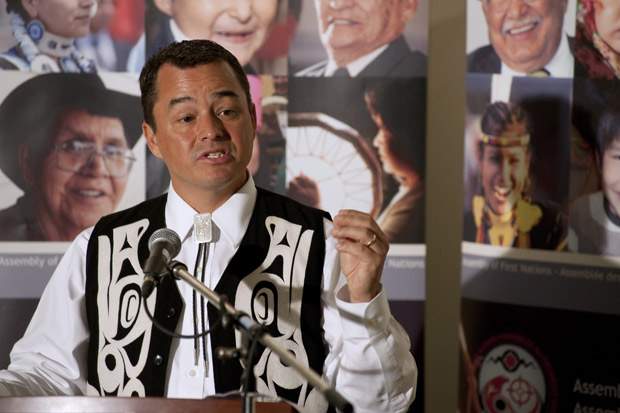
It’s all part of working towards a future without the Indian Act – a call made by National Chief Shawn Atleo at the Assembly of First Nations’ Annual General Assembly this week in Moncton, N.B.
Atleo said told the country’s 630 chiefs it was time to get rid of the Indian Act – considered paternalistic and outdated by many — and the government department that administers it.
He set out a broad roadmap pushing First Nations leaders to think about how to form a new government-to-government relationship with Ottawa, create new fiscal relationships and empower First Nations governments. It includes a call for First Nations citizenship.
“Canada has systematically undermined this authority and in the process, disenfranchised individuals and created family and community divisions. Chiefs-in-Assembly have consistently asserted their jurisdiction and intention to provide for all of their citizens, regardless of Indian Act imposed definitions and divisions,” wrote Atleo in the policy paper.
The plan has been praised for its boldness, but criticized as too vague by editorial boards across the country.
A study in citizenship
But First Nations communities like Membertou are already forging ahead – pushed on by the consistent problems they face with the Indian Act.
A new wave of people started moving into the community, and not all of had official status from the federal government. The band council still wanted to provide for these citizens and the issue had them at “loggerheads” with the Department of Aboriginal Affairs, says Bernard.
The problem was that some people had access to benefits like housing and postsecondary education funding because of their official status from the government and their neighbours did not.
“It creates two classes of Membertou community members,” Bernard said. “To have this left to bureaucrats in Ottawa that is very troubling to us.”
Community members – those with official status and those without – are now going meeting to decide who belongs.
The process isn’t going to please everyone and it will mean some are still excluded, but Bernard said it will be worth it.
“We are a government and we’d like to act accordingly,” he said.
Citizenship fundamental for the future: lawyer
Broad citizenship is fundamental to the future self-government, according to Pamela Palmater, a Mi’kmaq lawyer recently wrote a book about Indigenous identity and citizenship.
“You are not going to have a very strong, capable, enduring nation if you don’t have citizens who want to be a part of that nation, feel loyal to that nation and want to make contributions to that nation,” she said.
Palmater said while Membertou should be applauded, citizenship needs to go beyond small communities and extend to entire First Nations like the Mi’kmaq, of which Membertou is a part.
The ultimate goal would be Aboriginal citizenships that supersede the definitions laid out in the Indian Act and those set out by smaller communities, she said.
Supporters like Palmater and Atleo say citizenship would restore relationships within communities and empower First Nations in their relationship with the federal government.
Ideally, citizenship would allow everyone who the community decides belongs to the First Nation to share equally in the rights and responsibilities to the land, culture, politics and public services in the community.
“Citizenship will rectify the current divisions imposed on us,” says Palmater.
It would also change the relationship First Nations have with the government. For the first time in history, Canada’s First Nations will be telling the government who they are dealing with instead of the government deciding who the partners of the treaty are, she said.
The federal government has said it will continue to work with First Nations within the existing framework.
“Our government will continue to address challenges with the Indian Act. We are putting in place modern tools, investments and partnerships to address these, including legislation, based on partnerships and agreements with First Nations, provinces and territories,” said Michelle Yao, a spokeswoman for aboriginal affairs minister John Duncan.



Comments
Want to discuss? Please read our Commenting Policy first.