


TORONTO — The global video game industry cleared a major hurdle in the United States on Monday after the U.S. Supreme Court rejected a law banning the rental or sale of violent video games to minors.
In a 7-2 decision, the court ruled the California law violated young people’s U.S. constitutional right to free speech.
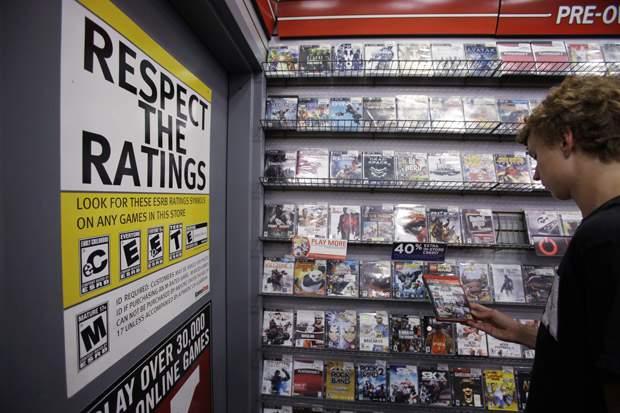
The ruling upholds the video gaming industry’s position that existing voluntary rating systems are adequate for parents to decide if a video game is appropriate for their children.
While the U.S. decision has a significant impact on the gaming industry south of the border, in Canada, the situation is little different.
Chris Bennett is a Canadian IP and IT lawyer for Davis LLP, a law firm with offices across Canada and in Japan.
A member of the firm’s Video Games & Interactive Entertainment Law practice group, Bennett has written extensively on video game law in Canada.
“Canadian legislators have had virtually no difficulties enacting legislation that restricts the sale of violent video games to children,” Bennett and co-author Chris Metcalfe, an articling student at Davis LLP, wrote in a commentary on anti-violence legislation in Canada.
“Currently, Manitoba, Ontario, Nova Scotia and New Brunswick have implemented this type of legislation, and Saskatchewan is in the process of doing so. British Columbia deals with violent games through its motion picture legislation,” Bennett and Metcalfe said in the article published in a 2007 edition of The Lawyer’s Weekly.
Bennett and Metcalfe explain that Canada’s Charter of Rights and Freedoms guarantees the right to freedom of expression to all Canadians, including video game developers.
However, Section 1 of the Charter subjects that law to reasonable limits that can be justified in a free, democratic society.
“The protection of children from the potentially adverse effects of exposure to video game violence might be enough to support a s. 1 argument,” Bennett and Metcalfe wrote.
“The real question is whether the gatekeepers of those (violent, gory or obscene) games should be the teenaged clerks who sell and rent the games, or the parents of the children who are playing the games.”
According to Entertainment Software Ratings Board (ESRB) policy, video game retailers are not permitted to sell games rated “M” for mature to minors under 17 years of age.
ESRB is an independent, voluntary regulatory body established in 1994 by the Entertainment Software Association, a North American trade group for video game developers, publishers and distributors.
Its members include Electronic Arts Inc. (EA), Disney Interactive Studios, Microsoft, Nintendo, Sega, Sony Computer Entertainment, Warner Bros. and others.
ESRB, which assigns content ratings on video and computer games, applauded the U.S. Supreme Court ruling on Monday.
“Today’s decision acknowledges the value and effectiveness of the ESRB rating system,” Vance said in a written statement.
“In striking this law the Court has made clear that the video game industry effectively empowers parents to be the ones to decide which games are right for their children,” Vance said.
Canada’s video gaming industry is expected to add $1.7-billion to the economy in 2011. Last year, the industry brought in $18-billion in the U.S.
Canada’s gaming industry employs thousands of developers and digital media specialists thanks to large-scale development studios in P.E.I., Ontario, Quebec, Alberta and British Columbia.
The industry is the third-largest in the world in terms of employment, behind the U.S. and Japan.



Comments
Want to discuss? Please read our Commenting Policy first.