


A man from Banff died after falling through thin ice and into the frigid waters of Lake Louise on Tuesday night.

The 911 call came to emergency services in Lake Louise around 6:15 p.m.
The caller reported someone had fallen through the ice on the world-famous picturesque lake in Alberta’s Rocky Mountains.
The local fire department, RCMP, EMS and Parks Canada visitor safety team all responded.
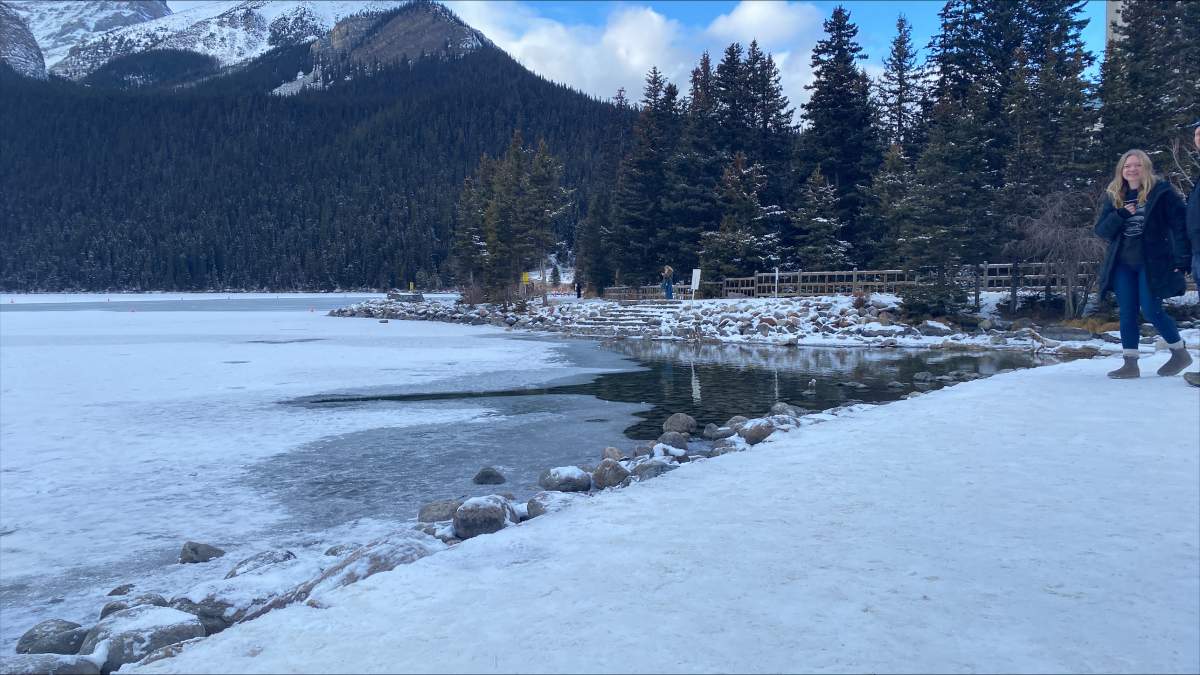
RCMP said a man had been skating alone near the back of Lake Louise when he fell through thin ice.
He was found underwater around 8:10 p.m. The temperature at the time was -5 C, according to Environment Canada, but with the wind chill felt like – 13.

Get daily National news
EMS began resuscitation efforts and the man was taken to the Banff Mineral Springs Hospital, where he was pronounced dead.
The man was a 70-year-old resident of Banff, but RCMP did not release his name.
His drowning death comes after two other skaters fell through the ice on Monday, however, they were able to get themselves out.
Lake Louise is a popular skating destination in the winter; however, a mild fall in Alberta has delayed the formation of ice on many water bodies across the province.
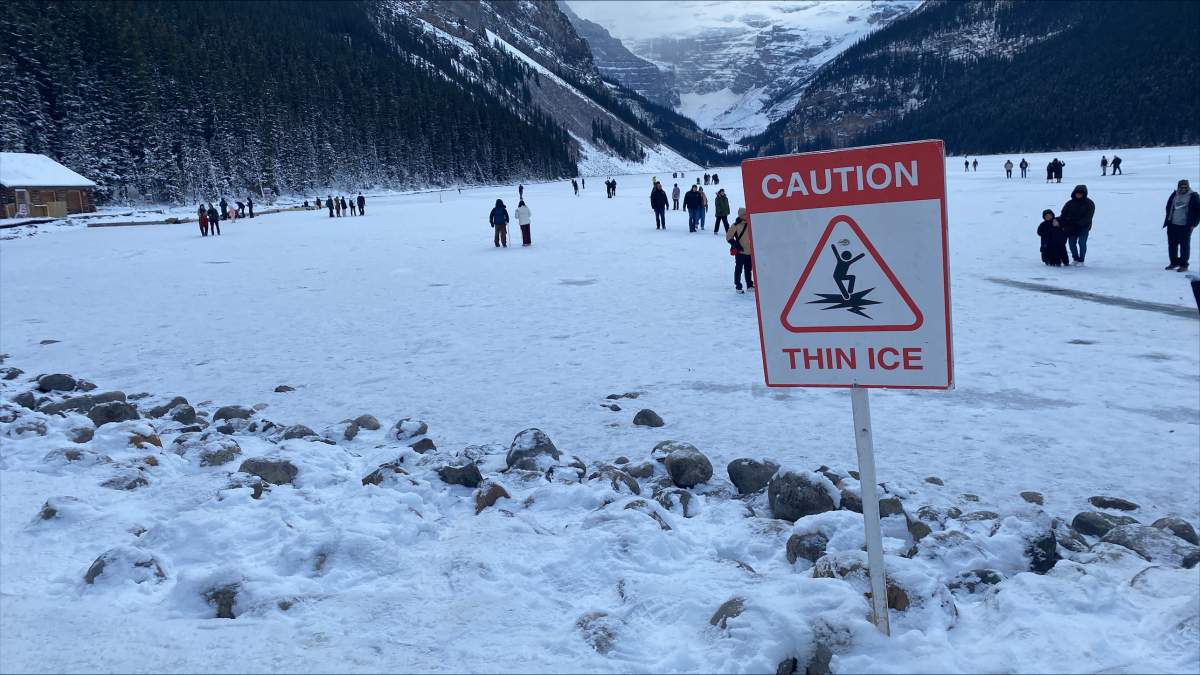
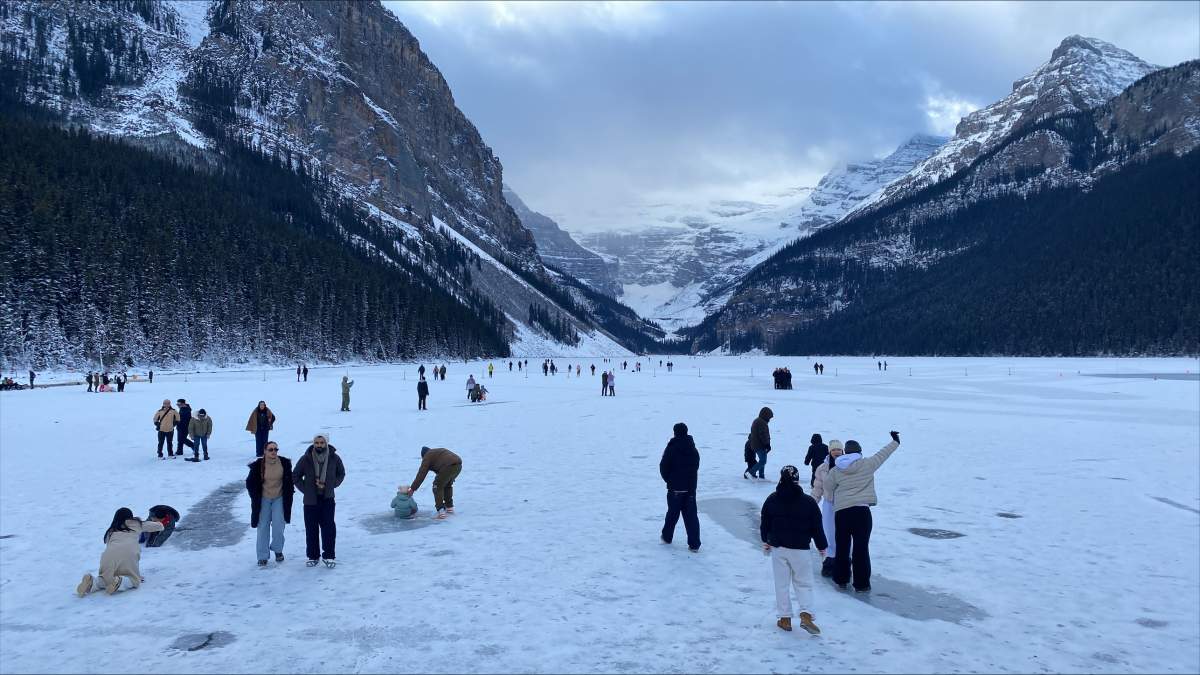
On Wednesday, there were dozens of people skating and walking on the lake in Banff National Park, which had signs posted at the shore warning of thin ice and cautioning people to skate at their own risk.
- Lack of snow forces cancellation of World Cup giant slalom races in Quebec
- Parts of B.C. Coast under orange-level rainfall warnings as final, potent storm hits
- Coastal B.C. bracing for another fall storm as warnings issued, King Tides expected
- Weather alerts in effect due to heavy rain across N.S. and parts of N.B., N.L.


On Monday, Parks Canada cautioned visitors to think twice about skating on Lake Louise and other bodies of water in Banff National Park.
Parks Canada said it doesn’t monitor ice conditions at Lake Louise or any other lake or pond, so visitors must be able to self-rescue should they fall in the water.
“If you choose to skate on natural ice, you do so at your own risk,” Parks Canada said in its Facebook post.
Never assume ice is safe because someone else was on it, they added.
Early season ice can be unpredictable and conditions can vary significantly across a lake, Parks Canada cautioned. Areas that appear frozen may not be strong enough to support your weight.
Ice thickness should be 15-20 cm for walking or skating, the government agency said.


Comments
Want to discuss? Please read our Commenting Policy first.