


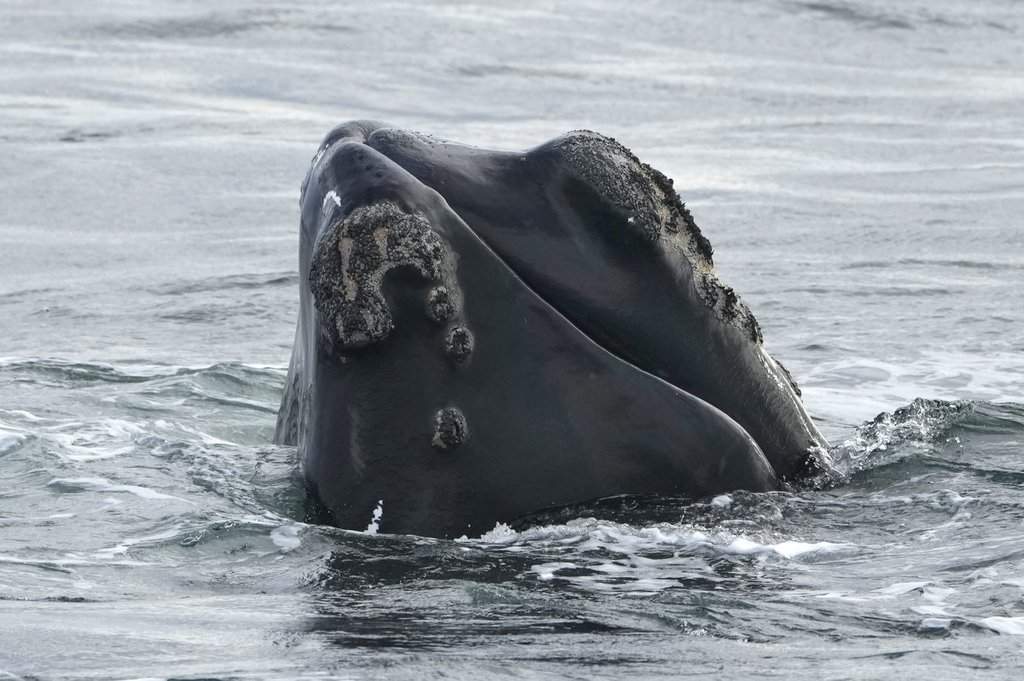
Scientists are one step closer to understanding why the critically endangered population of North Atlantic right whales produces so few calves each year.

Preliminary research presented Monday at the North Atlantic Right Whale Consortium meeting in Halifax cites genomic data indicating that up to 70 per cent of fetuses are lost due to inbreeding.
Tim Frasier, a professor at Saint Mary’s University in Halifax, says the findings closely match the population’s reproductive rate, which is about 70 per cent lower than it should be.
Though these numbers may seem grim for a species with fewer than 400 living members, Frasier says the high rate of lost fetuses has resulted in a purging of harmful genes that result from inbreeding. In the long run, this could promote long-term genetic diversity, a positive for species with such a tiny population.

Get breaking National news
As well, this diversity should also lead to an eventual decline in the loss of fetuses.
The population, however, must first endure this period of low reproduction, which Frasier expects is limiting the population’s recovery in the short-term.
“I think they are in this critical period where they’re suffering from these genetic factors and other things,” said Frasier, referring to the fact that ship strikes and entanglements in fishing gear remain the leading causes of death.
“So we need to stop killing them in order to allow them to survive and get through this.”
- Saskatoon wildlife rehab centre may soon resume work after licence revoked
- Strong calving season provides glimmer of hope for endangered right whales
- Mississauga’s data centre moratorium facing challenge from American company
- Former environment ministers say Canada’s commitment to climate targets ‘factually untrue’


Meanwhile, the population is not yet on a clear path to recovery. A preliminary estimate released Monday says the annual population as of 2025 decreased by two per cent to 382 whales.
The most recent calving season, which was one of the strongest on record with 24 new calves, provided a glimmer of hope. Yet, Frasier says that number could have been around 100 if all adult females gave birth at anticipated rates.
Moving forward, Frasier says he and his team plan to measure just how much of a determinant low reproduction is to the population’s recovery.
He says this will require creating population projection models to compare existing population trends with those predicted if none of the fetuses were lost due to inbreeding.


Comments
Want to discuss? Please read our Commenting Policy first.