


For decades, Canadian municipalities have had bylaws establishing minimum indoor air temperatures to protect people from the cold.

But as temperatures are heating up and record-breaking heat is becoming the norm, medical experts and tenant advocacy groups are renewing calls for the establishment of a maximum indoor air temperature standard.
“Up to this point, we’ve been experiencing cold more frequently in this area and in Canada in general. It’s been more of a concern,” Dr. Henry Swoboda, and ER physician and member of the Canadian Association of Physicians for the Environment, told Global News.
“But now our climate is changing. We’re in the midst of climate change, and Canada is heating faster than a lot of other areas.”
Swoboda joined a group of climate and tenant advocates in Kingston, Ont., Wednesday that worked with city council to establish July 15 as Extreme Heat Awareness Day. The group is also calling on the municipality to take further steps to protect vulnerable populations in the summer.
“We’ve seen some good progress, but we want to see full protection for all tenants with a maximum-temperature bylaw,” Chris Gusen, a member of the Kingston Climate Justice Coalition, told Global News.
“We know that during the winter it would be ridiculous if your landlord could allow the temperature to fall below a certain level. So why not have a ceiling in the summer as well, especially when summers are becoming increasingly extreme?”
In February 2025, Kingston city council voted to implement a bylaw that would require a maximum indoor temperature of 26 C from June 1 to Sept. 30, but it would only apply to apartments that already have air conditioning.

Get weekly health news
Other municipalities have made similar strides.
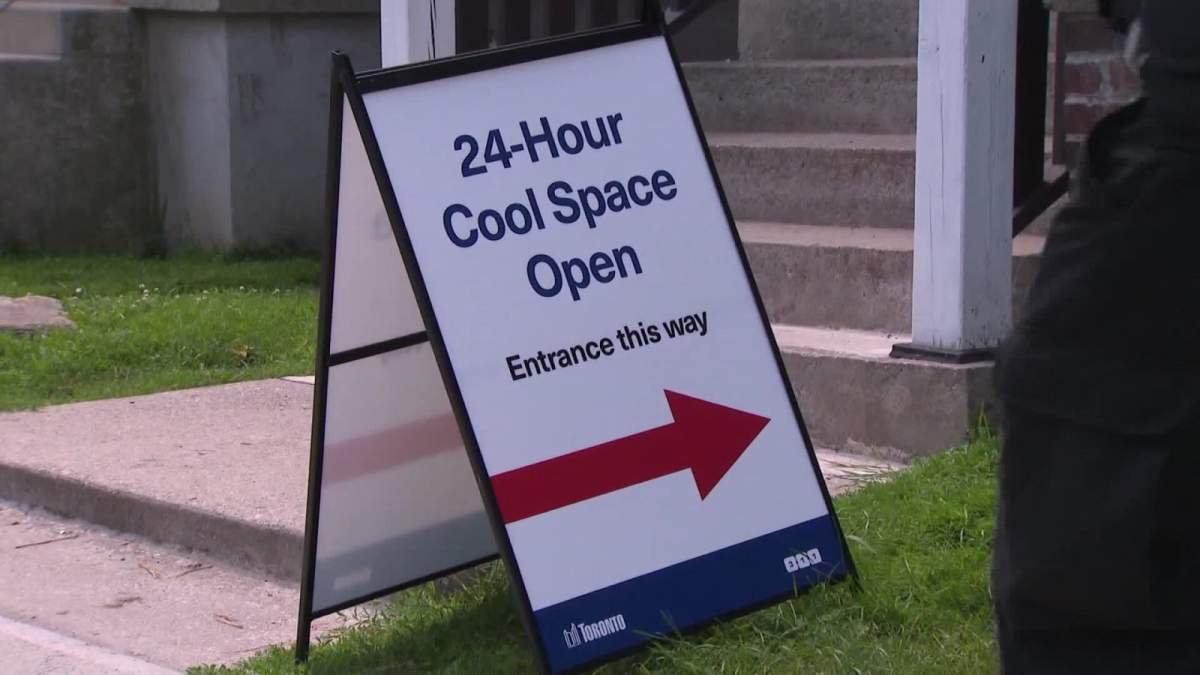
The City of Toronto also requires landlords of buildings with AC units to keep temperatures at a maximum of 26 C. Last week, council greenlit a plan to ask the city manager to draft a city bylaw and present it to council by June 2027 that would require all buildings to meet this standard.

The deadline for city staff to report back on a similar bylaw in Hamilton has been pushed to September.
On June 30, Health Canada published a guidance report on upper indoor temperature limits. The report recommends a maximum of 26 C to protect older adults.
“This recommendation is framed as a health-protective threshold and proposed action level for intervention rather than a comfort target,” the report states. “It also acknowledges that 26°C may not be protective of all older adults (for example, those with multiple health conditions or severe frailty).”


Health Canada said the guidance is intended to provide reference to public health authorities and other stakeholders in policy development and intervention measures to keep Canadians safe in the extreme heat.
As high temperatures become more common, more are pushing for this guidance to prompt action.
According to government data, Canada experienced an increase in average temperatures of 1.7°C between 1948 and 2016, about twice the average warming observed globally.
So far this summer, many Ontarians have felt the effects.
In the beginning of July, municipalities across southern Ontario broke heat records when humidex values reached the mid-40s. After a slight reprieve, the heat returned with a vengeance earlier this week.
“The frequency is going up, the duration, the length of time that these heat domes are around is also increasing, and the intensity is increasing. So that’s a trifecta of things that are making it uncomfortable for some of these summer weeks at a time,” Global News meteorologist Anthony Farnell said.
In 2021, Vancouver experienced a catastrophic heat dome that led to the deaths of at least 619 people. A report from the city after the fact said that 98 per cent of these deaths occurred indoors.
“Municipalities have the power to act to protect people,” Gusen said.
“If we don’t prepare for extreme heat, if we don’t protect these vulnerable people we talked about — seniors, pregnant women, children, people who don’t have access to indoor cooling — there will be deaths,” Swoboda added.
He said once the temperature climbs above 30 C, it can be dangerous for certain populations.
Signs of heat-related illness include high body temperature, confusion, nausea and vomiting, dizziness, headache, and extreme thirst.


@Vinny. Nope never denied it, just questioned why we let fear mongering children set energy policy that continues to decimate the Canadian economy while at the same time having no impact on global climate change. In addition, even if the economic penalties invoked by your coven of woketard simpletons would be effective in reducing 100% of Canadian sourced global carbon emissions, the total removal of 100% of all Canadian emissions would reduce world emissions by 1-3%.
The only 2 things Liberal climate policies do is decimate the economy while allowing woketards like you to parrot the virtue signalling nonsense fed to you by your coven masters at the cbc
Here in central Alberta, we haven’t had 2 consecutive days of summer temps yet.
Activists whining is not news
Its clickbait
Anyone still in denial of climate change