


Premiers from Canada’s four western provinces and the three territories are meeting in Kananaskis Country, west of Calgary, this week.

While the leaders have lots to talk about, it is the possibility of Alberta separatism that looms over the meetings.
The gathering, which Nunavut Premier John Main will participate in virtually, comes just days after Alberta Premier Danielle Smith announced her government will be holding a referendum in October that could set the stage for Alberta’s separation from Canada.
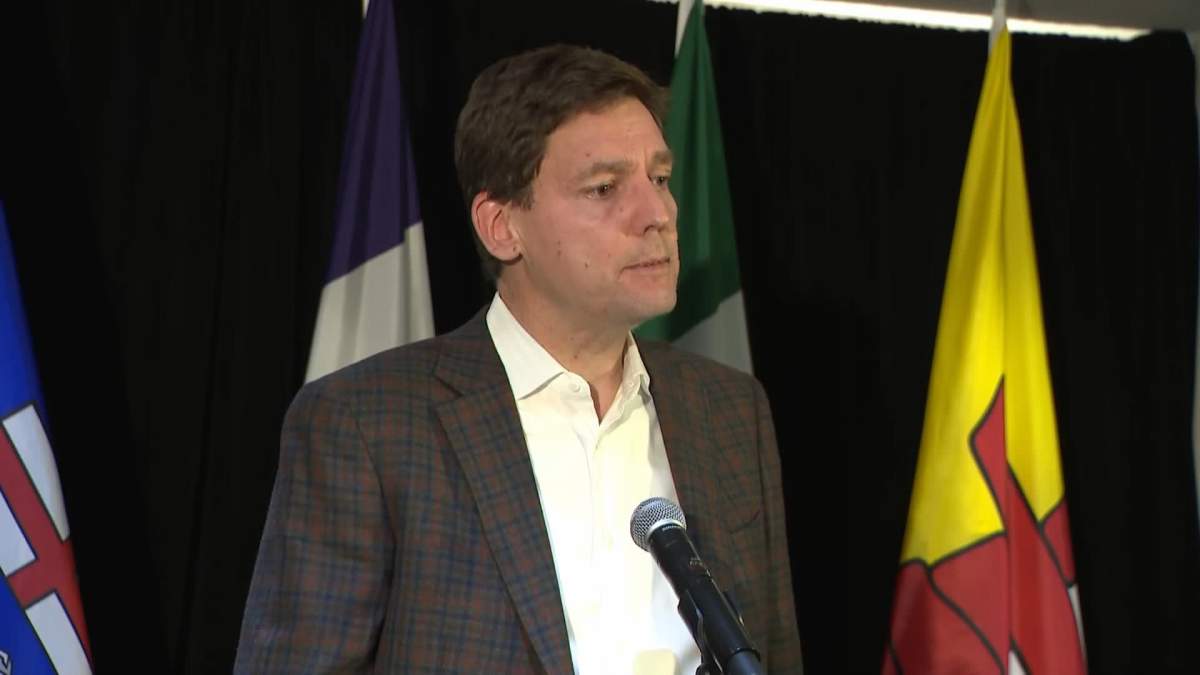
British Columbia Premier David Eby, who has been butting heads with Smith over her desire for a new pipeline from Alberta to the B.C. coast, said he’s wondering why they are meeting in Alberta to talk co-operation when the host premier wants to test separation.
“To say that this is the worst time to begin testing the bonds that hold this country together is a significant understatement,” said Eby.
“It empowers the people who would break our country up and sell us for parts.”
Eby called Smith’s plans to hold the October vote “reckless,” and said this week’s meeting of western and northern political leaders was supposed to be about addressing internal trade barriers, issues around national defence and economic corridors.
“These topics seem at best confusing, if not totally awkward in light of the referendum question that Premier Smith has put forward,” he said.
On Monday, the B.C. premier also reiterated his opposition to an oil pipeline to the north coast of B.C., saying the ban on oil tanker traffic in the area cannot be compromised on.

Get breaking National news
Alberta’s referendum plans were announced as the Smith government moves closer to submitting a proposal to build a new pipeline to the coast by July.
It’s part of an agreement Ottawa has with Alberta that also includes more relaxed carbon pricing for the province.
There isn’t a private proponent yet and industry experts say the referendum adds more uncertainty for potential investors.
“We know that companies don’t like to make decisions when there’s uncertainty and separating isn’t going to help that,” said Richard Masson, former CEO of the Alberta Petroleum Marketing Commission.
“The industry has been trying to find better market access and this is counter to that.”

While Smith said she’s looking forward to working with Eby this week, she also levelled some criticism of her own, reiterating her claims that political leaders across the country have fomented separatism in Alberta by throwing hurdles in the way of the province’s oil industry.
She has pointed the finger at her old nemesis, former prime minister Justin Trudeau, Liberal MPs in Ottawa, federal NDP Leader Avi Lewis and leadership in B.C.
“I think that Alberta has had 10 tough years under Justin Trudeau, and that’s part of the reason for the frustration,” Smith said.
On Monday, she also singled out Eby and several former premiers.
“It’s not only the current premier, but John Horgan, and Christy Clark — it goes back a long way,” said Smith, who accused them of stifling the construction of critical infrastructure to the West Coast.
“These ports are not British Columbia’s ports. They’re Canada’s ports.”
Despite Smith changing her own citizen initiative laws multiple times in the past year to clear the way for a separatist petition, Smith has argued that the push to secede didn’t emerge overnight.
“You get there because of successive barriers to us being able to realize our economic prosperity and be able to attract investment and be able to govern ourselves,” she said.
“I think that there just needs to be self-reflection.”
Saskatchewan Premier Scott Moe also weighed in on the referendum on Monday, saying he believes Smith didn’t have a choice but to announce the vote under her provincial law.
“We have 10 years of unconsulted, harmful policy by the previous prime minister,” he said.
While Moe said he aligns closely with Smith’s position on Alberta remaining in Canada, as the premier of Saskatchewan, he said it’s not for him to judge Albertans.
“That being said, I’m sure there’s going to be, you know much discussion about current events here in Alberta and in other provinces as well,” said Moe.
“We have a new leadership at the federal level, most certainly has proven to be much more collaborative than the previous fellow. So that’s a positive from Saskatchewan’s perspective.”
“We very much welcome that cooperative federalism that Prime Minister Carney has brought to the conversation over the course of the last year, and I would say that very much is an opportunity for us to build on in our province of Saskatchewan, but I think other provinces as well,” Moe added.
–with files from The Canadian Press




Hey , Fort Mac Murray … would you like to separate from Alberta and join Saskatchewan ? Just ask Moe … He’s all in !
“Eby the worst premier B.C. has ever had.”
According to who? A bunch of fascists? Go f*ck yourself
Eby the worst premier B.C. has ever had.
Smith is a traitor to Canada and should be treated as such.
Hey look Bob B aka Bob B1tch is crying about DRIPA again 🤣🤣Apparently his small penis syndrome only allows him to obsess over DRIPA everyday of his pathetic life and spread as much disinformation as he possibly can about First Nations people
When is Fort Mac Murray going to separate from Alberta so they can keep all the oil for themself ?
So, many many starve while these pigs eat huge on our dime. How much will be wasted on these azzholes? Will anything they discuss help feed the Canadian? Will it help do anything? Nope just another fascist pig shindig for these azzholes to wallow in.
“ There isn’t a private proponent yet”
Well there won’t be until you get the DRIPAs out of the way.
Who want to invest in it if all that is going to happen is every F’nN aid going to slow walk and extort money out of you for their consent .
Go away Smith, no one in BC is following your pipe dream, but you can pay us to have it go through our province.
Eby is an idiot.
I hope that they all tell her off! Pleasing a fringe isn’t democracy, it’s stupidity